This volume shifts perspective to the everyday aspects of ancient rhetoric-its teaching, exercises, and daily life-and concentrates on persons less visible in narratives of rhetoric's history: teachers, slaves and freedmen, speech performers, political dissidents, mavericks, and dropouts.
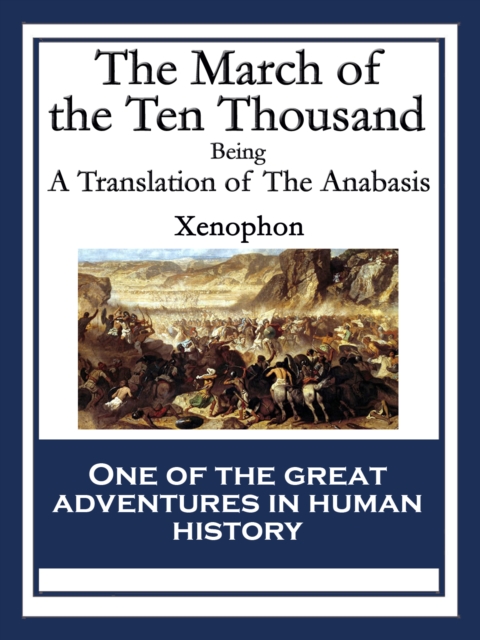
Stranded deep in enemy territory, the Spartan general Clearchus and the other Greek senior officers were subsequently killed or captured by treachery on the part of the Persian satrap Tissaphernes.
Lysistrata persuades the women of Greece to withhold sexual privileges from their husbands and lovers as a means of forcing the men to negotiate peace - a strategy, however, that inflames the battle between the sexes.
The Twelve Caesars, is a set of twelve biographies of Julius Caesar and the first 11 emperors of the Roman Empire written by Gaius Suetonius Tranquillus.
The Twelve Caesars, is a set of twelve biographies of Julius Caesar and the first 11 emperors of the Roman Empire written by Gaius Suetonius Tranquillus.
The Twelve Caesars, is a set of twelve biographies of Julius Caesar and the first 11 emperors of the Roman Empire written by Gaius Suetonius Tranquillus.
The Twelve Caesars, is a set of twelve biographies of Julius Caesar and the first 11 emperors of the Roman Empire written by Gaius Suetonius Tranquillus.
The Twelve Caesars, is a set of twelve biographies of Julius Caesar and the first 11 emperors of the Roman Empire written by Gaius Suetonius Tranquillus.
Hesiods Theogony is a large-scale synthesis of a vast variety of local Greek traditions concerning the gods, organized as a narrative that tells how they came to be and how they established permanent control over the cosmos.
Ancient accounts of Aristotle credit him with 170 Constitutions of various states; it is widely assumed that these were research for the Politics, and that many of them were written or drafted by his students.
The History of the Peloponnesian War is a historical account of the Peloponnesian War (431404 BC), which was fought between the Peloponnesian League (led by Sparta) and the Delian League (led by Athens).
Stranded deep in enemy territory, the Spartan general Clearchus and the other Greek senior officers were subsequently killed or captured by treachery on the part of the Persian satrap Tissaphernes.
Plutarch's Lives of the Noble Greeks and Romans, commonly called Parallel Lives or Plutarch's Lives, is a series of biographies of famous men, arranged in tandem to illuminate their common moral virtues or failings.
Stranded deep in enemy territory, the Spartan general Clearchus and the other Greek senior officers were subsequently killed or captured by treachery on the part of the Persian satrap Tissaphernes.
A scientific study of the influences that shaped Christianity in the years immediately following the death of Christ, clarifying disputed points of history and dogma and synthesizing the influences of the period.
A thorough history of the weapons and tools our prehistoric ancestors used to survive, this book reveals a world that will fascinate anyone interested in outdoor skills, ancient weapons, or anthropology.
In the many retellings of the Greek myths, the focus is generally on gods and heroes, but Natalie Haynes refocuses our gaze on the remarkable women at the centre of these ancient stories.
'Bold, dazzling and provocative' - Peter Frankopan, author of The Silk Roads'This book uncovers what was lost when Christianity won' - The TimesIn The Darkening Age, historian Catherine Nixey tells the little-known - and deeply shocking - story of how a militant religion deliberately tried to extinguish the teachings of the Classical world, ushering in unquestioning adherence to the 'one true faith'.
Judith tells the story of a beautiful Jewish woman who enters the tent of an invading general, gets him drunk, and then slices off his head, thus saving her village and Jerusalem.