During the first half of 1969, Bravo Troop, 3rd Squadron, 4th Cavalry, 25th Infantry Division operated northwest of Saigon in the vicinity of Go Dau Ha, fighting in 15 actions on the Cambodian border, in the Boi Loi Woods, the Hobo Woods and Michelin Rubber Plantation and on the outskirts of Tay Ninh City.
Originally designed as a cargo and paratroop transport during World War II, the Fairchild C-82 Packet is today mainly remembered for its starring role in the Hollywood film The Flight of the Phoenix (1965).
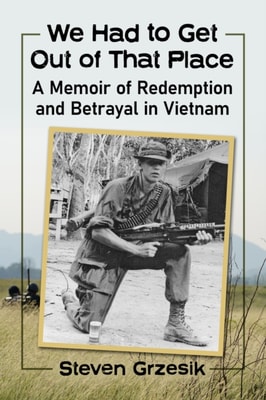
A poignant memoir that recounts the author's hair-raising--and occasionally hilarious--experiences as a young, not especially gung-ho Marine artilleryman in Vietnam.
Un diplomate moldave, Nicolas Milescu, deja presente a Louis XIV et a d'autres princes d'Europe, est envoye par le tsar de toutes les Russies en Chine, porteur d'un message d'amitie aupres de l'empereur Kang Xi.
By the mid-1980s, public opinion in the USSR had begun to turn against Soviet involvement in Afghanistan: the Soviet-Afghan War (1979-1989) had become a long, painful, and unwinnable conflict, one that Mikhail Gorbachev referred to as a "e;bleeding wound"e; in a 1986 speech.
The Oldest Guard tells the story of Zionist settler memory in and around the private Jewish agricultural colonies (moshavot) established in late nineteenth-century Ottoman Palestine.
Scholars have long been puzzled by why Muslim landowners in Central Asia, called begs, stayed loyal to the Qing empire when its political legitimacy and military power were routinely challenged.
Madchester may have been born at the Hacienda in the summer of 1988, but the city had been in creative ferment for almost a decade prior to the rise of acid house.
This book explores the concept of 'quiet' - an aesthetic of narrative driven by reflective principles - and argues for the term's application to the study of contemporary American fiction.
Among the Jewish writers who emigrated from Eastern Europe to France in the 1910s and 1920s, a number chose to switch from writing in their languages of origin to writing primarily in French, a language that represented both a literary center and the promises of French universalism.
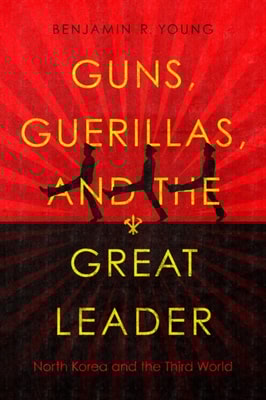
Far from always having been an isolated nation and a pariah state in the international community, North Korea exercised significant influence among Third World nations during the Cold War era.
In the first half of the twentieth century, a pioneering generation of young women exited their homes and entered public space, marking a new era for women's civic participation in northern Sudan.
This lively and ground-breaking collection brings together work on forms of popular television within the authoritarian regimes of Europe after World War Two.
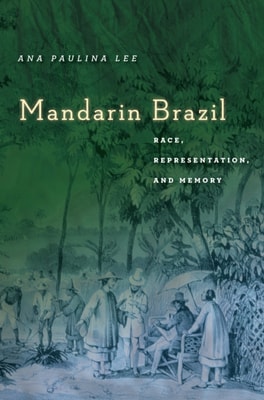
In Mandarin Brazil, Ana Paulina Lee explores the centrality of Chinese exclusion to the Brazilian nation-building project, tracing the role of cultural representation in producing racialized national categories.
Dispatches on nationalism and religionAs an insider to church politics and a scholar of contemporary Orthodoxy, Cyril Hovorun outlines forms of political orthodoxy in Orthodox churches, past and present.
All of us should condemn terrorism--whether the perpetrators are Muslim extremists, white supremacists, Marxist revolutionaries, or our own government.
This book's central claim is that a close reading of Augustine's epistemology can help political theologians develop affirmative accounts of political liberalism.
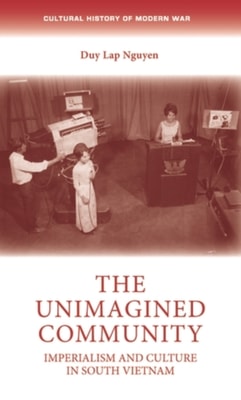
The unimagined community proposes a reexamination of the Vietnam War from a perspective that has been largely excluded from historical accounts of the conflict, that of the South Vietnamese.