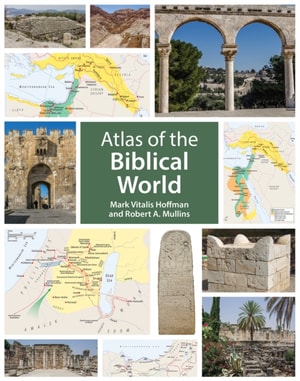
Based on the latest current scholarship, Atlas of the Biblical World features striking full-color maps and insightful commentary to make the ancient biblical world come alive.
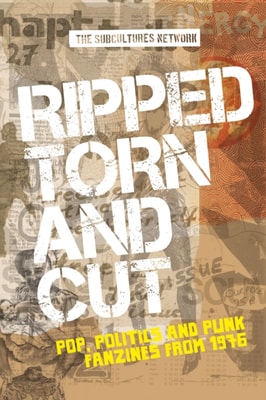
Ripped, torn and cut offers a collection of original essays exploring the motivations behind - and the politics within - the multitude of fanzines that emerged in the wake of British punk from 1976.
In 1939, residents of a rural village near Chengdu watched as Lei Mingyuan, a member of a violent secret society known as the Gowned Brothers, executed his teenage daughter.
This book offers the first social and intellectual history of Dalit performance of Tamasha-a popular form of public, secular, traveling theater in Maharashtra-and places Dalit Tamasha women who represented the desire and disgust of the patriarchal society at the heart of modernization in twentieth century India.
Translated for the first time from the original Persian into English, these selected treatises from Aziz O-Din Nasafi's thirteenth-century work The Perfect Being provide a fascinating and rare, yet applicable, introduction to Sufism.
Iraq was the first postcolonial state recognized as legally sovereign by the League of Nations amid the twentieth-century wave of decolonization movements.
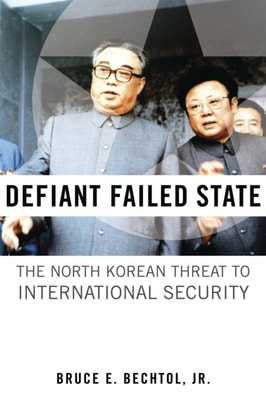
Since the 1990s, the American government has under prioritized the North Korean threat to global security, according to Bruce Bechtol, an associate professor of political science at Angelo State University.
This book explores the concept of 'quiet' - an aesthetic of narrative driven by reflective principles - and argues for the term's application to the study of contemporary American fiction.
Are all governments--east and west, Muslim and secular, authoritarian and constitutional, Republican and Democratic--fundamentally the same, all of them under the extraordinary, growing power of "e;technique"e; and bureaucracy?
For many in the West, North Korea is a secretive, reclusive, and enigmatic country, a rogue state that threatens the world with its nuclear program and ballistic missiles.
Pope Paul VI's notion of "e;integral human development,"e; which was endorsed by his successors including Pope Francis, broke with the modern project of purely economic and technological development, resulting in an original understanding of development.
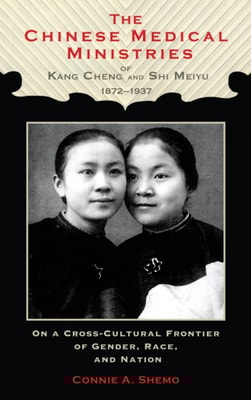
This is the first full-length study of the medical ministries of Kang Cheng and Shi Meiyu, who graduated from the medical school at the University of Michigan in 1896 and then ran dispensaries, hospitals, and nursing schools in China from the 1890s to the 1930s.
The church in the United States faces a dilemma: How is it possible for Christ's followers to worship faithfully in a nationalistic environment where religion and politics enjoy a vigorous affiliation while the separation of church and state is celebrated as the standard for the relationship between nation and faith?