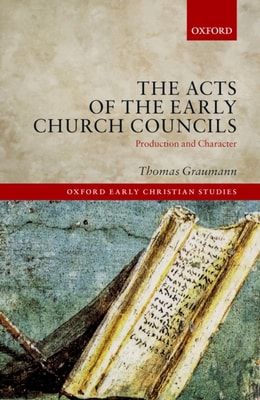
The Acts of Early Church Councils Acts examines the acts of ancient church councils as the objects of textual practices, in their editorial shaping, and in their material conditions.
The Acts of Early Church Councils Acts examines the acts of ancient church councils as the objects of textual practices, in their editorial shaping, and in their material conditions.
Deification in Russian Religious Thought considers the reception of the Eastern Christian (Orthodox) doctrine of deification by Russian religious thinkers of the immediate pre-revolutionary period.
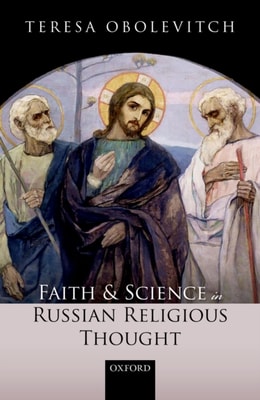
Faith and Science in Russian Religious Thought provides a comprehensive analysis of the relationship between science and faith in Russian religious thought.
Faith and Science in Russian Religious Thought provides a comprehensive analysis of the relationship between science and faith in Russian religious thought.
The Idea of Nicaea in the Early Church Councils examines the role that appeals to Nicaea (both the council and its creed) played in the major councils of the mid-fifth century.
The Idea of Nicaea in the Early Church Councils examines the role that appeals to Nicaea (both the council and its creed) played in the major councils of the mid-fifth century.
Deification in Russian Religious Thought considers the reception of the Eastern Christian (Orthodox) doctrine of deification by Russian religious thinkers of the immediate pre-revolutionary period.
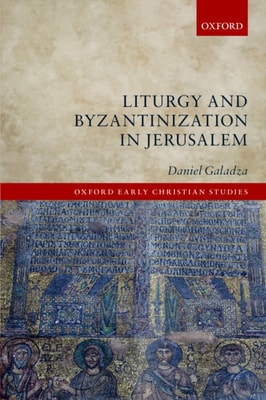
The Church of Jerusalem, the 'mother of the churches of God', influenced all of Christendom before it underwent multiple captivities between the eighth and thirteenth centuries: first, political subjugation to Arab Islamic forces, then displacement of Greek-praying Christians by Crusaders, and finally ritual assimilation to fellow Orthodox Byzantines in Constantinople.
The Church of Jerusalem, the 'mother of the churches of God', influenced all of Christendom before it underwent multiple captivities between the eighth and thirteenth centuries: first, political subjugation to Arab Islamic forces, then displacement of Greek-praying Christians by Crusaders, and finally ritual assimilation to fellow Orthodox Byzantines in Constantinople.
The Oxford Handbook of Russian Religious Thought is an authoritative new reference and interpretive volume detailing the origins, development, and influence of one of the richest aspects of Russian cultural and intellectual life - its religious ideas.
The Oxford Handbook of Russian Religious Thought is an authoritative new reference and interpretive volume detailing the origins, development, and influence of one of the richest aspects of Russian cultural and intellectual life - its religious ideas.
Spanning the divide between Europe and Asia, Russia is a multi-ethnic empire with a huge territory, strategically placed and abundantly provided with natural resources.
Spanning the divide between Europe and Asia, Russia is a multi-ethnic empire with a huge territory, strategically placed and abundantly provided with natural resources.
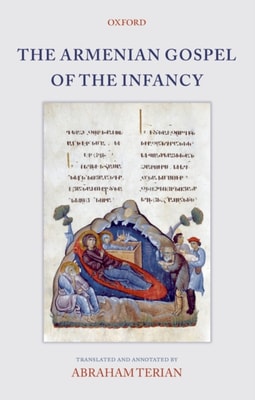
The various versions of the Infancy Gospels illustrate how stories about the Virgin and Child lend themselves to be told and retold - much like the stories in the canonical Gospels.
The Council of Chalcedon in 451 divided eastern Christianity, with those who were later called Syrian Orthodox among the Christians in the near eastern provinces who refused to accept the decisions of the council.
This volume, the first in a major new series which will provide authoritative texts of key non-canonical gospel writings, comprises a critical edition, with full translations, of all the extant manuscripts of the Gospel of Mary.
In seventeenth-century Europe the Copts, or the Egyptian members of the Church of Alexandria, were widely believed to hold the key to an ancient wisdom and an ancient theology.
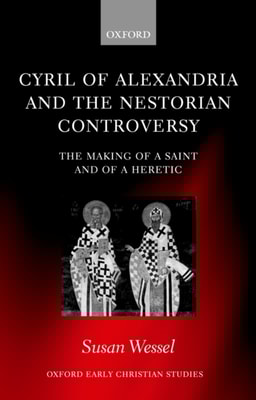
What were the historical and cultural processes by which Cyril of Alexandria was elevated to canonical status while his opponent, Nestorius, bishop of Constantinople, was made into a heretic?
Deification in the Greek patristic tradition was the fulfilment of the destiny for which humanity was created - not merely salvation from sin but entry into the fullness of the divine life of the Trinity.
This book explores the relationship between socialist psychiatry and political ideology during the Cold War, tracing Yugoslav 'psy' sciences as they experienced multiple internationalisations and globalisations in the post-WWII period.
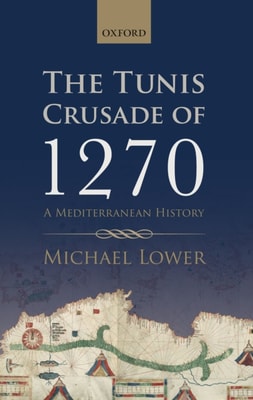
Why did the last of the major European campaigns to reclaim Jerusalem end in an attack on Tunis, a peaceful North African port city thousands of miles from the Holy Land?
In the age of the Theodosian dynasty and the establishment of Christianity as the only legitimate religion of the Roman Empire, few figures are more pivotal in the power politics of the Christian church than archbishop Theophilus of Alexandria (385-412).
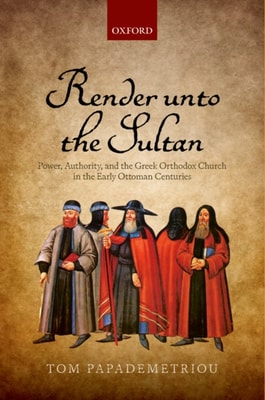
The received wisdom about the nature of the Greek Orthodox Church in the Ottoman Empire is that Sultan Mehmed II reestablished the Patriarchate of Constantinople as both a political and a religious authority to govern the post-Byzantine Greek community.
At the beginning of the thirteenth century Byzantium was still one of the most influential states in the eastern Mediterranean, possessing two-thirds of the Balkans and almost half of Asia Minor.
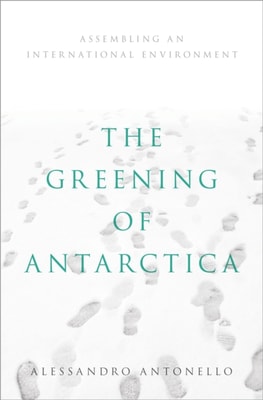
In The Greening of Antarctica Alessandro Antonello investigates the development of an international regime of environmental protection and management between the signing of the Antarctic Treaty in 1959 and the signing of the Convention on the Conservation of Antarctic Marine Living Resources in 1980.
In The Greening of Antarctica Alessandro Antonello investigates the development of an international regime of environmental protection and management between the signing of the Antarctic Treaty in 1959 and the signing of the Convention on the Conservation of Antarctic Marine Living Resources in 1980.
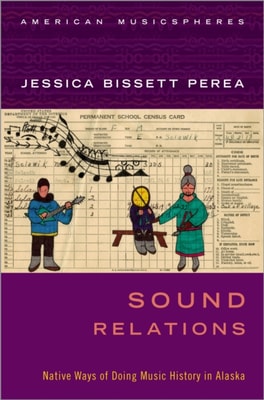
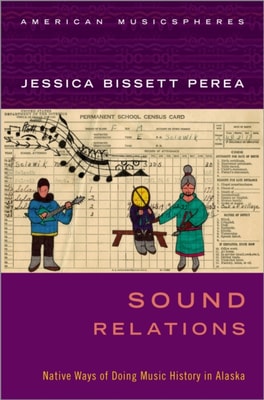
Sound Relations delves into histories of Inuit musical life in Alaska to register the significance of sound as integral to self-determination and sovereignty.
Sound Relations delves into histories of Inuit musical life in Alaska to register the significance of sound as integral to self-determination and sovereignty.