The Papacy and the Orthodox examines the centuries-long debate over the primacy and authority of the Bishop of Rome, especially in relation to the Christian East, and offers a comprehensive history of the debate and its underlying theological issues.
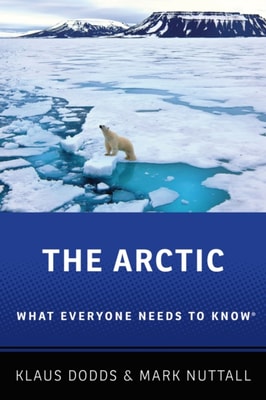
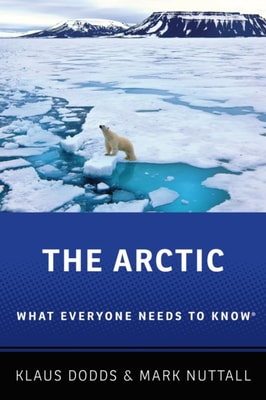
Conversations defining the Arctic region often provoke debate and controversy -- for scientists, this lies in the imprecise and imaginary line known as the Arctic Circle; for countries like Canada, Russia, the United States, and Denmark, such discussions are based in competition for land and resources; for indigenous communities, those discussions are also rooted in issues of rights.
Conversations defining the Arctic region often provoke debate and controversy -- for scientists, this lies in the imprecise and imaginary line known as the Arctic Circle; for countries like Canada, Russia, the United States, and Denmark, such discussions are based in competition for land and resources; for indigenous communities, those discussions are also rooted in issues of rights.
The North American Arctic was one of the last regions on Earth to be settled by humans, due to its extreme climate, limited range of resources, and remoteness from populated areas.
The North American Arctic was one of the last regions on Earth to be settled by humans, due to its extreme climate, limited range of resources, and remoteness from populated areas.
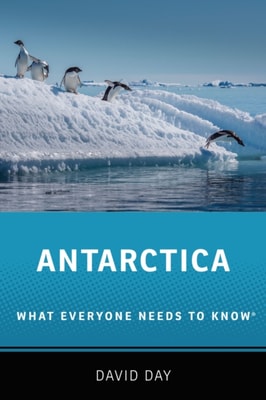
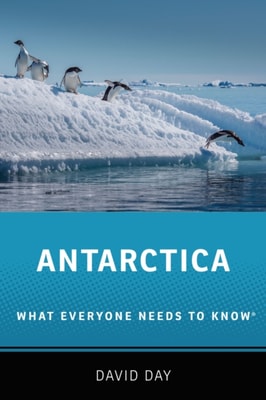
Perpetually covered in ice and snow, the mountainous Antarctic Peninsula stretches southwardd towards the South Pole where it merges with the largest and coldest mass of ice anywhere on the planet.
Perpetually covered in ice and snow, the mountainous Antarctic Peninsula stretches southwardd towards the South Pole where it merges with the largest and coldest mass of ice anywhere on the planet.
The Papacy and the Orthodox examines the centuries-long debate over the primacy and authority of the Bishop of Rome, especially in relation to the Christian East, and offers a comprehensive history of the debate and its underlying theological issues.
Throughout the ages, interpreters of the Christian scriptures have been wonderfully creative in seeking to understand and bring out the wonders of these ancient writings.
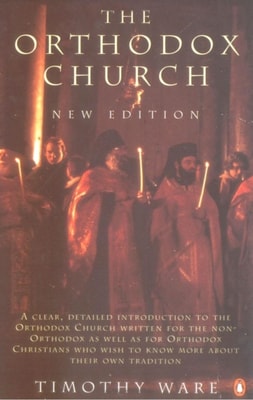
Since its first publication thirty years ago, Timothy Ware s book has become established throughout the English-speaking world as the standard introduction to the Orthodox Church.
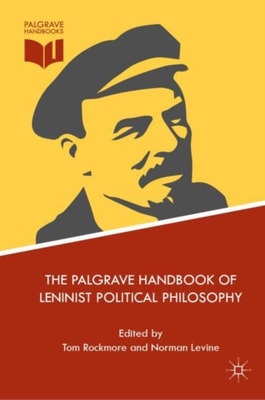
This intellectually discomfiting, disturbingly provocative, yet still thoroughly scholarly Handbook reproduces the intellectual ferment that accompanied the Russian Revolution including the wholly polarising effect at that time of Vladimir Ilyich Lenin.
The Rout of the German-Fascist Troops in Belorussia in 1944 covers the Red Army's Belorussian strategic operation: the linchpin of the 10 major Soviet offensive efforts launched that year to clear the country of the invader.
Translated from the original German Lenin Neuentdecken and available in English for the first time, this volume rediscovers Lenin as a strategic socialist thinker through close examination of his collected works and correspondence.
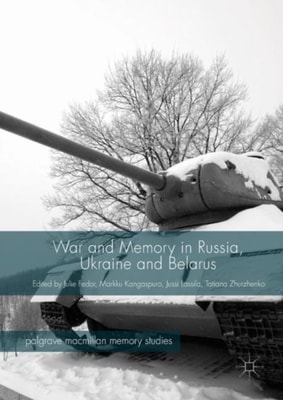
This edited collection contributes to the current vivid multidisciplinary debate on East European memory politics and the post-communist instrumentalization and re-mythologization of World War II memories.
This book tells the story of local-level controls on liquor licensing ('local option') that emerged during the anti-alcohol temperance movement of the late 19th and early 20th centuries.
This book discusses historical continuities and discontinuities between the Polish-Lithuanian Commonwealth, interwar Poland, the Polish People's Republic, and contemporary Poland.
Countless attempts at analyzing Russia's actions focus on Putin to understand Russia's military imbroglio in Ukraine, hostility towards America, and disdain of 'Gayropa'.
This book unravels the paradoxical denigration of the first significant group of free (non-convict), working-class emigrants to the Australian colony of New South Wales in the 1830s.
On the 100th anniversary of the Russian Revolution, the epic story of an enormous apartment building where Communist true believers lived before their destructionThe House of Government is unlike any other book about the Russian Revolution and the Soviet experiment.
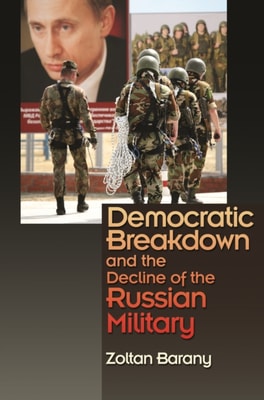
A rare, behind-the-scenes look at Russian military politicsWhy have Russian generals acquired an important political position since the Soviet Union's collapse while at the same time the effectiveness of their forces has deteriorated?
Russian Orthodoxy Resurgent is the first book to fully explore the expansive and ill-understood role that Russia's ancient Christian faith has played in the fall of Soviet Communism and in the rise of Russian nationalism today.
The book is the first attempt to investigate how and to what extent authoritarian (personalistic) regimes fail to provide fundamental goods and services.
This book focuses upon the secret agricultural biological warfare programme codenamed Ekologiya - which was pursued by the Soviet Union from 1958 through to the collapse of the USSR in 1991.
The mesmerizing, larger-than-life tale of an eccentric adventurer who traversed some of the greatest frontiers of the twentieth century, from uncharted Arctic wastelands to the underground resistance networks of World War II.
Muchos analistas creían, cuando se aprobó la Ley 135 de 1961, que la mala distribución de la tierra tenía efectos muy negativos sobre el crecimiento y sobre la tranquilidad del país.
The World Today Series: Russia and Eurasia deals with twelve sovereign states that became independent following the collapse of the Soviet Union in December 1991.
*LONGLISTED FOR THE 2024 HWA NON-FICTION CROWN AWARD*'Immensely readable, emotional and important'KAVITA PURI'A poignant exploration of empire, community and family'AANCHAL MALHOTRA'Full of the sights, smells and tastes of what most remember as a lost utopia'SPECTATORUganda, August 1972.
In this expansive book, David Narrett shows how the United States emerged as a successor empire to Great Britain through rivalry with Spain in the Mississippi Valley and Gulf Coast.
The England We Know: Russian Voices Abroad is based on a series of interviews, recorded between 2019 and 2021, with twelve Russophone immigrants—those who have achieved success and those who haven’t, the well-educated and the blue-collar—interpolated with the author’s memoir.