Water for Gotham tells the spirited story of New York's evolution as a great city by examining its struggle for that vital and basic element--clean water.
Finalist for the National Book Critics Circle Award in BiographyA double portrait of two of America's most influential writers that reveals the surprising connections between themand their uncanny relevance to our age of crisisUp from the Depths tells the interconnected stories of two of the most important writers in American historythe novelist and poet Herman Melville (18191891) and one of his earliest biographers, the literary critic and historian Lewis Mumford (18951990).
The Politics of Whiteness presents the first sustained analysis of white racial identity among workers in what was the South's largest industry--the textile industry--for much of the twentieth century.
How women preserved the power of the Catholic Church in Mexican political lifeWhat accounts for the enduring power of the Catholic Church, which withstood widespread and sustained anticlerical opposition in Mexico?
This book traces the history of the Maya Indians of Yucatan, Mexico,during a four-hundred-year period from late preconquest times throughthe end of Spanish rule in 1821.
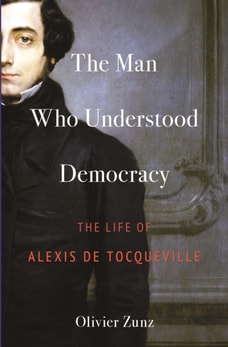
A definitive biography of the French aristocrat who became one of democracy's greatest championsIn 1831, at the age of twenty-five, Alexis de Tocqueville made his fateful journey to America, where he observed the thrilling reality of a functioning democracy.
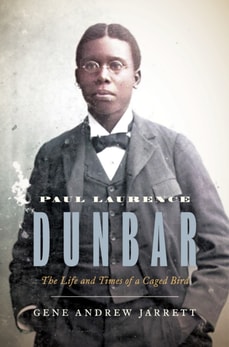
The definitive biography of a pivotal figure in American literary historyA major poet, Paul Laurence Dunbar (18721906) was one of the first African American writers to garner international recognition in the wake of emancipation.
Tracing the rise of evangelicalism and the decline of mainline Protestantism in American religious and cultural lifeHow did American Christianity become synonymous with conservative white evangelicalism?
This classic account of interwar diplomacy examines the curious fate of the diplomat, "e;the honest man sent to lie abroad for the good of his country,"e; in the capitals of a darkening Europe.
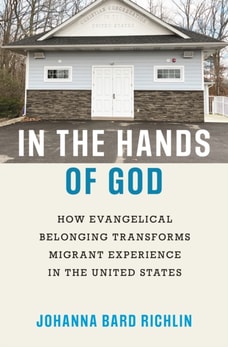
How evangelical churches in the United States convert migrant distress into positive religious devotionWhy do migrants become more deeply evangelical in the United States and how does this religious identity alter their self-understanding?
In this classic interpretation of the 1930s rise of industrial unionism, Gary Gerstle challenges the popular historical notion that American workers' embrace of "e;Americanism"e; and other patriotic sentiments in the post-World War I years indicated their fundamental political conservatism.
This comprehensive and in-depth look at southern politics in the United States challenges conventional notions about the rise of the Republican Party in the South.
A panoramic history of American individualism from its nineteenth-century origins to today's bitterly divided politicsIndividualism is a defining feature of American public life.
The most comprehensive and up-to-date exploration of one of the most important religious orders in the modern worldSince its founding by Ignatius of Loyola in 1540, the Society of Jesus-more commonly known as the Jesuits-has played a critical role in the events of modern history.
A comprehensive history of censorship in modern BritainFor Victorian lawmakers and judges, the question of whether a book should be allowed to circulate freely depended on whether it was sold to readers whose mental and moral capacities were in doubt, by which they meant the increasingly literate and enfranchised working classes.
This book presents the history of the Gomez, an elite family of Mexico that today includes several hundred individuals, plus their spouses and the families of their spouses, all living in Mexico City.
Divided We Stand is a study of how class and race have intersected in American society--above all, in the "e;making"e; and remaking of the American working class in the nineteenth and twentieth centuries.
A necessary reckoning with America's troubled history of injustice to Indigenous peopleAfter One Hundred Winters confronts the harsh truth that the United States was founded on the violent dispossession of Indigenous people and asks what reconciliation might mean in light of this haunted history.
From going AWOL to collaborating with communists, assaulting fellow servicemen to marrying without permission, military crime during the Cold War offers a telling glimpse into a military undergoing a demographic and legal transformation.
Beginning with the restoration of the Bourbon monarchy in 1875 and ending with the death of General Francisco Franco in 1975, this book explores the intersection of education and nationalism in Spain.
In this engaging new book, Howard Chudacoff describes a special and fascinating world: the urban bachelor life that took shape in the late nineteenth century, when a significant population of single men migrated to American cities.
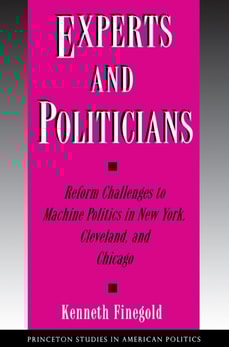
During the Progressive Era, reform candidates in New York, Cleveland, and Chicago challenged the status quo--with strikingly different results: brief triumph in New York, sustained success in Cleveland, and utter failure in Chicago.
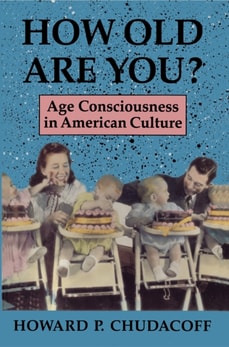
Most Americans take it for granted that a thirteen-year-old in the fifth grade is "e;behind schedule,"e; that "e;teenagers who marry "e;too early"e; are in for trouble, and that a seventy-five-year-old will be pleased at being told, "e;You look young for your age.
This book examines a remarkable political phenomenon--the dramatic shift of black voters from the Republican to the Democratic party in the 1930s, a shift all the more striking in light of the Democrats' indifference to racial concerns.
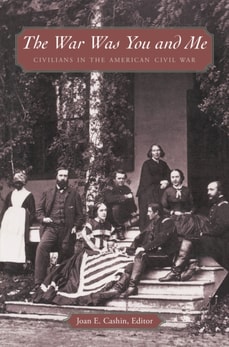
Though civilians constituted the majority of the nation's population and were intimately involved with almost every aspect of the war, we know little about the civilian experience of the Civil War.
A compelling history of the German ethnologists who were inspired by Prussian polymath and explorer Alexander von HumboldtThe Berlin Ethnological Museum is one of the world's largest and most important anthropological museums, housing more than a half million objects collected from around the globe.
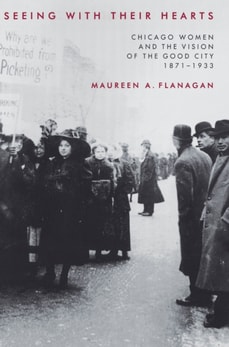
At the turn of the last century, as industrialists and workers made Chicago the hardworking City of Big Shoulders celebrated by Carl Sandburg, Chicago women articulated an alternative City of Homes in which the welfare of residents would be the municipal government's principal purpose.
From its earliest days under English rule, New York City had an unusually diverse ethnic makeup, with substantial numbers of Dutch, English, Scottish, Irish, French, German, and Jewish immigrants, as well as a large African-American population.
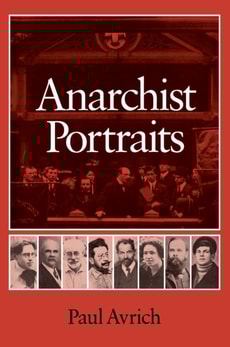
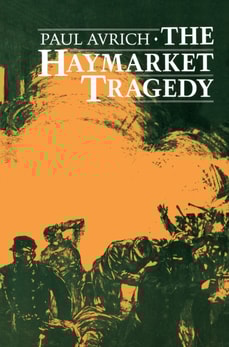
This is the first paperback edition of a moving appraisal of the infamous Haymarket bombing (May 1886) and the trial that followed it--a trial that was a cause celebre in the 1880s and that has since been recognized as one of the most unjust in the annals of American jurisprudence.
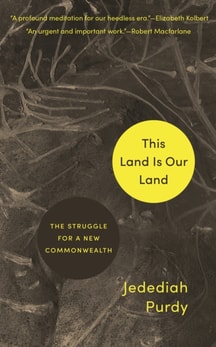
From one of our finest writers and leading environmental thinkers, a powerful book about how the land we share divides us-and how it could unite usToday, we are at a turning point as we face ecological and political crises that are rooted in conflicts over the land itself.
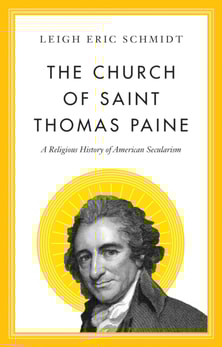
The forgotten story of the nineteenth-century freethinkers and twentieth-century humanists who tried to build their own secular religionIn The Church of Saint Thomas Paine, Leigh Eric Schmidt tells the surprising story of how freethinking liberals in nineteenth-century America promoted a secular religion of humanity centered on the deistic revolutionary Thomas Paine (1737-1809) and how their descendants eventually became embroiled in the culture wars of the late twentieth century.
The era of the American Revolution was one of violent and unpredictable social, economic, and political change, and the dislocations of the period were most severely felt in the South.