Over the course of three centuries, American settlers helped to create the richest, most powerful nation in human history, even as they killed and displaced millions.
Hybrid Knowledge in the Early East India Company World presents a new interpretation of the development of the English East India Company between 1660 and 1720.
The book brings together original, state-of-the-art historical research from several continents and examines how mainly local peasant societies responded to colonial pressures to produce a range of different commodities.
This volume of essays focuses upon Britain's international and imperial role from the mid-Victorian era through until the immediate aftermath of the Second World War.
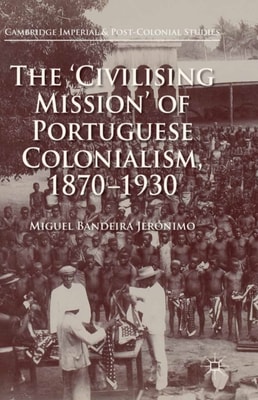
This book provides an historical, critical analysis of the doctrine of 'civilising mission' in Portuguese colonialism in the crucial period from 1870 to 1930.
This book looks at the reasons behind the emergence of a Catalan nationalist movement from the late 1880s, one of the most important developments that took place in nineteenth-century Spain, with the 'Catalan question' thereafter never far from the centre of the Spanish political stage.
Drawing on a wide range of British and Argentine sources, this book highlights the importance of the neglected 1960s as the decade in which the dormant Falklands (Malvinas) dispute became reactivated, developing into a dynamic set of bilateral negotiations on the question of sovereignty.
British Burma in the New Century draws upon neglected but talented colonial authors to portray Burma between 1895 and 1918, which was the apogee of British governance.
India and the Quest for One World revolutionizes the history of human rights, with dramatic impact on some of the most contentious debates of our time, by capturing the exceptional efforts of Mahatma Gandhi and the Nehrus to counter the divisions of the Cold War with an uplifting new vision of justice built on the principle of "e;unity in diversity.
Moving beyond the current fixation on "e;state construction,"e; the interdisciplinary work gathered here explores regulatory authority in South Sudan's borderlands from both contemporary and historical perspectives.
Why did the British empire expand so dramatically in the late eighteenth and nineteenth centuries - and why did it then collapse so rapidly after the Second World War?
Analyzing a wide body of cultural texts, including literature, film, and other visual arts, Gender, Empire, and Postcolony: Luso-Afro-Brazilian Intersections is a diverse collection of essays on gender in Portuguese colonialism and Lusophone postcolonialism.
Seeing the critical phase in the construction of a Turkish historical imagination between 1860 to 1950 disregarding the political disruptions, this book demonstrates how history and historical imagery had been instrumental in the nation-building process.
Messianism Against Christology: Resistance Movements, Folk Arts and Empire is a work committed to re-thinking the Christian tradition from the point of view of messianic movements of eco-sustainability and social justice rather than magnified individuals.
This much-needed study of the British Empire Exhibition reveals durable, persistent connections between empire and domestic society in Britain during the interwar years.
Drawing upon economic history, cultural studies, intellectual history and the history of science and medicine, this collection of case studies examines the transatlantic transfer and transformation of goods and ideas, with particular emphasis on their reception in Europe.
The book shows how teachers struggled to liberate their country's education system from the legacy of dictatorship, combining a general evaluation of the phenomenon with intimate glances at the people who drove it forward.
Drawing on recently declassified government files, private papers and interviews, this book argues that through a combination of preventative diplomacy and robust defence planning, the Labour government of 1974-79 succeeded in maintaining peace, avoiding the fate of its Tory successors.
The book is a new study that examines the contrasting extension of the Anglican Church to England's first two colonies, Ireland and Virginia in the 17th and 18th centuries.
An in-depth analysis of Great Britain's policy in the oil-rich Persian Gulf region during the last years of British imperialism in the area, covering the period from the independence of Kuwait to the decision of the Wilson Government to withdraw from the Gulf.
Covering two hundred years, this groundbreaking book brings together essays on borderlands by leading experts in the modern history of the Americas, Europe, Africa, Asia and Australia to offer the first historical study of borderlands with a global reach.
Using newly-discovered documentation from the French military archives, A History of Violence in the Early Algerian Colony offers a comprehensive study of the forms of violence adopted by the French Army in Africa.
This book uses identity theories to explore the struggles of indigenous peoples against the domination of the settler imaginary in Australia, Canada, New Zealand and the United States.
This book explores the decision of the British Empire to import Chinese labour to southern Africa despite the already tense racial situation in the region.
Britain's Imperial Muse explores the classics' contribution to British imperialism and to the experience of empire in India through the long 19th century.
This book examines the links between Britain's withdrawal from its east of Suez role and the establishment of South-East Asian regional security arrangements.
Harold Macmillan's 'Wind of Change' speech, delivered to the South African parliament in Cape Town at the end of a landmark six-week African tour, presaged the end of the British Empire in Africa.
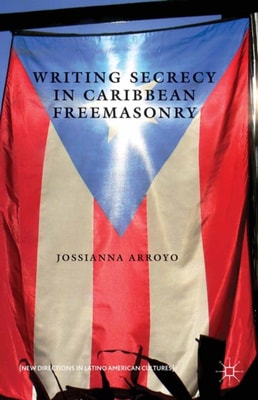
Addressing the transnational relationships of Freemasonry, politics, and culture in the field of Latin American and Caribbean literatures and cultures, Writing Secrecy provides insight into Pan-Caribbean, transnational and diasporic formations of these Masonic lodges and their influences on political and cultural discourses in the Americas.
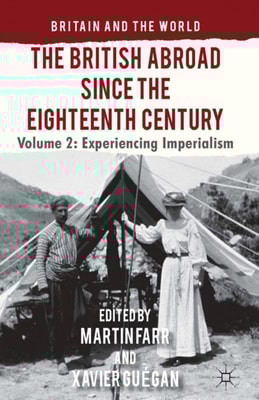
This is a collection of twelve interdisciplinary essays from international scholars concerned with examining the British experience of Empire since the eighteenth century.
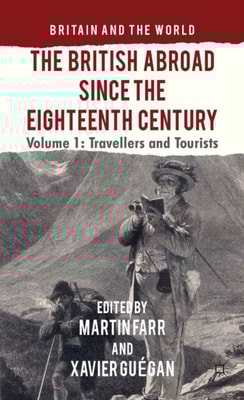
This book considers the British travelling beyond their isles over the last three hundred years, and through a range of interdisciplinary perspectives reflects on their taste for discovery and self-discovery both through the exploration - and exploitation - of other lands and peoples.
This study investigates the various extreme-rightist leagues in Algeria, with particular attention to certain key themes, among them the rabid xenophobia directed at the Jewish population and local Muslims.
This book offers a unique and fascinating examination of British and Irish responses to Italian independence and unification in the mid-nineteenth century.
This study reveals the more complex reality of Early Modern Naples than what has commonly been represented, in which royal representatives in the city came to depend on the assistance of a series of merchants, financiers, and bureaucrats who shared a common identity as conversos, descendants of converted Jews.
Exploring the ways in which the GDR has been remembered since its demise in 1989/90, this volume asks how memory of the former state continues to shape contemporary Germany.
Bronwen Everill offers a new perspective on African global history, applying a comparative approach to freed slave settlers in Sierra Leone and Liberia to understand their role in the anti-slavery colonization movements of Britain and America.
This book examines the partnerships between Britain's famed redcoats and the foreign corps that were a consistent and valuable part of Britain's military endeavors in the eighteenth century.