Today, the East African state of Tanzania is renowned for wildlife preserves such as the Serengeti National Park, the Ngorongoro Conservation Area, and the Selous Game Reserve.
Post-development advocates and decolonial thinkers are calling for radical alternatives to development, but how do these ideals sit with the day-to-day reality of marginalised communities struggling with poverty, precarity, and the deprivation of human rights?
This volume explores how imperial powers established and expanded their empires through decisions that were often based on exaggerated expectations and wishful thinking, rather than on reasoned and scientific policies.
Cultures of decolonisation combines studies of visual, literary and material cultures in order to explore the complexities of the 'end of empire' as a process.
This volume explores how imperial powers established and expanded their empires through decisions that were often based on exaggerated expectations and wishful thinking, rather than on reasoned and scientific policies.
Cultures of decolonisation combines studies of visual, literary and material cultures in order to explore the complexities of the 'end of empire' as a process.
This study of the British colonial administrator James Tod (1782-1835), who spent five years in north-western India (1818-22) collecting every conceivable type of material of historical or cultural interest on the Rajputs and the Gujaratis, gives special attention to his role as a mediator of knowledge about this little-known region of the British Empire in the early nineteenth century to British and European audiences.
This study of the British colonial administrator James Tod (1782-1835), who spent five years in north-western India (1818-22) collecting every conceivable type of material of historical or cultural interest on the Rajputs and the Gujaratis, gives special attention to his role as a mediator of knowledge about this little-known region of the British Empire in the early nineteenth century to British and European audiences.
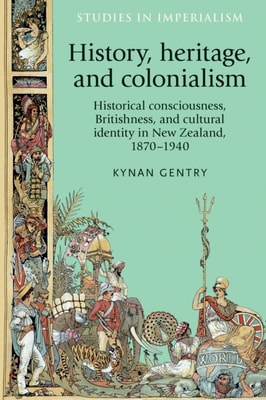
History, heritage, and colonialism explores the politics of history-making and interest in preserving the material remnants of the past in late-nineteenth and early-twentieth-century colonial society, looking at both indigenous pasts and those of European origin.
History, heritage, and colonialism explores the politics of history-making and interest in preserving the material remnants of the past in late-nineteenth and early-twentieth-century colonial society, looking at both indigenous pasts and those of European origin.
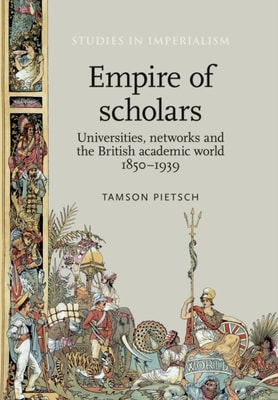
At the start of the twenty-first century we are acutely conscious that universities operate within an entangled world of international scholarly connection.
At the start of the twenty-first century we are acutely conscious that universities operate within an entangled world of international scholarly connection.
Engines for Empire examines the use of the railway by the British army from the 1830s to 1914, a period of domestic political strife and unprecedented imperial expansion.
On July 8, 2014, Israel launched air strikes and a ground invasion of Gaza, that lasted 51 days, leaving over 2,000 people dead, the vast majority of whom were Gazan civilians.
For more than six decades, Israel and Palestine have been the center of one of the world's most widely reported yet least understood human rights crises.
Israel's 2009 invasion of Gaza was an act of aggression that killed over a thousand Palestinians and devastated the infrastructure of an already impoverished enclave.
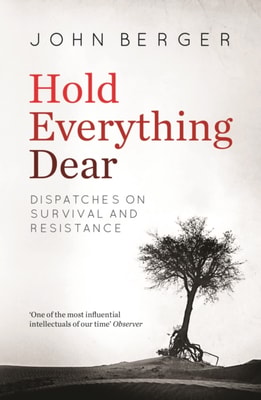
From the War on Terror to resistance in Ramallah and traumatic dislocation in the Middle East, Berger explores the uses of art as an instrument of political resistance.
Much has been written on the how colonial subjects took up British and European ideas and turned them against empire when making claims to freedom and self-determination.
Operation Protective Edge, Israel's seven-week bombing campaign and ground invasion of Gaza in the summer of 2014, resulted in half a million displaced Gazans, tens of thousands of destroyed homes, and more than 2,000 deaths-and, yet, it was only the latest in a long series of assaults endured by Palestinians isolated in Gaza.
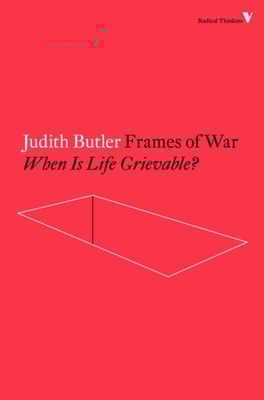
In this urgent response to violence, racism and increasingly aggressive methods of coercion, Judith Butler explores the media's portrayal of armed conflict, a process integral to how the West prosecutes its wars.
"Para gran parte de la historiografía, la figura de José Celestino Mutis remite inmediatamente al proceso de Ilustración e incluso a la independencia de lo que hoy es Colombia.