Sir Kennedy Trevaskis was the last High Commissioner of South Arabia - a role he held from 1963-1965, which provided the pinnacle of his career and yet also his ultimate failure.
With fascinating extracts from his own writings, this book reveals the captivating travels and adventures of Arthur Conan Doyle - the creator of Sherlock Holmes.
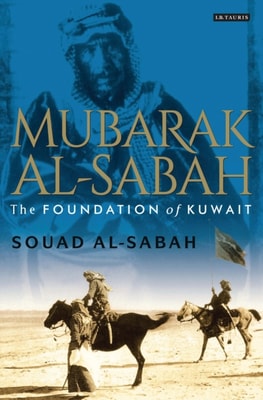
Amidst political upheaval and the decline of the Ottoman Empire, the State of Kuwait emerged as an independent country under British protection in 1899, with Sheikh Mubarak Al Sabah widely accredited as the instrument of its foundation.
Early twentieth-century Iran had been dominated by the competing influences of the two great imperial powers of the time - Russia and Britain - making it difficult for a third power to establish a foothold.
Russians in Iran seeks to challenge the traditional narrative regarding Russian involvement Iran and to show that whilst Russia's historical involvement in Iran is longstanding it is nonetheless much misunderstood.
In the mountains and jungles of occupied Burma during World War II, British special forces launched a series of secret operations, assisted by parts of the Burmese population.
While jihad has been the subject of countless studies in the wake of recent terrorist attacks, scholarship on the topic has so far paid little attention to South Asian Islam and, more specifically, its place in South Asian history.
Railway expansion was the great industrial project of the late 19th century, and the Great Powers built railways at speed and reaped great commercial benefits.
From Empire to Orient offers an alternative perspective on Britain's late imperial period by looking at the lives and the writings of the men who chose to defy the conventional social and political attitudes of the British ruling classes towards the Near East.
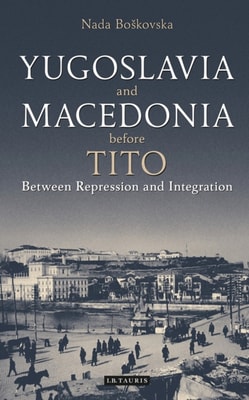
Held together by apparatchiks and, later, Tito's charisma, Yugoslavia never really incorporated separate Balkan nationalisms into the Pan-Slavic ideal.
Eva Per n remains Argentina's best-known and most iconic personality, surpassing even sporting superstars such as Diego Maradona or Lionel Messi, and far outlasting her own husband, President Juan Domingo Per n - himself a remarkable and charismatic political leader without whom she, as an uneducated woman in an elitist and male-dominated society, could not have existed as a political figure.
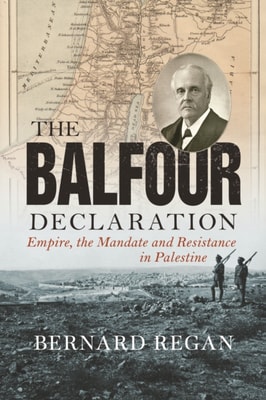
On November 2, 1917, the British government, represented by Foreign Minister Arthur Balfour, declared that they were in favor of 'the establishment in Palestine of a national home for the Jewish people.
The Parthenon Marbles (formerly known as the Elgin Marbles), designed and executed by Pheidias to adorn the Parthenon, are perhaps the greatest of all classical sculptures.
For centuries, Russian imperialism has shaped the fate of its neighbours, from the tsarist conquests to Soviet domination and today's relentless aggression.
Providing an accessible and comprehensive overview, The Story of the Salem Witch Trials explores the events between June 10 and September 22, 1692, when nineteen people were hanged, one was pressed to death and over 150 were jailed for practicing witchcraft in Salem, Massachusetts.
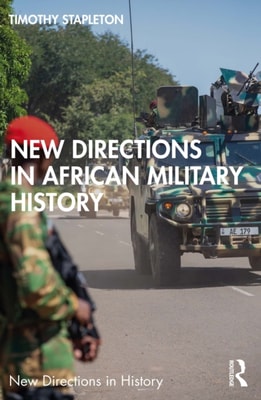
New Directions in African Military History takes a thematic approach to the history of war and military structures in Africa and highlights the under-researched areas.
This book compares the systems of exploitative race relations associated with two racist regimes - slavery in the British colonial Caribbean and forced labour in the Holocaust in Germany and the Nazi-occupied lands in Europe.
Bosnian Muslims, East African Masai, Czech-speaking Austrians, North American indigenous peoples, and Jewish immigrants from across Europe the nineteenth-century British and Habsburg Empires were characterized by incredible cultural and racial-ethnic diversity.
For much of the eighteenth and nineteenth centuries, the British East India Company consolidated its rule over India, evolving from a trading venture to a colonial administrative force.
While the study of indigenous intermediaries is today the focus of some of the most interesting research in the historiography of colonialism, its roots extend back to at least the 1970s.
In what ways did Europeans interact with the diversity of people they encountered on other continents in the context of colonial expansion, and with the peasant or ethnic Other at home?
World War I utterly transformed the lives of Jews around the world: it allowed them to display their patriotism, to dispel antisemitic myths about Jewish cowardice, and to fight for Jewish rights.
Prior to World War I, Britain was at the center of global relations, utilizing tactics of diplomacy as it broke through the old alliances of European states.
Historical research into the Armenian Genocide has grown tremendously in recent years, but much of it has focused on large-scale questions related to Ottoman policy or the scope of the killing.
Human variation represented a central research topic for life scientists and posed challenging administrative issues for colonial bureaucrats in the first half of the 20th century.
Far from the battlefront, hundreds of thousands of workers toiled in Bohemian factories over the course of World War I, and their lives were inescapably shaped by the conflict.
Today, the East African state of Tanzania is renowned for wildlife preserves such as the Serengeti National Park, the Ngorongoro Conservation Area, and the Selous Game Reserve.