This book is the first analysis of the dynamics of British press reporting of India and the attempts made by the British Government to manipulate press coverage as part of a strategy of imperial control.
In the new world order mapped out by Japanese and Western imperialism in East Asia after the mid-nineteenth century opium wars, communities of merchants and settlers took root in China and Korea.
Drawing on the latest contemporary research from an internationally acclaimed group of scholars, Law, history, colonialism brings together the disciplines of law, history and post-colonial studies in a singular exploration of imperialism.
This book marks an important new intervention into a vibrant area of scholarship, creating a dialogue between the histories of imperialism and of women and gender.
This book is the first major attempt to examine the cultural manifestations of the demise of imperialism as a social and political ideology in post-war Britain.
This is a study of Britain's presence in China both at its peak, and during its inter-war dissolution in the face of assertive Chinese nationalism and declining British diplomatic support.
Established in the belief that imperialism as a cultural phenomenon had as significant an effect on the dominant as it did on the subordinate societies, the "e;Studies in Imperialism"e; series seeks to develop the new socio-cultural approach which has emerged through cross-disciplinary work on popular culture, media studies, art history, the study of education and religion, sports history and children's literature.
Based on years of research in libraries and archives in England, Germany, India and Switzerland, this book offers a new interpretation of global migration from the early nineteenth until the early twentieth century.
Based on years of research in libraries and archives in England, Germany, India and Switzerland, this book offers a new interpretation of global migration from the early nineteenth until the early twentieth century.
Missionaries and their medicine is a lucid and enthralling study of the encounter between Christian missionaries and an Indian tribal community, the Bhils, in the period 1880 to 1964.
This book examines the distinctive aspects that insiders and outsiders perceived as characteristic of Irish and Scottish ethnic identities in New Zealand.
On the eve of World War II, a small, impoverished group of Africans and West Indians in London dared to imagine the unimaginable: the end of British rule in Africa.
The new activity of trans-continental civil flying in the 1930s is a useful vantage point for viewing the extension of British imperial attitudes and practices.
The Colonisation of Time is a highly original and long overdue examination of the ways that western-European and specifically British concepts and rituals of time were imposed on other cultures as a fundamental component of colonisation during the nineteenth century.
The Colonisation of Time is a highly original and long overdue examination of the ways that western-European and specifically British concepts and rituals of time were imposed on other cultures as a fundamental component of colonisation during the nineteenth century.
Southern Africa played a varied but vital role in Britain's maritime and imperial stories: it was one of the most intricate pieces in the British imperial strategic jigsaw, and representations of southern African landscape and maritime spaces reflect its multifaceted position.
Exhibiting the empire considers how a whole range of cultural products - from paintings, prints, photographs, panoramas and 'popular' texts to ephemera, newspapers and the press, theatre and music, exhibitions, institutions and architecture - were used to record, celebrate and question the development of the British Empire.
Museums and Empire is the first book to examine the origins and development of museums in six major regions if the British Empire in the nineteenth and twentieth centuries.
This is the first book to survey in comparative form the transmission of imperial ideas to the public in six European countries in the nineteenth and twentieth centuries.
This book is a study of the ambitions, activities and achievements of Methodist missionaries in northern Burma from 1887-1966 and the expulsion of the last missionaries by Ne Win.
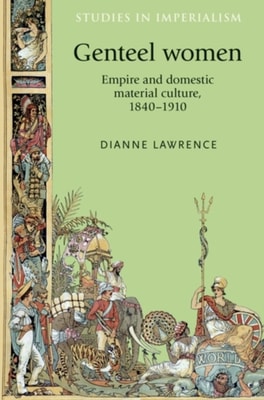
During the latter half of the nineteenth century and the first decades of the twentieth, colonial expansion prompted increasing numbers of genteel women to establish their family homes in far-flung corners of the world.
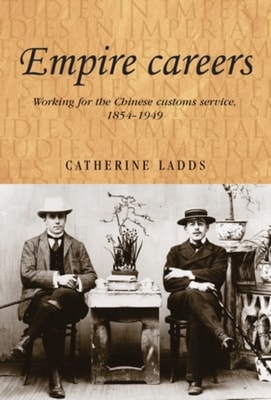
This is the first book-length study of the 11,000 foreign nationals who worked for the Chinese Customs Service between 1854 and1949, exploring how their lives and careers were shaped by imperial ideologies, networks and structures.
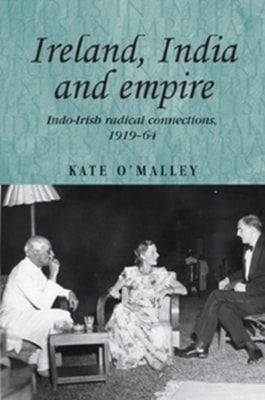
Offering a fresh new perspective on the history of the end of Empire, with the Irish and Indian independence movements as its focus, this book details how each country s nationalist agitators engaged with each other and exchanged ideas.
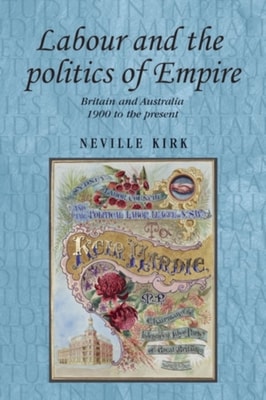
This is a pathbreaking comparative and trans-national study of the neglected influences of nation, empire and race upon the development and electoral fortunes of the Labour Party in Britain and the Australian Labor Party from their formative years of the 1900s to the elections of 2010.
Based on over two hundred and fifty psychiatric case files, this book offers a radical new departure from existing historical accounts of what is still commonly thought of as the most picturesque of Britain's colonies overseas.
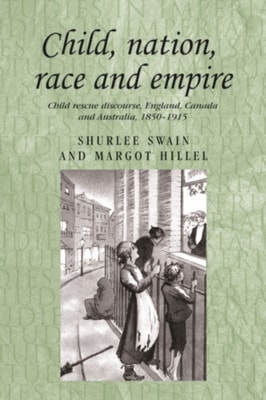
Child, nation, race and empire is an innovative, inter-disciplinary, cross cultural study that contributes to understandings of both contemporary child welfare practices and the complex dynamics of empire.
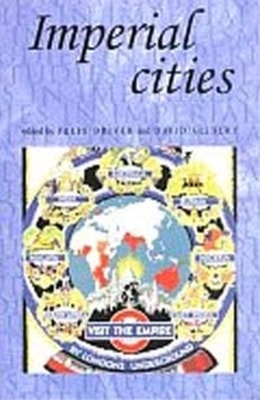
Imperial cities explores the influence of imperialism in the landscapes of modern European cities including London, Paris, Rome, Vienna, Marseilles, Glasgow and Seville.
Engendering whiteness represents a comparative analysis of the complex interweaving of race, gender, social class and sexuality in defining the contours of white women's lives in Barbados and North Carolina during the era of slavery.
This unique collection of essays is the first book to explore the many relationships that developed between Wales and the British overseas empire between 1650 and 1830.