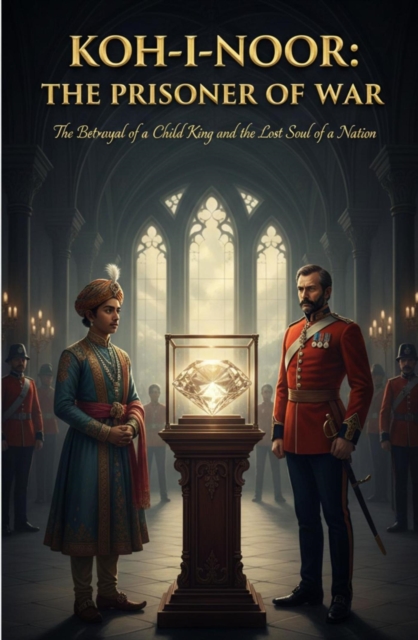
Koh-i-Noor The Prisoner of WarThe Fingerprints of a Child King and the Stolen DNA of a NationThe DNA of the SoilThe story of the KohiNoor does not begin in a kings treasury or on a battlefield it begins deep within the ancient womb of the Indian earth To understand this diamond one must first understand the soil that gave it birth This is not merely a geological occurrence It is as if the very essence of Bharat its spiritual energy and its elemental strength were compressed over billions of years into a single defiant spark of light When we speak of the KohiNoor we are speaking of a kidnapped fragment of our geography It is a piece of the motherland that was torn away yet it carries the silent vibrating frequency of the land it once called homeThe journey starts in the alluvial silts of the Krishna River specifically in the legendary Kollur mines Imagine the sweat and the hope of the ancient miners who waded through the mud their hands feeling for the pulse of the earth These people didnt just see stones they saw the blessings of the earth goddess The KohiNoor was born from this specific mineral DNA Science tells us that diamonds are formed under immense pressure and heat but the human heart knows that this particular stone absorbed the prayers the struggles and the vibrations of an entire civilization It is a mineral witness to the rise and fall of dynasties but its core remains tethered to the Indian sun
ENGMore than just colorful clickbait or pragmatic city grids, maps are often deeply emotional tales: of political projects gone wrong, budding relationships that failed, and countries that vanished.
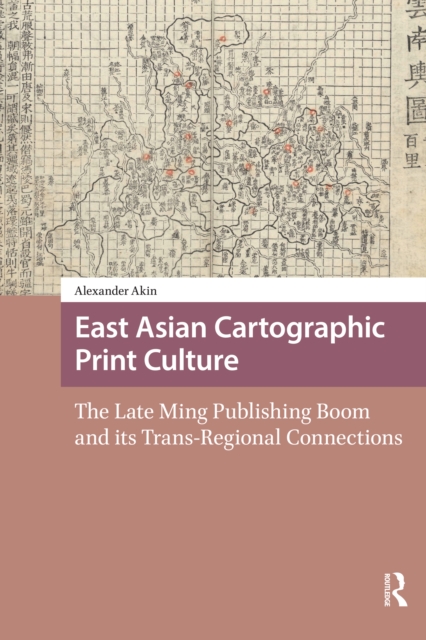
Alexander Akin examines how the expansion of publishing in the late Ming dynasty prompted changes in the nature and circulation of cartographic materials in East Asia.
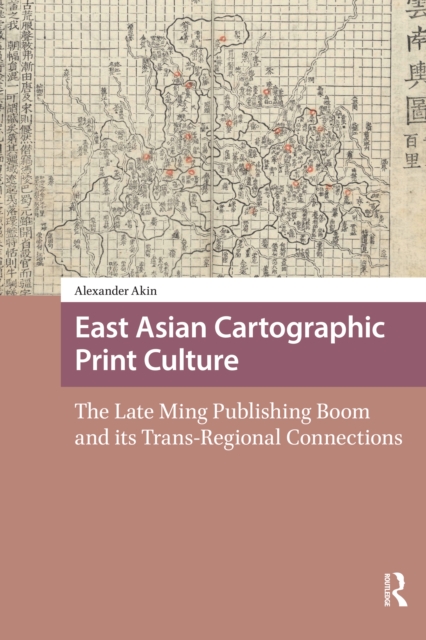
Alexander Akin examines how the expansion of publishing in the late Ming dynasty prompted changes in the nature and circulation of cartographic materials in East Asia.
Motion in Maps, Maps in Motion argues that the mapping of stories, movement, and change should not be understood as an innovation of contemporary cartography, but rather as an important aspect of human cartography with a longer history than might be assumed.
In this study, the appearance and location of shops in Amsterdam during the early modern period is linked to major changes in the urban economy, the size and socio-spatial distribution of its population, and the structure of the urban grid.
Guided by the romantic compass of Turner, Byron, and Ruskin, Victorian travellers to the Dolomites sketched in the mountainous backdrop of Venice a cultural 'Petit Tour' of global significance.
In this study, the appearance and location of shops in Amsterdam during the early modern period is linked to major changes in the urban economy, the size and socio-spatial distribution of its population, and the structure of the urban grid.
Motion in Maps, Maps in Motion argues that the mapping of stories, movement, and change should not be understood as an innovation of contemporary cartography, but rather as an important aspect of human cartography with a longer history than might be assumed.
Guided by the romantic compass of Turner, Byron, and Ruskin, Victorian travellers to the Dolomites sketched in the mountainous backdrop of Venice a cultural 'Petit Tour' of global significance.
A monumental journey through Baltic history and culture, in which we encounter well-known personalities and forgotten ones, and a disconcerting picture of Europe in the twentieth century.
The gripping story of Taiwan, from the flood myths of ancient legend to its 'Asian Tiger' economic miracle - and the looming threat of invasion by China.
Monuments of Diverse Heritage in Early America: Placemaking and Preservation by Black, Indigenous, and Jewish Peoples explores a more inclusive history of preserving public historic sites.
Monuments of Diverse Heritage in Early America: Placemaking and Preservation by Black, Indigenous, and Jewish Peoples explores a more inclusive history of preserving public historic sites.
Bringing together a broad range of case studies from across Europe, this book explores practices implemented to promote the sustainable use of environmental resources from the 16th century until the turn of the 21st century.
Bringing together a broad range of case studies from across Europe, this book explores practices implemented to promote the sustainable use of environmental resources from the 16th century until the turn of the 21st century.
Dieser Sammelband geht den unbewussten Wirkungsweisen gesellschaftlicher Machtverhältnisse nach und plädiert dafür, diese auch in der klinischen Praxis zu adressieren und zu analysieren.
Dieser Sammelband geht den unbewussten Wirkungsweisen gesellschaftlicher Machtverhältnisse nach und plädiert dafür, diese auch in der klinischen Praxis zu adressieren und zu analysieren.
First published in 2010, Maritime Heritage of Southern Peninsular India is a comprehensive exploration of the maritime traditions of the Indian Peninsula, South of 14(deg)N.
First published in 2010, Maritime Heritage of Southern Peninsular India is a comprehensive exploration of the maritime traditions of the Indian Peninsula, South of 14(deg)N.
Winner of the Saltire Society Research Book of the YearWhilst documents and other written material are obvious resources that help shape our view of the past, maps too can say much about a nation's history.
First published in 1925, Historical Geography of England and Wales gives a picturesque account of what has come to be recognized as the 'Historical Geography' of Britain south of the Tweed.
First published in 1925, Historical Geography of England and Wales gives a picturesque account of what has come to be recognized as the 'Historical Geography' of Britain south of the Tweed.
Fernando Esposito erzählt eine Geschichte und Theorie historischer Zeiten und plädiert für einen Aufbruch ins wilde Dickicht einer vielzeitigen Geschichte.
During the Civil War, cities, houses, forests, and soldiers' bodies were transformed into "e;dead heaps of ruins,"e; novel sights in the southern landscape.
Before the novel and the film Deliverance appeared in the early 1970s, any outsiders one met along the Chattooga River were likely serious canoeists or anglers.
Three months after a family vacation in Costa Rica ends in tragedy when two fellow rafters die on the flooded Rio Reventazon, John Lane sets out with friends from his own backyard in upcountry South Carolina to calm his nerves and to paddle to the sea.