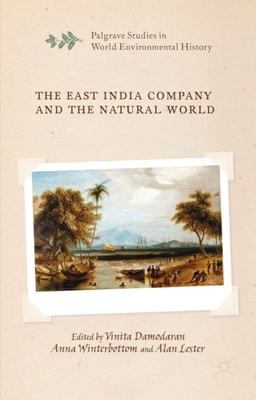
This book is the first to explore the deep and lasting impacts of the largest colonial trading company, the British East India Company on the natural environment.
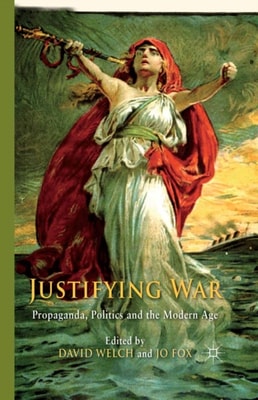
A new assessment of the debates about Just War in the twentieth and twenty-first centuries, from the imperial wars of the nineteenth century through the age of total war, the evolution of human rights discourse and international law, to proportionality during the Cold War and the redefinition of authority with the ascendancy of terror groups.
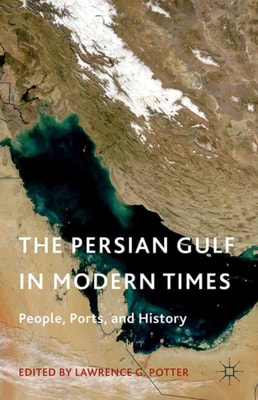
This book explores the historiography, ports, and peoples of the Persian Gulf over the past two centuries, offering a more inclusive history of the region than previously available.
The New Nationalism and the First World War is an edited volume dedicated to a transnational study of the features of the turn-of-the-century nationalism, its manifestations in social and political arenas and the arts, and its influence on the development of the global-scale conflict that was the First World War.
Christopher Hookway has been influential in promoting engagement with pragmatist and naturalist perspectives from classical and contemporary American philosophy.
Christopher Hookway has been influential in promoting engagement with pragmatist and naturalist perspectives from classical and contemporary American philosophy.
This book tackles the difficult challenge of uncovering the pathogenic cause, epidemiological mechanics and broader historical impacts of an extremely deadly third-century ancient Roman pandemic.
This book is designed to help instructors effectively incorporate images and other aspects of material culture into their pedagogy in an engaging and relatable manner.
This collection of 15 accessible essays on neglected philosophical figures and traditions aims to provide readers with concrete access points to less familiar philosophical sources and methods.
Diese Studie befasst sich mit den vielfältigen Identitätskonzepten im Werk von Michael Ende, vor allem mit Patchwork- und Geschlechtsidentitäten, kulturellen und hybriden Identitäten.
The second edition of this influential book addresses how the experiences and claims of non-European 'others' have been rendered invisible to the standard narratives and analytical frameworks of sociological understandings of modernity.
Documenting the reception of the pre-eminent Austrian school reformer Johann Ignaz Felbiger and his pedagogical thought in European histories of education in the nineteenth century, this volume demonstrates how national and religious ideological preferences have propelled the construction of fundamental biases in educational historiography.
Documenting the reception of the pre-eminent Austrian school reformer Johann Ignaz Felbiger and his pedagogical thought in European histories of education in the nineteenth century, this volume demonstrates how national and religious ideological preferences have propelled the construction of fundamental biases in educational historiography.
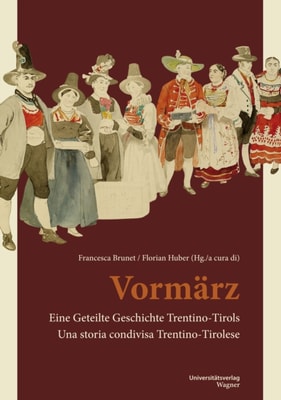
Der Vormärz (1816–1848), die Zeit zwischen den großen europäischen Revolutionen, gehört zu den kompliziertesten Perioden der Tiroler Regionalgeschichte.
This volume investigates competing ideas, images, and stereotypes of a European 'East', exploring its role in defining European and national conceptions of self and other since the eighteenth century.
This volume investigates competing ideas, images, and stereotypes of a European 'East', exploring its role in defining European and national conceptions of self and other since the eighteenth century.
McManus presents an intellectual history of the conservative and reactionary tradition, stretching from Aristotle and Filmer to Alexander Dugin and Patrick Deneen.
Aimed at an international readership, this book offers a representative collection of essays by the German philosopher, Georg Picht (1913-1982), who was a specialist in Greek philosophy, practical philosophy and philosophy of religion.
This book explores the experiences of the ethnic and religious minorities of Iran, such as Jews, Yarsani, Christian, Sabean Mandaean, Bahai, Zoroastrian, Baluch, Kurd, and others and provides a historical overview of their position in society before and after the 1979 Islamic revolution and highlights their contribution to the country's history, diversity, and development.
This book shows how Max Weber's perceptions of the social and political world he inhabited in Wilhelmine Germany were characterized by a nationalist commitment which coloured practically every aspect of his thought, including his social scientific writings and the formulations they expound.
This book shows how Max Weber's perceptions of the social and political world he inhabited in Wilhelmine Germany were characterized by a nationalist commitment which coloured practically every aspect of his thought, including his social scientific writings and the formulations they expound.
This book explores one of the most notorious aspects of the German system of oppression in wartime Poland: the only purpose-built camp for children under the age of 16 years in German-occupied Europe.
This volume addresses the current boom in biographical fictions across the globe, examining the ways in which gendered lives of the past become re-imagined as gendered narratives in fiction.
This book explores continuity and ruptures in the historical use of visual representations in science and related disciplines such as art history and anthropology.
This book brings together leading scholars in the history of science, history of universities, intellectual history, and the history of the Royal Society, to honor Professor Mordechai Feingold.
This textbook introduces readers to the academic scholarship on the history of childhood and youth in sub-Saharan Africa, with a particular focus on the colonial and postcolonial eras.
Focusing on the ancient, medieval, and early-modern eras, this collection considers the beginnings of Sino-Japanese Relations in the Ancient East Asian World, focusing on changes of the East Asian international system.
This second part of the 2 volume collection comprises a collection of essays in English by leading scholars on 19th century institutions and individuals presenting the latest developments in international scholarship on the numismatic world in the long 19th century.