A collection of essays reflecting on Edgar as friend and colleague and on the subjects of his scholarly workCitizen-Scholar comprises essays written in honor of Walter Edgar, South Carolina's preeminent historian and founding director of the University of South Carolina (USC) Institute for Southern Studies.
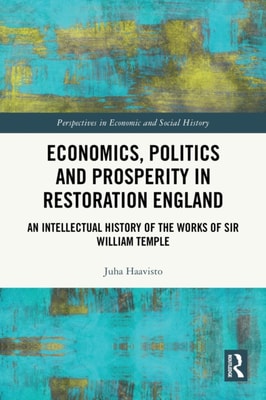
Drawing on key published works, as well as those of his contemporaries, this book explores the political and economic thought of the seventeenth-century diplomat William Temple and his proposals for change in Restoration England and Ireland.
These prominent filmmakers, "e;two of our most provocative and radical voices,"e; discuss American historical events that have been forgotten-or hidden (Katrina vanden Heuvel, editor of The Nation).
It is only in the past two decades that English-speaking scholars have fully breached European language barriers, permitting a comprehensive reexamination of the Napoleonic Wars beyond the limitations of English-, French-, and German-dependent works.
This carefully crafted ebook: "e;The Collected Works of Edward Gibbon"e; is formatted for your eReader with a functional and detailed table of contents.
A collection of essays reflecting on Edgar as friend and colleague and on the subjects of his scholarly workCitizen-Scholar comprises essays written in honor of Walter Edgar, South Carolina's preeminent historian and founding director of the University of South Carolina (USC) Institute for Southern Studies.
This book addresses early modern concepts of the body and the self - focussing on three self-narratives authored by the nobleman Osvaldo Ercole Trapp (1634-1710), a body description from head to foot, autobiographical writings, and a brief chronicle of the House of Trapp-Caldonazzo.
What are the archives of gay and lesbian leather histories, and how have contemporary artists mined these archives to create a queer politics of the present?
What are the archives of gay and lesbian leather histories, and how have contemporary artists mined these archives to create a queer politics of the present?
Acclaimed after the Second World War as England's greatest historian, Sir Lewis Namier was an eastern European immigrant who came to idealise the English gentleman and enjoyed close friendship with leading figures of his day, including Winston Churchill.
Acclaimed after the Second World War as England's greatest historian, Sir Lewis Namier was an eastern European immigrant who came to idealise the English gentleman and enjoyed close friendship with leading figures of his day, including Winston Churchill.
This is a book about the conflict between history and poetry - and historians and poets - in Atlantic World society from the end of the seventeenth century to the present day.
This is a book about the conflict between history and poetry - and historians and poets - in Atlantic World society from the end of the seventeenth century to the present day.
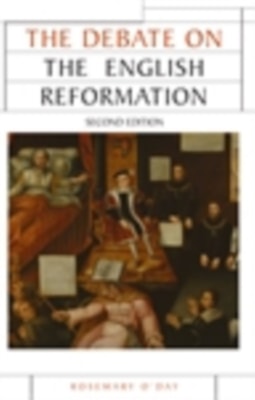
Extensively revised and updated, this new edition of The debate on the English Reformation combines a discussion of successive historical approaches to the English Reformation with a critical review of recent debates in the area, offering a major contribution to modern historiography as well as to Reformation studies.
Extensively revised and updated, this new edition of The debate on the English Reformation combines a discussion of successive historical approaches to the English Reformation with a critical review of recent debates in the area, offering a major contribution to modern historiography as well as to Reformation studies.
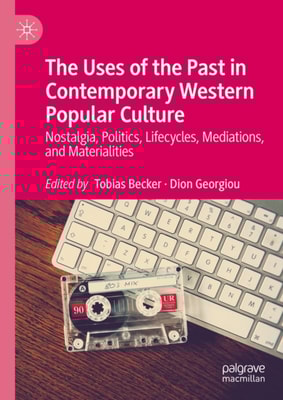
This book takes an interdisciplinary approach to understanding the different ways in which the past remains present in Western popular culture in the twenty-first century.
One of the difficulties in talking about historical generalizations is the problem of finding a language in the middle ground between abstract speculation and mere recording of raw empirical data.
In the original two editions of Engineering Ethics: Peace, Justice, and the Earth, a response of the engineering profession to the challenges of security, poverty and underdevelopment, environmental sustainability, and native cultures was described.
Among the Jewish writers who emigrated from Eastern Europe to France in the 1910s and 1920s, a number chose to switch from writing in their languages of origin to writing primarily in French, a language that represented both a literary center and the promises of French universalism.
This book, the first-ever collection of primary documents on North African history and the Holocaust, gives voice to the diversity of those involved-Muslims, Christians, and Jews; women, men, and children; black, brown, and white; the unknown and the notable; locals, refugees, the displaced, and the interned; soldiers, officers, bureaucrats, volunteer fighters, and the forcibly recruited.
Sediments of Time features the most important essays by renowned German historian Reinhart Koselleck not previously available in English, several of them essential to his theory of history.
Scholars have long been puzzled by why Muslim landowners in Central Asia, called begs, stayed loyal to the Qing empire when its political legitimacy and military power were routinely challenged.
This book argues for a deconstructive approach to the practice and writing of history at a moment when available forms for writing and publishing history are undergoing radical transformation.
New Directions in Print Culture Studies features new methods and approaches to cultural and literary history that draw on periodicals, print culture, and material culture, thus revising and rewriting what we think we know about the aesthetic, cultural, and social history of transnational America.
New Directions in Print Culture Studies features new methods and approaches to cultural and literary history that draw on periodicals, print culture, and material culture, thus revising and rewriting what we think we know about the aesthetic, cultural, and social history of transnational America.
This book examines the legacy of a British child migration scheme that relocated British children to Southern Rhodesia between 1946 and 1962, with the aim of populating the colony with "e;fresh white stock"e;.