Histories of Transnational Crime provides a broad, historical framework for understanding the developments in research of transnational crime over the centuries.
During HaA-HaB, many settlements were established in Silesia and in the central part of Poland, and their stability seems to be confirmed by the existence of regional groups and subgroups, by long-lasting colonies, and by long-used burial grounds, located at large settlements.
This book examines the legacy of a British child migration scheme that relocated British children to Southern Rhodesia between 1946 and 1962, with the aim of populating the colony with "e;fresh white stock"e;.
Within the context of the debate between idealism and empiricism, this book studies the ideas of six representative Canadian intellectuals of the late Victorian era.
This book closes an obvious gap in nineteenth-century historiography by carefully analysing British policy and public opinion with regard to the Schleswig-Holstein problem from 1848 to 1864.
The power of imagination to construct those mythos which alone, according to Barres, give sense and value to our absurd existence and by which, above all, men are moved to believe and act, was at the centre of his life-long preoccupation with the art of arousing and directing spiritual energy in individuals and groups.
In a stretch of the North Atlantic known as the Black Pit, far from land-based air cover, escorted convoys travelling the main trade routes between Newfoundland and Ireland were regularly besieged by marauding U-boats in classical naval confrontations.
In the mid- to late-1930s, while he was a student at the Gregorian University in Rome, Bernard Lonergan wrote a series of eight essays on the philosophy and theology of history.
In the mid- to late-1930s, while he was a student at the Gregorian University in Rome, Bernard Lonergan wrote a series of eight essays on the philosophy and theology of history.
In the early twelfth century a Burgundian monk set out to tell the 500-year history of his monastery, embedded within a broader history of early medieval France.
In the early twelfth century a Burgundian monk set out to tell the 500-year history of his monastery, embedded within a broader history of early medieval France.
Fernand Braudel (1912-1985), was a leading French historian and author of, among other books, the groundbreaking The Mediterranean and the Mediterranean World in the Age of Philip II (1949).
Chinas Great Leap Forward of 1958-1961 was a time of official rejoicing over the achievements of Communism, but it was also a time of immense suffering.
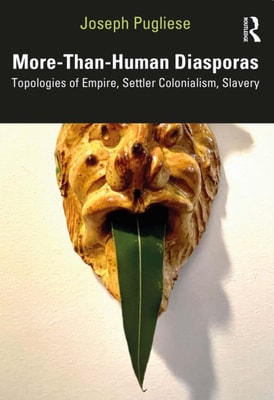
Pugliese's More Than Human Diasporas breaks the confines of existing scholarship in its vision of the way that more than human diasporic entities-such as water, trees, clay, stone and architectural styles-have functioned as agents within the context of empire, settler colonialism and a largely effaced history of Mediterranean enslavement, a history that pre existed and then coincided with the Atlantic slave trade.
This second collection of work by Jeremy Johnsoncontains a selection of his plays written between1994 and 2012 refl ecting his versatility with hisAmerican plays: Direct From Broadway and ThePalace of Mention, and his return to Australia withThe Sheltered Workshop and Better Than Death.
A Primer for Teaching Pacific Histories is a guide for college and high school teachers who are teaching Pacific histories for the first time or for experienced teachers who want to reinvigorate their courses.
A Primer for Teaching Women, Gender, and Sexuality in World History is a guide for college and high school teachers who are teaching women, gender, and sexuality in history for the first time, for experienced teachers who want to reinvigorate their courses, for those who are training future teachers to prepare their own syllabi, and for teachers who want to incorporate these issues into their world history classes.
This volume was developed to meet a much noted need for accessible case study material for courses in human ecology, cultural ecology, cultural geography, and other subjects increasingly offered to fulfill renewed student and faculty interest in environmental issues.
From April through December of 1945, ten of Nazi Germany's greatest nuclear physicists were detained by Allied military and intelligence services in a kind of gilded cage at Farm Hall, an English country manor near Cambridge.