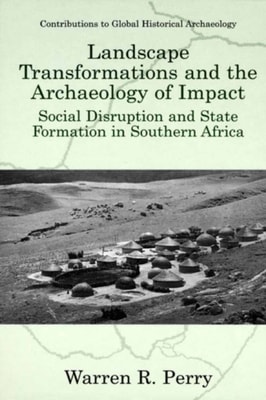
This book examines how colonial identities were constructed in the Cape Colony of South Africa since its establishment in the 17th century up to the 20th century.
Research records composed of notes and protocols have long played a role in the efforts to understand the origins of what have come to be seen as the established milestones in the development of modern science.
Fabricating Europe has within it a core idea, a crucial but imprecise idea, that of a European educational space, which transnational governance, networks and cultural and economic projects are creating now.
Recent droughts in Africa and elsewhere in the world, from China to Peru, have serious implications for food security and grave consequences for local and international politics.
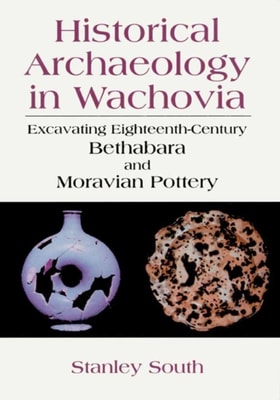
Originally distributed with a different title as a very limited edition of twelve in 1975, Historical Archaeology in Wachovia presents a unique record of the 1753 Moravian town of Bethabara, near Winston-Salem, North Carolina.
A discussion of the historical archaeology of one of the largest cities in the world following four centuries of marginal positioning in regard to empires, trade routes, and the production and accumulation of wealth.
An attempt to render Chinese archaeology more accessible to Western readers through a detailed case study of approximately 16,000 years of cultural development in northeastern China.
For many years, one of my favorite classroom devices in historical archaeology was to ask the students to imagine that they had to make the choice between saving-from some unnamed calamity-all master's theses or all doctoral disser tations in anthropology, but not both.
Historical archaeology, one of the fastest growing of archaeology's sub fields in North America, has developed more slowly in Central and p- ticularly South America.
Archaeology in the Middle East and the Balkans rarely focuses on the recent past; as a result, archaeologists have largely ignored the material remains of the Ottoman Empire.
In the early 1980s the author was asked to investigate the newly discovered wreck of the Xantho, an iron screw steamship active off the Australian coast during the period 1848 to 1872, and to develop a strategy to stop the looting that was occurring at the site.
Nearly, 50 years ago, Karl Pribram in a discussion section accompanying MacLean's proposal of a limbic system, criticized the visceral or limbic brain concept as theoretically too vague and cumbersome.
How providential history-the conviction that God is an active agent in human history-has shaped the American historical imagination In 1847, Protestant missionary Marcus Whitman was killed after a disastrous eleven-year effort to evangelize the indigenous peoples of the Pacific Northwest.
An experienced, multi-faceted historian shows how revisionist history is at the heart of creating historical knowledge"e;A rallying cry in favor of historians who, revisiting past subjects, change their minds.
A collection of memorable, stirring, and eloquent historical essays, designed to help any historian write more artfully Is there any reason serious historical scholarship cannot receive literary expression?
A fresh translation of The New Science, with detailed footnotes that will help both the scholar and the new reader navigate Vico’s masterpieceThe New Science is the major work of Italian philosopher Giambattista Vico.
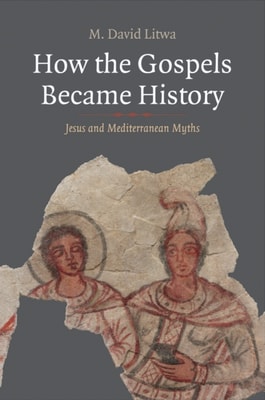
A compelling comparison of the gospels and Greco-Roman mythology which shows that the gospels were not perceived as myths, but as historical records Did the early Christians believe their myths?
An innovative reassessment of Holocaust testimony, revealing the dramatic ways in which the languages and places of postwar life inform survivor memory This groundbreaking work rethinks conventional wisdom about Holocaust testimony, focusing on the power of language and place to shape personal narrative.
A noted medical historian explores the roles played by various intellectual frameworks and trends in the writing of history A collection of ten essays paired with substantial prefaces, this book chronicles and contextualizes Roger Cooter’s contributions to the history of medicine.
A master historian explores the critical future of history writing and teaching For more than sixty years, John Lukacs has been writing, teaching, and reading about the past.
The first comprehensive account to explore the beginnings of early Christian history writing, tracing its origin to the Gospel of Mark and Luke-Acts When the Gospel writings were first produced, Christian thinking was already cognizant of its relationship to ancient memorial cultures and history-writing traditions.
In the early 1990s, Classics professor Mary Lefkowitz discovered that one of her faculty colleagues at Wellesley College was teaching his students that Greek culture had been stolen from Africa and that Jews were responsible for the slave trade.
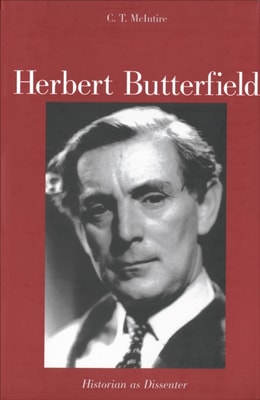
Herbert Butterfield (1900-1979) was an important British historian and religious thinker whose ideas, in particular his concept of a “Whig interpretation of history,” remain deeply influential.