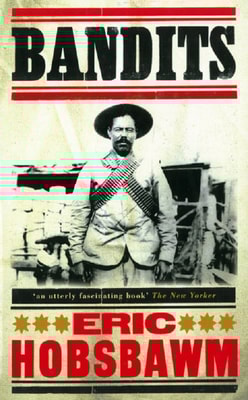
A trailblazing study of the social bandit or rebelBANDITS is a study of the social bandit or bandit-rebel - robbers and outlaws who are not regarded by public opinion as simple criminals, but rather as champions of social justice, as avengers or as primitive resistance fighters.
This book examines the role of (post)colonial ports in creating and shaping the ecotonal, cultural, historical, material, environmental, socio-political, and economic contexts in formerly colonized regions, spanning the Caribbean, Africa, North America, Europe, and the Pacific.
Fur die Klassische Philologie wie fur die Alte Geschichte bietet die antike Geschichtsschreibung den unmittelbarsten Zugang zur Lebenswelt und Geschichte Roms.
Dazzlingly original but deeply engaged with the philosophical currents of her time, Margaret Cavendish (1623-1673) was one of the most ingenious and exciting philosophers of the seventeenth century.
Eighteenth-century England was a place of enlightenment and revolution: new ideas abounded in science, politics, transportation, commerce, religion, and the arts.
Eighteenth-century England was a place of enlightenment and revolution: new ideas abounded in science, politics, transportation, commerce, religion, and the arts.
"e;Langer, by the force of scholarship and literary precision rather than dogmatic affirmation and pathos, is one of the few writers, with the exception of significant poets and novelists, who unsettles both our customary language and conceptual instruments.
This monumental 7-volume encyclopedia, the result of years of work by the Jack, Joseph, and Morton Mandel Center for Advanced Holocaust Studies at the United States Holocaust Memorial Museum, will describe the universe of camps and ghettos-some 20,000 in all-that the Nazis and their allies operated, from Norway to North Africa and from France to Russia.
Contributors investigate the motivation behind scientifically-embedded contemporary art practices as well as art-based scientific research and engagement that attempt to shape society.
In the first major engagement with Aberdeenshire's rural society since Carter's The Poor Man's Country of 1979, Riddell's study of Northeast Scotland encourages readers to consider the vast potential held by Digital Genealogy for second-wave Digital Humanities.
The dissolution of the Lombard political unity in southern Italy and the Muslim military activities in that area rendered the ninth century a crucial, yet troubled period for the history of this part of the Italian peninsula.
In 1939, on the eve of Hitler's invasion of Poland, seven-year-old Edith Milton (then Edith Cohn) and her sister Ruth left Germany by way of the Kindertransport, the program which gave some 10,000 Jewish children refuge in England.
In this clear, jargon-free guide, Willie Thompson provides a concise introduction to postmodernist theory and its significant impact on the study of history.
This book explores manifestations of physical disability in Spanish American narrative fiction and performance, from Jose Marti's late nineteenth century cronicas, to Mario Bellatin's twenty-first century novels, from the performances of Guillermo Gomez-Pena and Coco Fusco to the testimonio and filmic depictions of Gabriela Brimmer.
This book offers historians and aspiring historians a learned, absorbing, and comprehensive overview of current fashions of method, interpretation, and meaning in the context of postmodernism that has washed over the historical profession in the last two decades.
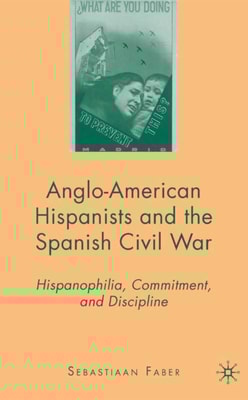
In this book, Faber assesses the long-term impact of the Spanish Civil War on Hispanic Studies as an academic field in the United States and Great Britain.
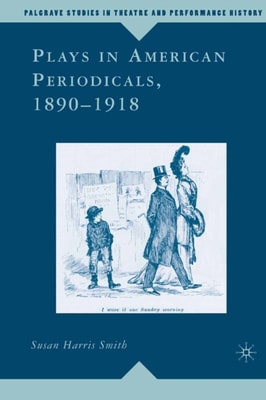
This book examines over 125 American, English, Irish and Anglo-Indian plays by 70 dramatists which were published in 14 American general interest periodicals aimed at the middle-class reader and consumer.
Bringing together scholars from around the world, this first book in the Palgrave Macmillan Transnational History Series raises the question of how we can get away from the contemporary language of globalization, so as to identify meaningful, global ways of defining historical events and processes in the late Nineteenth and Twentieth centuries.
Exploring five key texts from the emerging canon of second generation writing, this exciting new study brings together theories of autobiography, trauma, and fantasy to understand the how traumatic family histories are represented.
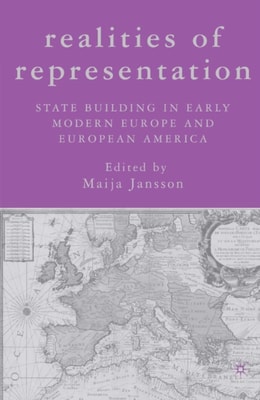
This book offers an examination of the idea of representation and the institutional realities that shaped it in early modern Europe and European America.
This book is a political study of the reign of George III which draws upon unpublished sources and takes account of recent research to present a rounded appreciation of one of the most important and controversial themes in British history.
'Beyond the Canon' deals with recent politicized processes of canonization and its implications for historical culture in a globalizing and postcolonial world.
This book intervenes in debates over the significance of Diana, Princess of Wales by offering a critical account of her media iconicity from 1981 to the present.
This book explores the political significance of the development of historical revisionism in the USSR under Khrushchev in the wake of the Twentieth Congress of the CPSU and its demise with the onset of the 'period of stagnation' under Brezhnev.
This book explores the lives, careers, and social and political activism of a diverse group of women historians in Ireland, contributing to the study of the Irish historical tradition and the study of women historians in an international context.
Collects twelve previously unpublished essays by one of Britain's most eminent historians, David Cannadine, including his inaugural and valedictory lectures at the Institute of Historical Research.
Ten essays on the nature of fascism by a leading scholar in the field, focusing on how to understand and apply fascist ideology to various movements since the twentieth century, Mussolini's prophesied 'fascist century'.
The balance of power is one of the most influential ideas in international relations, yet it has never been comprehensively examined in pre-modern or non-European contexts.
This collection of essays approaches the history of psychoanalysis from a transnational perspective, emphasizing the flows of people, ideas and institution across cultures and nations, and examining the factors that contributed to turn psychoanalysis into one of the systems of beliefs that defined the Twentieth century.