The early decades of the Cold War presented seemingly boundless opportunity for the construction of "e;laboratories"e; of American society abroad: microcosms where experts could scale down problems of geopolitics to manageable size, and where locals could be systematically directed toward American visions of capitalist modernity.
Human rights are politically fraught in Turkey, provoking suspicion and scrutiny among government workers for their anti-establishment left-wing connotations.
In the first half of the twentieth century, a pioneering generation of young women exited their homes and entered public space, marking a new era for women's civic participation in northern Sudan.
The "e;home"e; is a quintessentially quotidian topic, yet one at the center of global concerns: Consumption habits, aesthetic preferences, international trade, and state authority all influence the domestic sphere.
In The Story of Reason in Islam, leading public intellectual and political activist Sari Nusseibeh narrates a sweeping intellectual history-a quest for knowledge inspired by the Qu'ran and its language, a quest that employed Reason in the service of Faith.
Literally the concept of Al-Rasm means an attempt of picturing things and generally it means all the customs habits manners superstition and laws that limits the way of communication between the caliph (the successor) and the common people including his favorite.
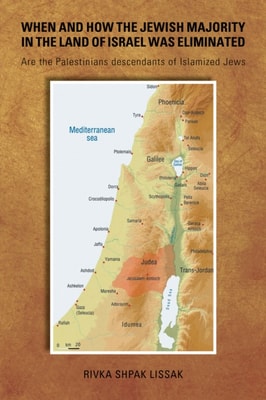
Imperialist Rome employed a policy of colonization and confiscation of Jewish land, transferring it to foreigners who immigrated to the Land of Israel and settled there with the support of Roman governments.
A "e;captivating"e; account of the starvation and disease that wracked far-from-the-front Beirut during WWI, and the relief efforts that followed (Middle East Journal).
Ideal for student research, this book provides a reference guide to the war as well as seven essays analyzing a variety of aspects of the war and its consequences.
Maajid Nawaz spent his teenage years listening to American hip-hop and learning about the radical Islamist movement spreading throughout Europe and Asia in the 1980s and 90s.
Despite siginificant advances in annual chronology, the Old Assyrian trade fundamentally lacked a regime of time at the level of the merchant's commercial and personal activities.
Despite siginificant advances in annual chronology, the Old Assyrian trade fundamentally lacked a regime of time at the level of the merchant's commercial and personal activities.
These essays represent a summation of Piotr Steinkeller's decades-long thinking and writing about the history of third millennium BCE Babylonia and the ways in which it is reflected in ancient historical and literary sources and art, as well as of how these written and visual materials may be used by the modern historian to attain, if not a reliable record of histoire evenementielle, a comprehensive picture of how the ancients understood their history.
These essays represent a summation of Piotr Steinkeller's decades-long thinking and writing about the history of third millennium BCE Babylonia and the ways in which it is reflected in ancient historical and literary sources and art, as well as of how these written and visual materials may be used by the modern historian to attain, if not a reliable record of histoire evenementielle, a comprehensive picture of how the ancients understood their history.
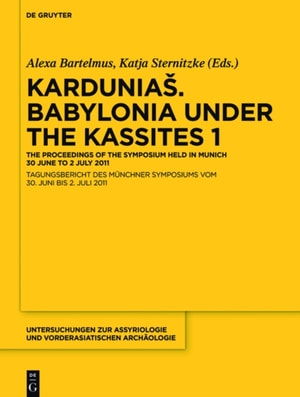
Kardunias, as the kingdom of the Kassites in Babylonia was called in ancient times, was the neighbor and rival of great powers such as Egypt, the Hittites, and Assyria.
Kardunias, as the kingdom of the Kassites in Babylonia was called in ancient times, was the neighbor and rival of great powers such as Egypt, the Hittites, and Assyria.
The present work attempts to close a gap in our knowledge of the history of Sumerian between the extensive and well-understood corpus of texts from the late 3rd to early 2nd millennia B.
The present work attempts to close a gap in our knowledge of the history of Sumerian between the extensive and well-understood corpus of texts from the late 3rd to early 2nd millennia B.
This book investigates the issue of the singularity versus the multiplicity of ancient Near Eastern deities who are known by a common first name but differentiated by their last names, or geographic epithets.
The present work attempts to close a gap in our knowledge of the history of Sumerian between the extensive and well-understood corpus of texts from the late 3rd to early 2nd millennia B.
The present work attempts to close a gap in our knowledge of the history of Sumerian between the extensive and well-understood corpus of texts from the late 3rd to early 2nd millennia B.
Kardunias, as the kingdom of the Kassites in Babylonia was called in ancient times, was the neighbor and rival of great powers such as Egypt, the Hittites, and Assyria.
Kardunias, as the kingdom of the Kassites in Babylonia was called in ancient times, was the neighbor and rival of great powers such as Egypt, the Hittites, and Assyria.