Winston Churchill was the greatest statesman of the twentieth century, yet he began his career as a colonial policeman in the North-West borderlands of India, and this experience was the beginning of his long relationship with the Islamic world.
Arguably, trade is the engine of history, and the acceleration in what you mightcall 'globalism' from the beginning of the last millennium has been driven by communities interacting with each other through commerce and exchange.
The retreat of the Byzantine army from Syria in around 650 CE, in advance of the approaching Arab armies, is one that has resounded emphatically in the works of both Islamic and Christian writers, and created an enduring motif: that of the Islamic-Byzantine frontier.
Christianity arose from the lands of biblical Palestine and, regardless of its twentieth century associations with the Arab-Israeli conflict, to Christians around the world it remains first and foremost the birthplace of Christianity.
As global climate change threatens to change radically both the political and physical climate with regard to water issues, so a reassessment of some of the fundamental principles of international water law is emerging.
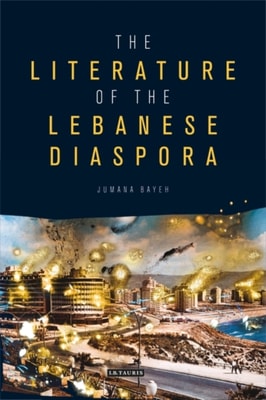
The Lebanese civil war, which spanned the years of 1975 to 1990,caused the migration of hundreds of thousands of Lebanese citizens, many of whom are still writing of their experiences.
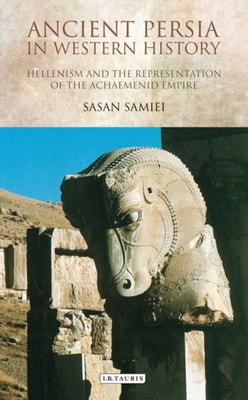
Ancient Persia in Western History is a measured rejoinder to the dominant narrative that considers the Graeco-Persian Wars to be merely the first round of an oft-repeated battle between the despotic 'East' and the broadly enlightened 'West'.
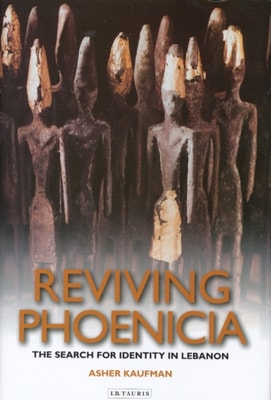
Reviving Phoenicia follows the social, intellectual and political development of the Phoenician myth of origin in Lebanon from the middle of the nineteenth century to the end of the twentieth.
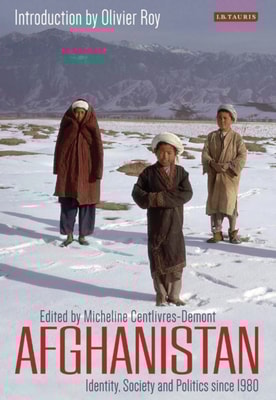
Over the last three decades Afghanistan has been plagued by crisis - from Soviet invasion in 1979 and Taliban rule to US invasion following the events of 9/11.
Amongst the riches of nineteenth century India, as the British fought their way across Mughal territory, an orphaned streetgirl ends up at court with the ear of the Emperor.
Following the 25th January revolution, the Muslim Brotherhood emerged as the most organised and successful political force in Egypt as they cashed in on decades of grassroots mobilisation and growth.
Railway expansion was symbolic of modernization in the late 19th century, and Britain, Germany and France built railways at enormous speed and reaped great commercial benefits.
Sent to the Middle East by Woodrow Wilson to ascertain the viability of self-determination in the disintegrating Ottoman Empire, the King-Crane Commission of 1919 was America's first foray into the region.
Azerbaijan's Soviet and post-Soviet political history has been tumultuous and varied, particularly with regard to the struggle for independence, democracy and sovereignty.
The countries of the Southern and Eastern Mediterranean (SEM) and those in Sub-Saharan Africa (SSA) are crucial to the development of the world economy.
As Bashar al-Asad rescinds emergency rule in the face of demonstrations and protests, Syria finds itself in a key position in a Middle East beset by regional tensions, the repercussions of the global 'war on terror' and popular uprisings.
The Iranian cleric Ayatollah Montazeri (1922-2009) played an integral role in the founding of the Islamic Republic in the wake of the Iranian Revolution of 1978/9.
In 1923, when the pioneer of feminist activism, Huda Shaarawi, removed her veil in Cairo's train station, she created what became a landmark (and much-copied) gesture for feminists throughout Egypt and the Middle East and cemented her status as one of the most important feminists in twentieth-century Egypt.
Lebanon, together with the province of Hatay in Turkey (containing Antakya) and the Golan Heights were all part of French mandate Syria, but are now all outside the boundaries of the modern Syrian state.
The common image of Saudi Arabia portrays a country where religious rules dictate every detail of daily life: where women may not drive; where unrelated men and women may not interact; where the latter veil their faces; and where banks, restaurants and cafes have dual facilities: one for families, another for men.
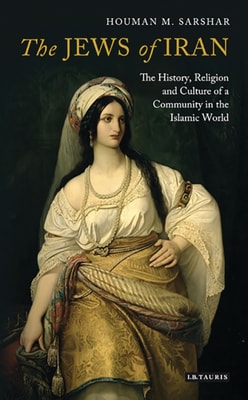
Since the establishment of the State of Israel in May 1948, more than 40,000 Iranian Jews have moved to Israel, with the last big wave arriving after the Iranian Revolution of 1978/79.
Regionally-based Arabs and Iranian scholars here explore the preoccupation of the economic, political, educational and strategist present of Arab-Iranian relationships in the context of the historical and cultural past.
Since the Shah went into exile and the Islamic Republic was established in 1979 in the wake of the Iranian Revolution, the very idea of monarchy in Iran has been contentious.
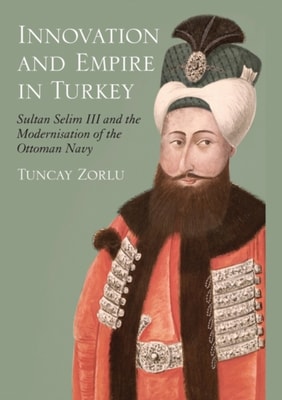
The Ottoman Empire maintained a complex and powerful bureaucratic system which enforced the Sultan's authority across the Empire's Middle-Eastern territories.
Saudi Arabia is generally and justifiably viewed as a country with the fewest democratic institutions and the weakest traditions of pluralism in the world.