The so-called 'Cedar Revolution' in Lebanon, triggered by the assassination of the former Prime Minister Rafiq Hariri in February 2005, brought to an end three decades of Syrian military presence in the country.
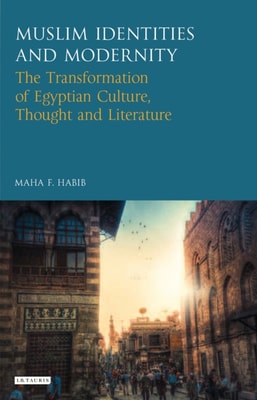
The creation of the Egyptian monarchy in 1922, under King Fuad II, opened contests and debates over fundamental cultural questions, particularly definitions of Egyptian modernity, rule and identity.
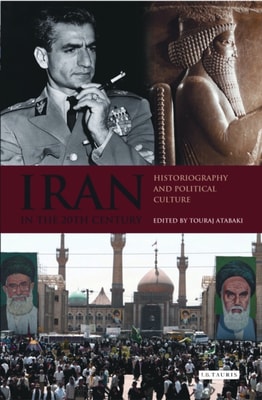
With the ratification of a new constitution in December 1906, Iran embarked on a great movement of systemic and institutional change which, along with the introduction of new ideas, was to be one of the most abiding legacies of the first Iranian revolution - known as the Constitutional Revolution.
Diplomats, politicians and activists alike have long laboured under the assumption that a two-state solution is the only path to peace between the Israelis and the Palestinians.
The material and visual culture of the Islamic World casts vast arcs through space and time, and encompasses a huge range of artefacts and monuments from the minute to the grandiose, from ceramic pots to the great mosques.
From Cairo to Damascus and from Tunisia to Bahrain, Layla Al-Zubaidi and Matthew Cassel have brought together some of the most exciting new writing born out of revolution in the Arab world.
The Iranian nuclear crisis has dominated world politics since the beginning of the century, with the country now facing increasing diplomatic isolation, talk of military strikes against its nuclear facilities and a disastrous Middle East war.
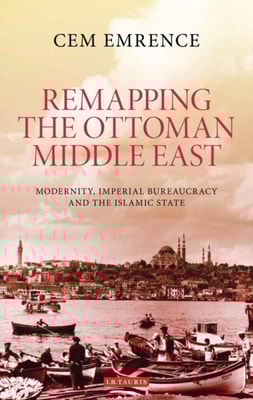
Once hailed as 'the eternal state', the Ottoman Empire was in decline by the end of the nineteenth century, finally collapsing under the pressures of World War I.
The conflict between Israel and Palestine is, and remains to be, one of the most widely- and passionately-debated issues in the Middle East and in the field of international politics.
In the wake of the establishment of the State of Israel in 1948, it has often been alleged, King Abdullah I of Jordan and the Zionist movements colluded to partition Mandate Palestine between them, while Great Britain, the retreating imperial power, gave them tacit approval to do so.
At the height of the 'Great Game' in Central Asia, in the run up to World War I and the aftermath of the second Afghan War, the region of Afghanistan became particularly significant for both Great Britain and Russia.
In the Middle East, and in Egypt in particular, there has always been a tendency to accord complete supremacy to the authority and might of the state, and to see 'society' as a separate, powerless entity.
The relationship between Islam and the West has frequently been subject to misunderstanding and mistrust and recent events in the international arena have only deepened this perceived divide, culturally and politically.
The grand narrative of "e;The Young Turk Legacy and Nation Building"e; is that of the essential continuity of the late Ottoman Empire with the Republic of Turkey that was founded in 1923.
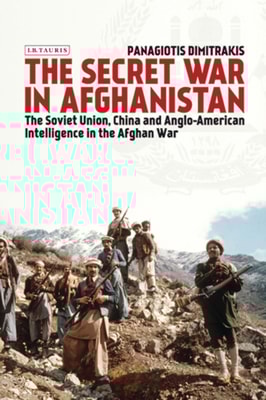
The Soviet invasion of Afghanistan, in support of a Marxist-Leninist government, and the subsequent nine-year conflict with the indigenous Afghan Mujahedeen was one of the bloodiest conflicts of the Cold War.
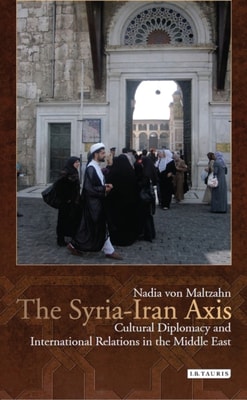
Since the Iranian Revolution of 1979, the close alliance between Syria and Iran has endured for over three decades, based on geopolitical interests between the two states and often framed in the language of resistance.
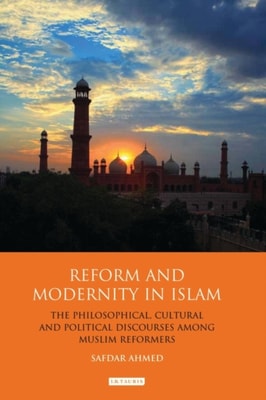
The debate over Islam and modernity tends to be approached from a Eurocentric perspective that presents Western norms as a template for progress - against which Islamic societies can be measured.
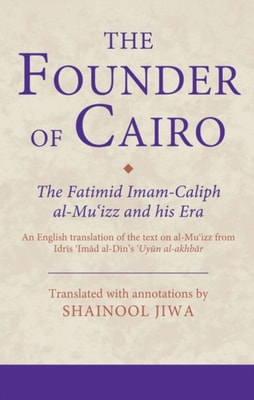
The reign of the founder of Cairo, the fourth Fatimid Imam-caliph al-Mu'izz li-Din Allah (341-365/953-975), marks a watershed in the transformation of the Fatimid state from a regional North African dynasty to an expansive Mediterranean empire.
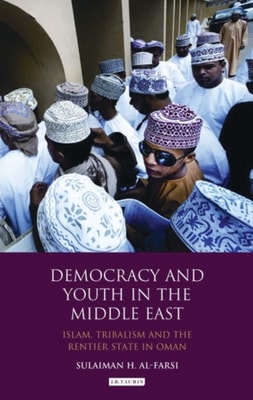
The leaders of the oil-rich rentier states of the Middle East, and in particular in the Gulf, have hitherto often predicated their legitimacy on a tacit social contract with their (much poorer) populations.
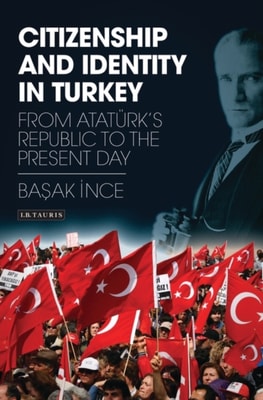
Is Turkish nationalism simply a product of Kemalist propaganda from the early Turkish Republic or an inevitable consequence of a firm and developing 'Turkish' identity?
The Russian Revolutions of 1917 and the Iranian Revolution of 1979 are two examples of dramatic, sudden and extraordinary political upheaval that significantly altered the nature of the state and society in the modern age.
As Barack Obama seeks to chart a new course in American foreign policy, one of the English language media's most respected authorities on the Arab world, David Gardner, addresses the controversial but urgent question: why is the Middle East so dysfunctional?
In Islamic law the world was made up of the 'House of Islam' and the 'House of War' with the Ottoman Sultan - successor to the early Caliphs - as supreme ruler of the Islamic world.
In 1974 the Greek colonels ousted the Greek-Cypriot leader of Cyprus, Archbishop Makarios, and Turkey retaliated by invading and seizing a third of the island.
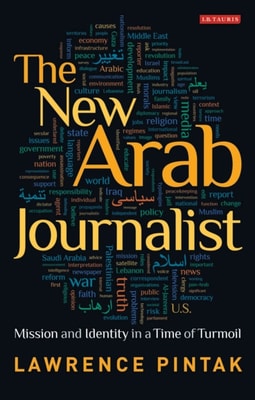
The Arab media is in the midst of a revolution that will inform questions of war and peace in the Middle East, political and societal reform, and relations between the West and the Arab World.
'The best travel guide to Istanbul' - The TimesPractical and informative, readable and vividly described, this is the definitive guide to and story of Istanbul, by those who know it best.
In 1923 the Turkish government, under its new leader Kemal Ataturk, signed a renegotiated Balkan Wars treaty with the major powers of the day and Greece.