Opium Traders-Volume Two continues the history of opium commerce at a point where the Sassoons of Persia, closely connected with the Rothchilds, won control of the trade.
Extensively researched, painstakingly documented, and dedicated to the courageous men and women who fought and served in the First War with Iraq, this is a factual military history of Operation Desert Storm-and the only readable and thorough chronicle of the entire war.
This tightly focused collection of essays, from an invited seminar of international specialists, centres on the question of the apocalyptic worldview around the time of the Maccabean revolt.
When this provocative text was first published, Lemche presented a new model of how we should understand Israelite society, its history and its religion.
When this provocative text was first published, Lemche presented a new model of how we should understand Israelite society, its history and its religion.
This book investigates the archaeological, epigraphic, and biblical evidence for the course of Ammon's history, setting it squarely within the context of ancient Near Eastern imperialism.
Emil Schürer's Geschichte des judischen Volkes im Zeitalter Jesu Christi, originally published in German between 1874 and 1909 and in English between 1885 and 1891, is a critical presentation of Jewish history, institutions, and literature from 175 B.
Here is a blueprint for a new interdisciplinary approach that decompartmentalizes disciplines for the study of this district of the Achaemenid Empire including Syria, Phoenicia, Palestine and Cyprus.
It has often been argued that Zerubbabel, the Jewish governor of Yehud at the time of the rebuilding of the temple (late 6th century BCE), was viewed by the prophets Haggai and Zechariah as the new king in the line of David.
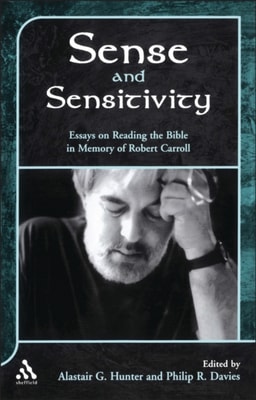
In this collection of studies to the memory of Robert Carroll, and reflecting his interests in prophecy, ideology and reception history, are contributions from Graeme Auld, John Ashton, Alice Bach, Hans Barstad, Joseph Blenkinsopp, Athalya Brenner, David Clines, Johann Cook, Robert Davidson, Philip Davies, Sean Freyne, Norman Gottwald, Lester Grabbe, John Halligan, Alastair Hunter, David Jasper, William Johnstone, Gabriel Josipovici, Francis Landy, Heather McKay, Stephen Prickett, Hugh Pyper, Stefan Reif, John Sawyer, Robert Setio, Yvonne Sherwood, Carol Smith and Johanna Stiebert.
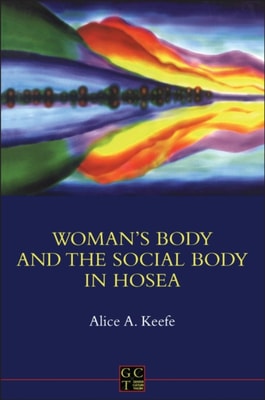
Keefe's analysis dismantles the androcentric and theological assumptions which have determined the dominant reading of Hosea's metaphor of Israel as the adulterous wife of God.
In this short, accessible and readable book, Professor Soggin gives an account of all the features of Israelite and Jewish religion in the biblical period.
This is the first full-scale assessment of the theological, social and ideational implications of our new understandings of ancient Israel's social and religious development.
Building on the biblical narrative and on social world analysis, Leeb argues that the terms NA'AR and NA'ARAH refer to persons displaced from the father's house (BET 'AB), usually as a result of debt slavery.
This study argues that the gist and movement of the prophecy in the book of Amos can be attributed to Amos himself, who composed a coherent cycle of poetry.
In what sense does Matthew's Gospel reflect the colonial situation in which the community found itself after the fall of Jerusalem and the subsequent humiliation of Jews across the Roman Empire?
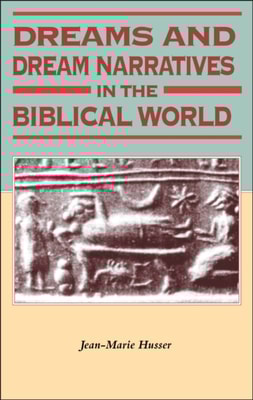
This study of dream accounts in the Bible and in ancient Near Eastern literature suggests two main lines of interpretation: on the one hand it defines the function of dream accounts from a literary, social, political and religious point of view on the basis of literary genre (practitioners' manuals, royal inscriptions, prophetic texts, etc.
The occurrence of treaties throughout the Ancient Near East has been investigated on a number of occasions, generally in order to resolve certain questions arising in the biblical field.
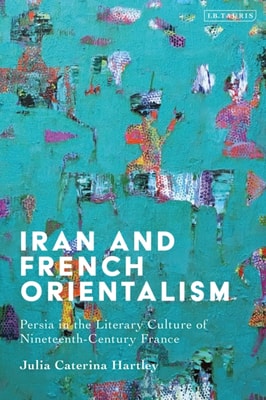
New translations of Persian literature into French, the invention of the Aryan myth, increased travel between France and Iran, and the unveiling of artefacts from ancient Susa at the Louvre Museum are among the factors that radically altered France's perception of Iran during the long nineteenth century.
A bold new religious history of the late antique and medieval Middle East that places ordinary Christians at the center of the storyIn the second half of the first millennium CE, the Christian Middle East fractured irreparably into competing churches and Arabs conquered the region, setting in motion a process that would lead to its eventual conversion to Islam.
Surrounded on all sides by Islam, the beloved Ecumenical Patriarch Bartholomew continues to impact the world for Christ from his seat in Constantinople, a city central to Christian history.
The Deoband movementa revivalist movement within Sunni Islam that quickly spread from colonial India to Pakistan, Afghanistan, Bangladesh, and even the United Kingdom and South Africahas been poorly understood and sometimes feared.
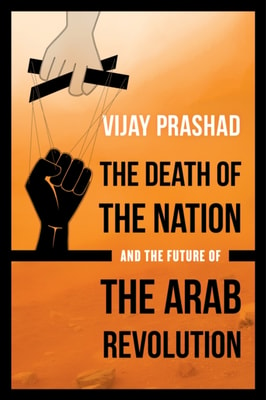
This fast-paced and timely book from Vijay Prashad is the best critical primer to the Middle East conflicts today, from Syria and Saudi Arabia to the chaos in Turkey.
For decades, political observers and pundits have characterized the Islamic Republic of Iran as an ideologically rigid state on the verge of collapse, exclusively connected to a narrow social base.
Across the Middle East in the postWorld War I era, European strategic moves converged with late Ottoman political practice and a newly emboldened Zionist movement to create an unprecedented push to physically divide ethnic and religious minorities from Arab Muslim majorities.
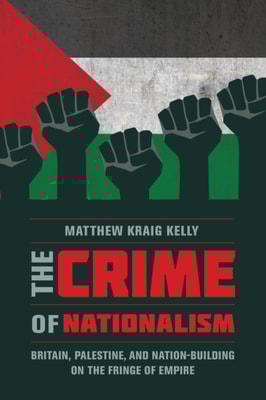
The Palestinian national movement gestated in the early decades of the twentieth century, but it was born during the Great Revolt of 193639, a period of Arab rebellion against British policy in the Palestine mandate.