This thought-provoking book, the first of its kind in the English language, reexamines the fifty-year-old nation of Israel in terms of its origins as a haven for a persecuted people and its evolution into a multi- cultural society.
This highly original book brings into focus the sexual discourses manifest in a wealth of little-studied source material-medical texts, legal documents, religious literature, dream interpretation manuals, shadow theater, and travelogues-in a nuanced, wide-ranging, and powerfully analytic exploration of Ottoman sexual thought and practices from the heyday of the Ottoman Empire in the sixteenth century to the beginning of the twentieth.
This highly original historical and political analysis of the Arab-Israeli conflict combines the unique perspectives of two prominent segments of the Middle Eastern puzzle: Israeli Jews and the Palestinian citizens of Israel.
Israel's military court system, a centerpiece of Israel's apparatus of control in the West Bank and Gaza since 1967, has prosecuted hundreds of thousands of Palestinians.
Inspired by stories he heard in the West Bank as a child, Hillel Cohen uncovers a hidden history in this extraordinary and beautifully written book-a history central to the narrative of the Israel-Palestine conflict but for the most part willfully ignored until now.
Drawing from a rich array of visual and literary material from nineteenth-century Iran, this groundbreaking book rereads and rewrites the history of Iranian modernity through the lens of gender and sexuality.
This incisive study adds a new dimension to discussions of Egypt's nationalist response to the phenomenon of colonialism as well as to discussions of colonialism and nationalism in general.
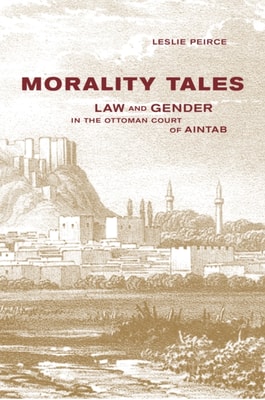
In this skillful analysis, Leslie Peirce delves into the life of a sixteenth-century Middle Eastern community, bringing to light the ways that women and men used their local law court to solve personal, family, and community problems.
Tomaz Mastnak's provocative analysis of the roots of peacemaking in the Western world elucidates struggles for peace that took place in the high and late Middle Ages.
Extending deconstructive theory to historical and political analysis, Timothy Mitchell examines the peculiarity of Western conceptions of order and truth through a re-reading of Europe's colonial encounter with nineteenth-century Egypt.
New translations of Persian literature into French, the invention of the Aryan myth, increased travel between France and Iran, and the unveiling of artefacts from ancient Susa at the Louvre Museum are among the factors that radically altered France's perception of Iran during the long nineteenth century.
Surrounded on all sides by Islam, the beloved Ecumenical Patriarch Bartholomew continues to impact the world for Christ from his seat in Constantinople, a city central to Christian history.
The first comprehensive history of the Turkish economyThe population and economy of the area within the present-day borders of Turkey has consistently been among the largest in the developing world, yet there has been no authoritative economic history of Turkey until now.
The surprising similarities in the rise and fall of the Sunni Islamic and Roman Catholic empires in the face of the modern stateCoping with Defeat presents a historical panorama of the Islamic and Catholic political-religious empires and exposes striking parallels in their relationship with the modern state.
In a convincing reinterpretation of early Islamic history, Wilferd Madelung examines the conflict which developed after the death of Muhammad for control of the Muslim community.