A journalist investigates what could motivate someone to serve a monstrous regime like Saddam Huseein's Iraq in this "e;masterly and elegantly told story that weaves together the Iraqi past and present"e; (New York Times Book Review, A Notable Book of the Year).
A new account of modern Iraqi politics that overturns the conventional wisdom about its sectarian divisionsHow did Iraq become one of the most repressive dictatorships of the late twentieth century?
How the conflict between political Islamists and secular-leaning nationalists has shaped the history of the modern Middle EastIn 2013, just two years after the popular overthrow of Hosni Mubarak, the Egyptian military ousted the country's first democratically elected president-Mohamed Morsi of the Muslim Brotherhood-and subsequently led a brutal repression of the Islamist group.
The first book to explore the modern history of Islam in South AsiaThe first modern state to be founded in the name of Islam, Pakistan was the largest Muslim country in the world at the time of its establishment in 1947.
The first English-language biography of the de facto ruler of the late Ottoman Empire and architect of the Armenian GenocideTalaat Pasha (1874-1921) led the triumvirate that ruled the late Ottoman Empire during World War I and is arguably the father of modern Turkey.
How interwar Poland and its Jewish youth were instrumental in shaping the ideology of right-wing ZionismBy the late 1930s, as many as fifty thousand Polish Jews belonged to Betar, a youth movement known for its support of Vladimir Jabotinsky, the founder of right-wing Zionism.
How the Ottomans refashioned and legitimated their rule through mystical imageries of authorityThe medieval theory of the caliphate, epitomized by the Abbasids (750-1258), was the construct of jurists who conceived it as a contractual leadership of the Muslim community in succession to the Prophet Muhammed's political authority.
The first in-depth look at how postwar thinkers in Egypt mapped the intersections between Islamic discourses and psychoanalytic thoughtIn 1945, psychologist Yusuf Murad introduced an Arabic term borrowed from the medieval Sufi philosopher and mystic Ibn 'Arabi-al-la-shu'ur-as a translation for Sigmund Freud's concept of the unconscious.
A major new history of the century-long debate over what a Jewish state should beMany Zionists who advocated the creation of a Jewish state envisioned a nation like any other.
A biography of the founder of modern Turkey that chronicles the ideas that shaped himWhen Mustafa Kemal Ataturk became the first president of Turkey in 1923, he set about transforming his country into a secular republic where nationalism sanctified by science-and by the personality cult Ataturk created around himself-would reign supreme as the new religion.
How the support of patriotic sentiments in Ottoman Egypt led to an emerging Arab nationalismArab Patriotism presents the essential backstory to the formation of the modern nation-state and mass nationalism in the Middle East.
Turkish republicanism is commonly thought to have originated with Mustafa Kemal Ataturk and the founding of modern Turkey in 1923, and understood exclusively in terms of Kemalist ideals, characterized by the principles of secularism, nationalism, statism, and populism.
In recent years, North American and European nations have sought to legally remake religion in other countries through an unprecedented array of international initiatives.
How a group of Iranian students sought love and learning in Jane Austen's LondonIn July 1815, six Iranian students arrived in London under the escort of their chaperone, Captain Joseph D'Arcy.
There is a growing recognition that philosophy isn't unique to the West, that it didn't begin only with the classical Greeks, and that Greek philosophy was influenced by Near Eastern traditions.
Insightful, penetrating, and shocking, the defining biography of Iraq's deposed tyrantDrawing on an unparalleled network of sources, contacts, and firsthand testimonies, Con Coughlin takes us to the center of Saddam Hussein's complex, bewildering regime -- and beyond.
Why churches in some democratic nations wield enormous political power while churches in other democracies don'tIn some religious countries, churches have drafted constitutions, restricted abortion, and controlled education.
A concise and authoritative introduction to Islamic political ideasIn sixteen concise chapters on key topics, this book provides a rich, authoritative, and up-to-date introduction to Islamic political thought from the birth of Islam to today, presenting essential background and context for understanding contemporary politics in the Islamic world and beyond.
How religion and race-not nationalism-shaped early encounters between Zionists and Arabs in PalestineAs the Israeli-Palestinian conflict persists, aspiring peacemakers continue to search for the precise territorial dividing line that will satisfy both Israeli and Palestinian nationalist demands.
With each day that passed after the 2003 invasion, the United States seemed to sink deeper in the treacherous quicksand of Iraq's social discord, floundering in the face of deep ethno-sectarian divisions that have impeded the creation of a viable state and the molding of a unified Iraqi identity.
Nasser's Gamble draws on declassified documents from six countries and original material in Arabic, German, Hebrew, and Russian to present a new understanding of Egypt's disastrous five-year intervention in Yemen, which Egyptian president Gamal Abdel Nasser later referred to as "e;my Vietnam.
Written by a pioneer in the field of Middle Eastern women's history, Women in the Middle East is a concise, comprehensive, and authoritative history of the lives of the region's women since the rise of Islam.
Perhaps no other Western writer has more deeply probed the bitter struggle in the Muslim world between the forces of religion and law and those of violence and lawlessness as Noah Feldman.
In this fascinating book, Madeleine Albright weaves together history, personal experiences, and brilliant analysis in exploring how religion can be a force for liberty and tolerance rather than oppression and terror.
An unprecedented look at secret documents showing the deliberate nature of the Armenian genocideIntroducing new evidence from more than 600 secret Ottoman documents, this book demonstrates in unprecedented detail that the Armenian Genocide and the expulsion of Greeks from the late Ottoman Empire resulted from an official effort to rid the empire of its Christian subjects.
A sweeping history of Islam and the West from the seventh century to todayEurope and the Islamic World sheds much-needed light on the shared roots of Islamic and Western cultures and on the richness of their inextricably intertwined histories, refuting once and for all the misguided notion of a "e;clash of civilizations"e; between the Muslim world and Europe.
From the dawn of writing in Sumer to the sunset of the Islamic empire, Founding Gods, Inventing Nations traces four thousand years of speculation on the origins of civilization.
How Machiavelli's Christianity shaped his political thoughtTo many readers of The Prince, Machiavelli appears to be deeply un-Christian or even anti-Christian, a cynic who thinks rulers should use religion only to keep their subjects in check.
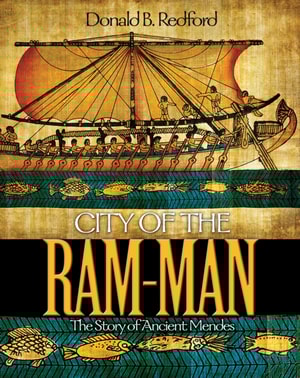
A richly illustrated history that sheds light on ancient Egypt across the millenniaIn this richly illustrated book, renowned archaeologist Donald Redford draws on the latest discoveries-including many of his own-to tell the story of the ancient Egyptian city of Mendes, home of the mysterious cult of the "e;fornicating ram who mounts the beauties.
In 1854, American Presbyterian missionaries arrived in Egypt as part of a larger Anglo-American Protestant movement aiming for worldwide evangelization.
Many Americans wish to believe that the United States, founded in religious tolerance, has gradually and naturally established a secular public sphere that is equally tolerant of all religions--or none.
On November 4, 1979, when students occupied the American Embassy in Tehran and subsequently demanded that the United States return the Shah in exchange for hostages, the deposed Iranian ruler's regime became the focus of worldwide scrutiny and controversy.
Will to Live tells how Brazil, against all odds, became the first developing country to universalize access to life-saving AIDS therapies--a breakthrough made possible by an unexpected alliance of activists, government reformers, development agencies, and the pharmaceutical industry.
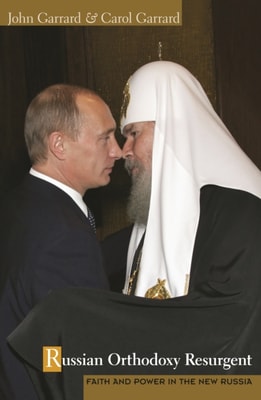
Russian Orthodoxy Resurgent is the first book to fully explore the expansive and ill-understood role that Russia's ancient Christian faith has played in the fall of Soviet Communism and in the rise of Russian nationalism today.
Whether you are a politician caught carrying on with an intern or a minister photographed with a prostitute, discovery does not necessarily spell the end of your public career.