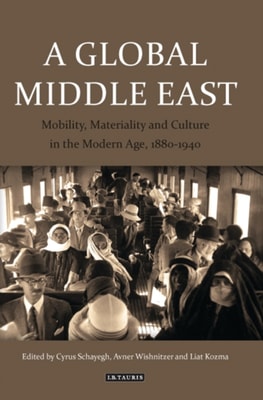
At the turn of the nineteenth century, the Ottoman Empire straddled three continents and encompassed extraordinary ethnic and cultural diversity among the estimated thirty million people living within its borders.
Balancing respect for religious conviction and the values of liberal democracy is a daunting challenge for judges and lawmakers, particularly when religious groups seek exemption from laws that govern others.
Balancing respect for religious conviction and the values of liberal democracy is a daunting challenge for judges and lawmakers, particularly when religious groups seek exemption from laws that govern others.
This absorbing book explores the tensions within the Roman Catholic church and between the church and royal authority in France in the crucial period 1290-1321.
Workable Sisterhood is an empirical look at sixteen HIV-positive women who have a history of drug use, conflict with the law, or a history of working in the sex trade.
Humanity lives inside 4 unyielding constraints, the speed of light, conservation of mass-energy, inefficiency in conversion of heat to work, and the law of demand.
In the months leading up to March 2003, fresh from its swift and heady victory in Afghanistan, the Bush administration mobilized the United States armed forces to overthrow the government of Iraq.
Using the work of Edward Said as a point of departure, this book dissects the concept of Orientalism through the lens of 19th century missionary impressions of Kurdistan.
Using the work of Edward Said as a point of departure, this book dissects the concept of Orientalism through the lens of 19th century missionary impressions of Kurdistan.
As the specter of religious extremism has become a fact of life today, the temptation is great to allow the evil actions and perspectives of a minority to represent an entire tradition.
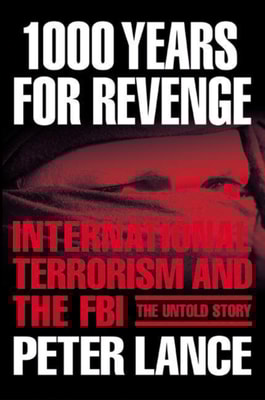
1000 Years for Revenge is a groundbreaking investigative work that uncovers startling evidence of how the FBI missed dozens of opportunities to stop the attacks of September 11, dating back to 1989.
An Iranian family embroiled in Islamic revolution, the hostage crisis, incest and exile in AmericaForced to flee the country with their parents as Khomeini rises to power, Nora and Jahan Ellahi rise to the challenge of anti-Iranian hostility in America.
Wafaa Bilal's childhood in Iraq was defined by the horrific rule of Saddam Hussein, two wars, a bloody uprising and time spent interned in chaotic refugee camps in Kuwait and Saudi Arabia.
The war in Afghanistan has become the most complex foreign policy problem the United States has ever faced, spreading into Pakistan and involving the conflicting interests of Russia, India, China and Iran.
The coup d' tat which took place in Turkey on 12 September 1980 was the third in the history of the Republic, and ushered in a three-year period of military rule.
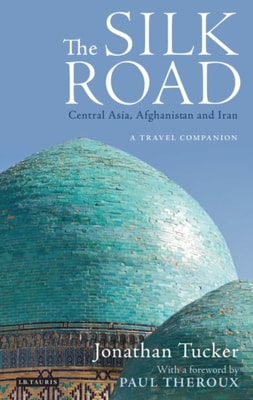
Stretching from the ancient Chinese capital of Xian across the expanses of Central Asia to Rome, the Silk Road was, for 1,500 years, a vibrant network of arteries that carried the lifeblood of nations across the world.
State-society dialogue in Saudi Arabia is one of the most contested issues in the country today, yet little is known about the National Dialogue process, and its relationship with Saudi society is frequently and widely misunderstood.
The Umayyad caliphate, ruling over much of what is now the modern Middle East after the death of the Prophet Muhammad, governe from Damascus from 661 to750CE, when they were expelled by the Abbasids.
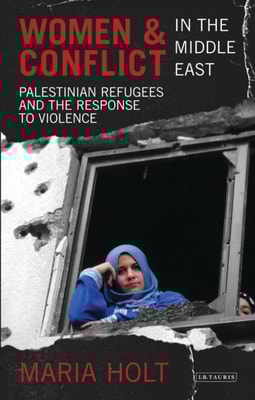
Women in conflict zones face a wide range of violence from a variety of sources: from physical and psychological trauma to political, economic and social disadvantage.
In the wake of its creation in 1948, the state of Israel was confronted with the challenge of establishing foreign relations with key players in the region, in the face of opposition from most of the Arab states.
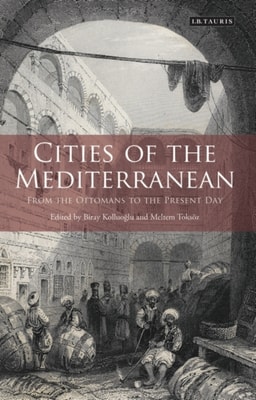
The Eastern Mediterranean is one of the world's most vibrant and vital commercial centres and for centuries the region's cities and ports have been at the heart of East-West trade.
Throughout the Middle East, and in the west as well, there has been much discussion concerning the notion of Islamic rule and the application of shari'ah by the state.
The eruption of violent sectarianism in Iraq following the US invasion in 2003 brought the question of Sunni-Shi'i relations in the country to the forefront of the international public agenda.
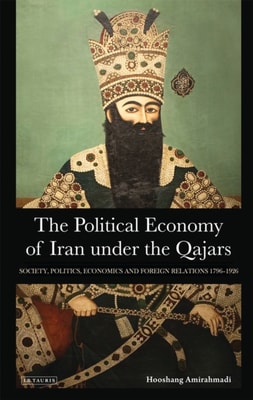
The political economy of Iran underwent the fundamental transition from feudalism to modernity from the early 19th to the 20th century: a period which was a vital watershed in Iran's historical development.
The Gulf Cooperation Council (GCC), made up of Saudi Arabia, Bahrain, Kuwait, Oman, Qatar and the United Arab Emirates (UAE), is one of the most resilient sub-regional organizations in the world, and the most successful in the Arab world.
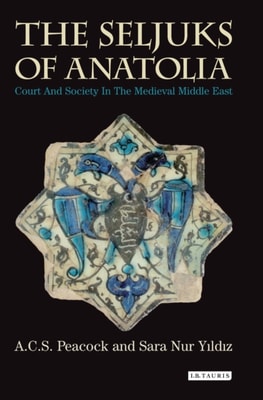
One of the most powerful dynasties to rule in the medieval Middle East, the Seljuks played a critical role in the development of Anatolia's multi-ethnic, multi-confessional identity.