From Timur's tent in Samarqand to Shah 'Abbas's palace in Isfahan and Humayun's tomb in Delhi, the pavilion has been an integral part of Persianate gardens since its earliest appearance at the Achaemenid garden in Pasargadae in the sixth century BC.
A mixture of travelogue, history and war journalism, Allah's Mountains tells the story of the conflict between a nation of mountain tribes and the might of the Russian army.
In the troubled island of Cyprus, the national interests and rivalries of Greece and Turkey still collide, the population remains divided between the Greek and Turkish communities and the country is still a cat's paw of outside powers - especially the USA and the now resurgent Russia - as it has been since the acquisition of the island by Britain in 1878.
The conclusion of World War I and the subsequent breakup of the Ottoman Empire led to theindependence of a number of Arab nations and resulted in a Western scramble for roles ofcontrol and influence over them.
As the only oil producer with sufficient spare capacity to shape the world economy, Saudi Arabia is one of the most significant states in twenty-first century geopolitics.
The profound effects of the British Empire's actions in the Arab World during the First World War can be seen echoing through the history of the 20th century.
Gandhi's involvement in Middle Eastern politics is largely forgotten yet it goes to the heart of his teaching and ambition - to lead a united freedom movement against British colonial power.
It has often been assumed that the subjects of the Ottoman sultans were unable to travel beyond their localities - since peasants needed the permission of their local administrators before they could leave their villages.
The on-going crisis in Syria has not only affected those caught within the country's borders, but with the deluge of refugees fleeing the violence, it has also had an impact on the surrounding countries.
Since the beginning of 2011, the political situation in Syria has consistently found itself at the top of news broadcasts, newspaper headlines and the agendas of politicians.
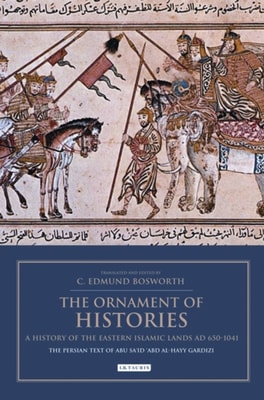
The Umayyad caliphate, ruling over much of what is now the modern Middle East after the death of the Prophet Muhammad, governe from Damascus from 661 to750CE, when they were expelled by the Abbasids.
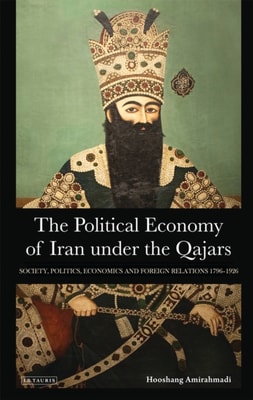
The political economy of Iran underwent the fundamental transition from feudalism to modernity from the early 19th to the 20th century: a period which was a vital watershed in Iran's historical development.
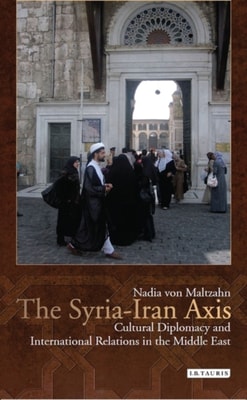
Since the Iranian Revolution, the close alliance between Syria and Iran has endured for over three decades, based on geopolitical interests between the two states and often framed in the language of resistance.
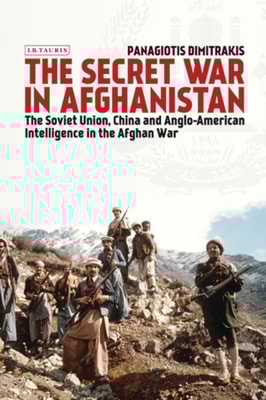
The Soviet invasion of Afghanistan, in support of a Marxist-Leninist government, and the subsequent nine-year conflict with the indigenous Afghan Mujahedeen was one of the bloodiest conflicts of the Cold War.
The reign of the founder of Cairo, the fourth Fatimid Imam-caliph al-Mu'izz li-Din Allah (341-365/953-975), marks a watershed in the transformation of the Fatimid state from a regional North African dynasty to an expansive Mediterranean empire.
In the decades since Edward Said first christened the term 'Orientalism', the discourse on the West's historical representation of the East has been inundated with new literature.
Over ninety years since their absorption into the modern Iraqi state, the Kurdish people of Iraq still remain an apparent anomaly in the modern world - a nation without a state.
The Iranian nuclear crisis has dominated world politics since the beginning of the century, with the country now facing increasing diplomatic isolation, talk of military strikes against its nuclear facilities and a disastrous Middle East war.
The conclusion of World War I and the subsequent breakup of the Ottoman Empire led to the independence of a number of Arab nations and resulted in a Western scramble for roles of control and influence over them.
Why does an officer in an elite regiment - the Grenadier Guards - exchange a prestigious and privileged career in the British Army for service among desert tribes in harsh and unforgiving territory, and in the seemingly insoluble conflict of the turbulent Arab world?
The great German theologian Albert Schweitzer famously drew a line under nineteenth-century historical Jesus research by showing that at the bottom of the well lay not the face of Joseph's son, but rather the features of all the New Testament scholars who had tried to reveal his elusive essence.
Beginning in January 2011, the Arab world exploded in a vibrant demand for dignity, liberty, and achievable purpose in life, rising up against an image and tradition of arrogant, corrupt, unresponsive authoritarian rule.
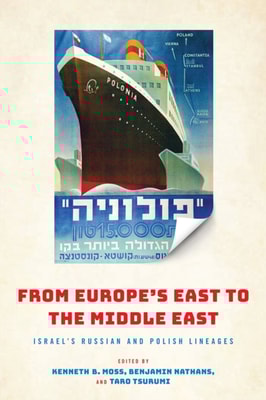
The overwhelming majority of Jews who laid the foundations of the Israeli state during the first half of the twentieth century came from the Polish lands and the Russian Empire.
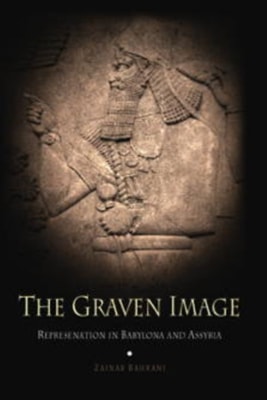
Mesopotamia, the world's earliest literate culture, developed a rich philosophical conception of representation in which the world was saturated with signs.