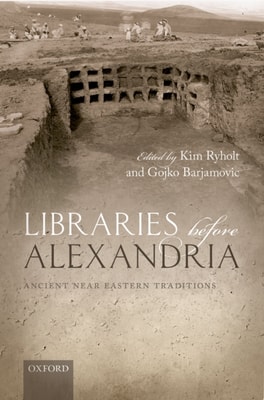
The creation of the Library of Alexandria is widely regarded as one of the great achievements in the history of humankind - a giant endeavour to amass all known literature and scholarly texts in one central location, so as to preserve it and make it available for the public.
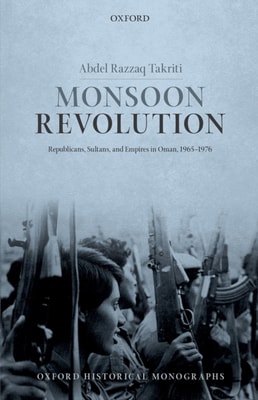
The Dhufar revolution in Oman (1965-1976) was the longest running major armed struggle in the history of the Arabian Peninsula, Britain's last classic colonial war in the region, and one of the highlights of the Cold War in the Middle East.
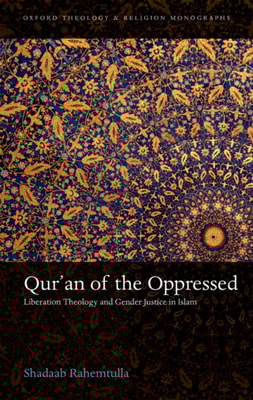
This study analyses the commentaries of four Muslim intellectuals who have turned to scripture as a liberating text to confront an array of problems, from patriarchy, racism, and empire to poverty and interreligious communal violence.
This study analyses the commentaries of four Muslim intellectuals who have turned to scripture as a liberating text to confront an array of problems, from patriarchy, racism, and empire to poverty and interreligious communal violence.
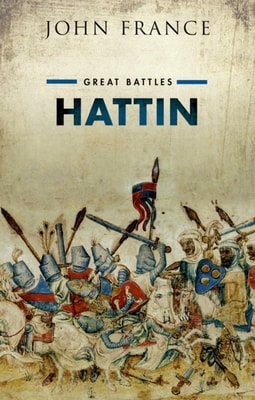
On 4 July 1187 the legendary Muslim leader Saladin destroyed the Crusader army of the Latin Kingdom of Jerusalem with a terrible slaughter at the battle of Hattin - and went on to restore the Holy City of Jerusalem to Islamic rule.
On 4 July 1187 the legendary Muslim leader Saladin destroyed the Crusader army of the Latin Kingdom of Jerusalem with a terrible slaughter at the battle of Hattin - and went on to restore the Holy City of Jerusalem to Islamic rule.
This book is about the emergence of a new activist Sufism in the Muslim world from the sixteenth century onwards, which emphasized personal responsibility for putting Godas guidance into practice.
This book is about the emergence of a new activist Sufism in the Muslim world from the sixteenth century onwards, which emphasized personal responsibility for putting Godas guidance into practice.
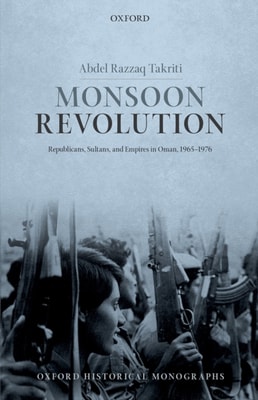
The Dhufar revolution in Oman (1965-1976) was the longest running major armed struggle in the history of the Arabian Peninsula, Britain's last classic colonial war in the region, and one of the highlights of the Cold War in the Middle East.
The Oxford Handbook of Contemporary Middle-Eastern and North African History critically examines the defining processes and structures of historical developments in North Africa and the Middle East over the past two centuries.
The Oxford Handbook of Contemporary Middle-Eastern and North African History critically examines the defining processes and structures of historical developments in North Africa and the Middle East over the past two centuries.
Histories of Palestine in the pre-1948 period usually assume the emergent Arab-Zionist conflict to be the central axis around which all change revolves.
The Mystery of the Hanging Garden of Babylon is an exciting story of detection involving legends, expert decipherment of ancient texts, and a vivid description of a little-known civilization.
The Mystery of the Hanging Garden of Babylon is an exciting story of detection involving legends, expert decipherment of ancient texts, and a vivid description of a little-known civilization.
In the critical period when Islamic law first developed, a new breed of jurists developed a genre of legal theory treatises to explore how the fundamental moral teachings of Islam might operate as a legal system.
In the critical period when Islamic law first developed, a new breed of jurists developed a genre of legal theory treatises to explore how the fundamental moral teachings of Islam might operate as a legal system.
The creation of the Library of Alexandria is widely regarded as one of the great achievements in the history of humankind - a giant endeavour to amass all known literature and scholarly texts in one central location, so as to preserve it and make it available for the public.
A dynamic account of the practice of Islamic law, this book focuses on the actions of a particular legal official, the muhtasib, whose vast jurisdiction included all public behavior.
A dynamic account of the practice of Islamic law, this book focuses on the actions of a particular legal official, the muhtasib, whose vast jurisdiction included all public behavior.
Before they had an empire in the East, the British travelled into the Islamic world to pursue trade and to form strategic alliances against the Catholic powers of France and Spain.
Before they had an empire in the East, the British travelled into the Islamic world to pursue trade and to form strategic alliances against the Catholic powers of France and Spain.
Hagith Sivan offers an unconventional study of one corner of the Roman Empire in late antiquity, weaving around the theme of conflict strands of distinct histories, and of peoples and places, highlighting Palestine's polyethnicity, and cultural, topographical, architectural, and religious diversity.
In dealing with a wide range of aspects of the life, activities, and customs of the Late Bronze Age Hittite world, this book complements the treatment of Hittite military and political history presented by the author in The Kingdom of the Hittites (OUP, 1998).
Here Jerome Murphy-O'Connor presents a completely new, and much more vivid and dramatic account of the life of Paul than has ever previously been attempted.
This volume (in French) contains the editio princeps of the second part (4Q550-583) of the Aramaic texts from Cave 4 at Qumran which were originally assigned to Pere Jean Starcky (4Q521-578).
In the first centuries AD, although much of the Near East was ruled by Rome, the main local language was Aramaic, and the people who lived inside or on the fringes of the area controlled by the Romans frequently wrote their inscriptions and legal documents in their own local dialects of this language.
Charles Ortloff provides a new perspective on archaeological studies of the urban and agricultural water supply and distribution systems of the major ancient civilizations of South America, the Middle East, and South-East Asia, by using modern computer analysis methods to extract the true hydraulic/hydrological knowledge base available to these peoples.
Hagith Sivan offers an unconventional study of one corner of the Roman Empire in late antiquity, weaving around the theme of conflict strands of distinct histories, and of peoples and places, highlighting Palestine's polyethnicity, and cultural, topographical, architectural, and religious diversity.
This book brings together new and original work by forty two of the world's leading scholars of Indo-European comparative philology and linguistics from around the world.
In this book, Martin Bunton focuses on the way in which the Palestine Mandate was part of a broader British imperial administration - a fact often masked by Jewish immigration and land purchase in Palestine.