This book examines the most turbulent period in the history of Jordan's ruling house, the six years following the assassination of the kingdom's founder, Abdullah (1951-1957).
Newspapers and the practice of journalism began in the Middle East in the nineteenth century and evolved during a period of accelerated sociopolitical and cultural change.
In 1908, the revolution of the Young Turks deposed the dictatorship of Sultan Abdulhamid II and established a constitutional regime that became the major ruling power in the Ottoman empire.
This is the first serious attempt to understand modern Iraq through a close examination of the political discourse used by the Ba'th regime and its leader, Saddam Hussein.
While there exists no evidence to date that the indigenous inhabitants of Arabia knew of holy war prior to Islam, holy war ideas and behaviors appear already among Muslims during the first generation.
Charles Issawi's collection of essays, Cross-Cultural Encounters and Conflicts, has been written in the belief that a study of the past encounters and conflicts between the world's major cultures can shed light on their nature and importance.
Positioned at the boundary of traditional biblical studies, legal history, and literary theory, Deuteronomy and the Hermeneutics of Legal Innovation shows how the legislation of Deuteronomy reflects the struggle of its authors to renew late seventh- century Judean society.
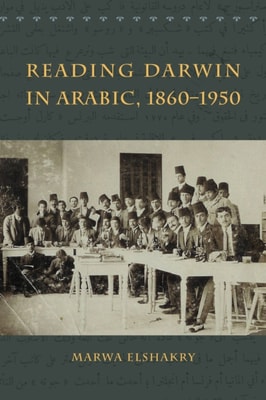
In Reading Darwin in Arabic, Marwa Elshakry questions current ideas about Islam, science, and secularism by exploring the ways in which Darwin was read in Arabic from the late 1860s to the mid-twentieth century.
Combining international and domestic perspectives, this book analyzes the transformation of the Ottoman Empire over the nineteenth and twentieth centuries.
Esteemed scholar David Leeming, who has authored more than twelve books on mythology, here offers the first comprehensive narrative study of the mythology of the Middle East, that tumultuous region that was the cradle of civilization.
"e;Operation Solomon"e; was one of the most remarkable rescue efforts in modern history, in which more than 14,000 Ethiopian Jews were airlifted to Israel in little more than a day.
In order to understand Iran's religious revolution of 1978-1979, it is important to look closely at an earlier revolution in the country, the constitutional revolution of 1905-1909.
Britain's Levantine Empire, 1914-1923 explains the rise and decline and nature and extent of British military rule in the urban eastern Mediterranean during the course of the First World War and its aftermath.
Church Architecture of Late Antique Northern Mesopotamia examines the church architecture of Northern Mesopotamia between the fourth and eighth centuries.
Church Architecture of Late Antique Northern Mesopotamia examines the church architecture of Northern Mesopotamia between the fourth and eighth centuries.
Caliphs and Merchants: Cities and Economies of Power in the Near East (700-950) offers fresh perspectives on the origins of the economic success of the early Islamic Caliphate, identifying a number of previously unnoticed or underplayed yet crucial developments, such as the changing conditions of labour, attitudes towards professional associations, and the interplay between the state, Islamic religious institutions, and the economy.
Caliphs and Merchants: Cities and Economies of Power in the Near East (700-950) offers fresh perspectives on the origins of the economic success of the early Islamic Caliphate, identifying a number of previously unnoticed or underplayed yet crucial developments, such as the changing conditions of labour, attitudes towards professional associations, and the interplay between the state, Islamic religious institutions, and the economy.
Educating Palestine, through the story of education and the teaching of history in Mandate Palestine, reframes our understanding of the Palestinian and Zionist national movements.
Educating Palestine, through the story of education and the teaching of history in Mandate Palestine, reframes our understanding of the Palestinian and Zionist national movements.
This book explores the story of the Israelites' worship of the Golden Calf in its Jewish, Christian, and Muslim contexts, from ancient Israel to the emergence of Islam.
This book explores the story of the Israelites' worship of the Golden Calf in its Jewish, Christian, and Muslim contexts, from ancient Israel to the emergence of Islam.
A Commerce of Knowledge tells the story of three generations of Church of England chaplains who served the English Levant Company in Syria during the seventeenth and eighteenth centuries.
A Commerce of Knowledge tells the story of three generations of Church of England chaplains who served the English Levant Company in Syria during the seventeenth and eighteenth centuries.
The Middle East today is characterized by an astonishingly bloody civil war in Syria, an ever more highly racialized and militarized approach to the concept of a Jewish state in Israel and the Palestinian territories, an Iraqi state paralyzed by the emergence of class- and region-inflected sectarian identifications, a Lebanon teetering on the edge of collapse from the pressures of its huge numbers of refugees and its sect-bound political system, and the rise of a wide variety of Islamist paramilitary organizations seeking to operate outside all these states.
The Middle East today is characterized by an astonishingly bloody civil war in Syria, an ever more highly racialized and militarized approach to the concept of a Jewish state in Israel and the Palestinian territories, an Iraqi state paralyzed by the emergence of class- and region-inflected sectarian identifications, a Lebanon teetering on the edge of collapse from the pressures of its huge numbers of refugees and its sect-bound political system, and the rise of a wide variety of Islamist paramilitary organizations seeking to operate outside all these states.
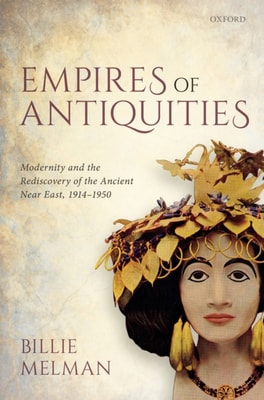
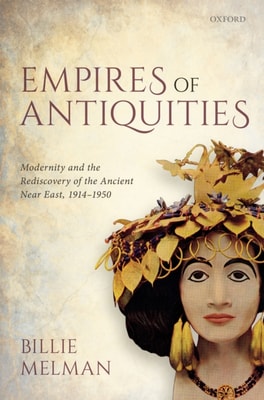
Empires of Antiquities is a history of the rediscovery of civilizations of the ancient Near East in the imperial order that evolved between the outbreak of the First World War and the 1950s.
Empires of Antiquities is a history of the rediscovery of civilizations of the ancient Near East in the imperial order that evolved between the outbreak of the First World War and the 1950s.