This book is an attempt to explain how, in the face of increasing religious authoritarianism in medieval Islamic civilization, some Muslim thinkers continued to pursue essentially humanistic, rational, and scientific discourses in the quest for knowledge, meaning, and values.
Hailed in The New York Times Book Review as "e;the doyen of Middle Eastern studies,"e; Bernard Lewis has been for half a century one of the West's foremost scholars of Islamic history and culture, the author of over two dozen books, most notably The Arabs in History, The Emergence of Modern Turkey, The Political Language of Islam, and The Muslim Discovery of Europe.
Contemporary Muslims face a challenge: how should they define the relationship between normative Islamic jurisprudence--worked out by classical jurists over the course of centuries-and the reality that confronts them in their everyday lives.
Contemporary Muslims face a challenge: how should they define the relationship between normative Islamic jurisprudence--worked out by classical jurists over the course of centuries-and the reality that confronts them in their everyday lives.
This book introduces readers to Abu Bakr al-Razi (known in Latin as Rhazes), one of the most innovative and divisive figures of the early philosophical tradition in the Islamic world.
This book introduces readers to Abu Bakr al-Razi (known in Latin as Rhazes), one of the most innovative and divisive figures of the early philosophical tradition in the Islamic world.
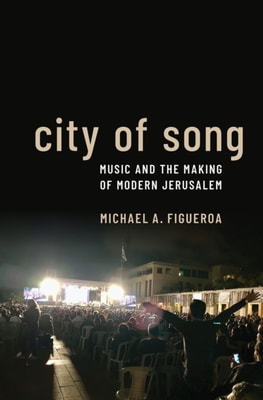
Modern Jerusalem, a city central to Jewish, Muslim, and Christian religious imaginaries and the political epicenter of the Israeli-Palestinian crisis, is to put it mildly a highly contested space.
Modern Jerusalem, a city central to Jewish, Muslim, and Christian religious imaginaries and the political epicenter of the Israeli-Palestinian crisis, is to put it mildly a highly contested space.
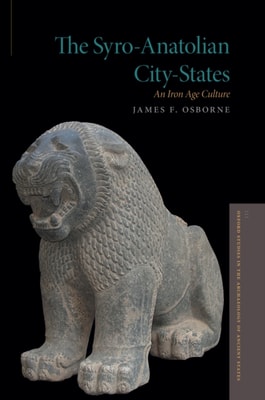
This book presents a new model for understanding the collection of ancient kingdoms that surrounded the northeast corner of the Mediterranean Sea from the Cilician Plain in the west to the upper Tigris River in the east, and from Cappadocia in the north to western Syria in the south, during the Iron Age of the ancient Near East (ca.
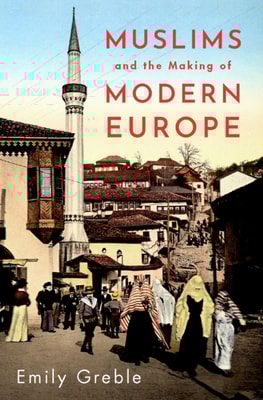
Muslims and the Making of Modern Europe shows that Muslims were citizens of modern Europe from its beginning and, in the process, rethinks Europe itself.
Muslims and the Making of Modern Europe shows that Muslims were citizens of modern Europe from its beginning and, in the process, rethinks Europe itself.
The cultures of Nubia built the earliest cities, states, and empires of inner Africa, but they remain relatively poorly known outside their modern descendants and the community of archaeologists, historians, and art historians researching them.
Theological Stains offers the first in-depth study of the development of art music in Israel from the mid-twentieth century to the turn of the twenty-first.
Theological Stains offers the first in-depth study of the development of art music in Israel from the mid-twentieth century to the turn of the twenty-first.
Schoenbaum's book is a history of one of the most remarkable liaisons in international experience, a portrait of the special relationship between the last remaining superpower and the tiny Jewish state between the Jordan and the Mediterranean, and a study of how that relationship grew and works.
In 1720, an Ottoman ambassador was sent to the court of the Child King Louis XV to observe Western civilization and report on what he saw and how it could be applied in the Ottoman Empire.
This is the first comprehensive history and economic analysis of the Fertile Crescent during the 19th century, a region currently encompassing Iraq, Syria, Lebanon, Israel, Jordan, and a small part of Turkey.
Israel is the only new state among the twenty-one countries in the world today that have maintained democracy without interruption since the end of the Second World War.
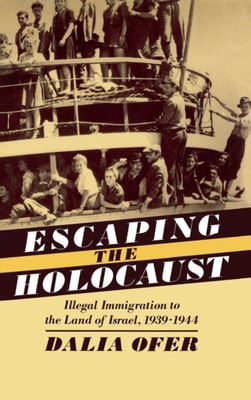
Illegal Jewish immigration to Palestine prior to the founding of the State of Israel forms one of the most fascinating chapters in the history of Zionism and modern Jewish history.
This is a penetrating account of Anglo-Iraqi relations from 1929, when Britain decided to grant independence to Iraq, to 1941, when hostilities between the two nations came to an end.
Throughout the 20th century, Egyptian nationalism has alternately revolved around three primary axes: a local Egyptian territorial nationalism, a sense of Arab ethnic-linguistic nationalism, and an identification with the wider Muslim community.
While for many years scholars and journalists have focused on the more obvious manifestations of political life in the Middle East, one major theme has been consistently neglected.
In this thought-provoking interdisciplinary work, Shaun Marmon describes how eunuchs, as a category of people who embodied ambiguity, both defined and mediated critical thresholds of moral and physical space in the household, in the palace and in the tomb of pre-modern Islamic society.
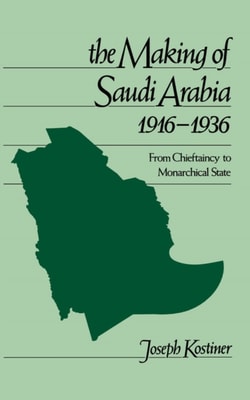
The Making of Saudi Arabia focuses on the transformation of the Saudi state from a loose tribal confederation into a more organized, monarchical state, a process which evolved mainly between 1916 and 1936.