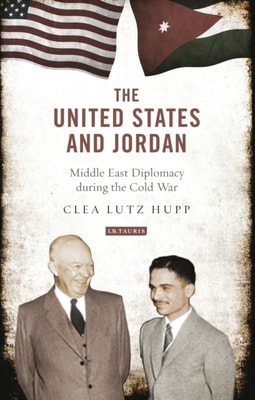
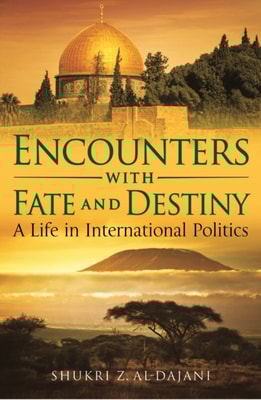
US foreign policy in the Middle East has faced a challenge in the years since World War II: balancing an idealistic desire to promote democracy against the practical need to create stability.
The Republican People's Party (RPP), also know as the CHP (Cumhuriyet Halk Partisi), stands as the main opposition party - one of two major political currents, second only to the Erdooan's AK Party.
The uprisings of 2011, which erupted so unexpectedly and spread across the Middle East, once again propelled the armies of the region to the centre of the political stage.
Shi`i Ismaili Muslims are unique in following for centuries a living, hereditary Imam (spiritual leader), whom they believe to be directly descended from the Prophet Muhammad.
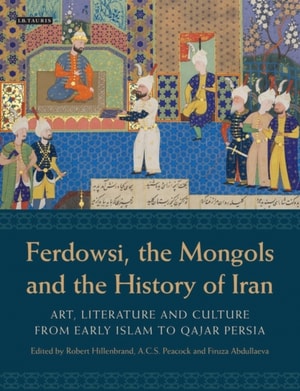
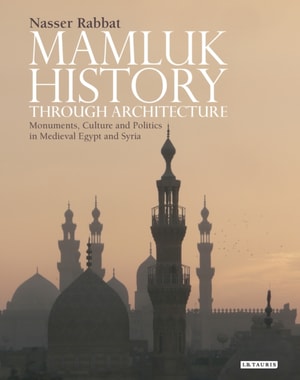
The Mongol invasions in the first half of the thirteenth century led to profound and shattering changes to the historical trajectory of Islamic West Asia.
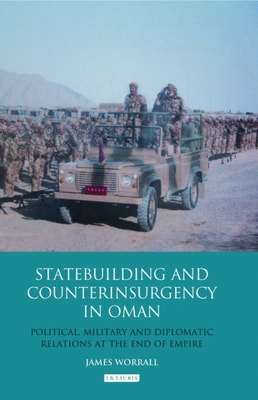
In the depths of the Cold War and in the wake of Britain's announcement of its intention to withdraw 'East of Suez' by the end of 1971, Britain was faced with the stark reality of a Marxist rebellion in the Dhofar province of Oman.
Russians in Iran seeks to challenge the traditional narrative regarding Russian involvement Iran and to show that whilst Russia's historical involvement in Iran is longstanding it is nonetheless much misunderstood.
The architecture of the Islamic world is predominantly considered in terms of a dual division between 'tradition' and 'modernity' - a division which, Saeid Khaghani here argues, has shaped and limited the narrative applied to this architecture.
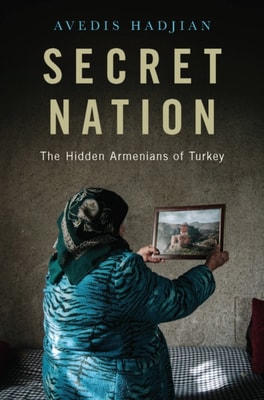
In 1981 a young semi-professional footballer - known as `Imam Beckenbauer' for his piety and his dominant style of play - has his career cut short after a confrontation with Turkey's military junta.
The Xi'an Stele, erected in Tang China's capital in 781, describes in both Syriac and Chinese the existence of Christian communities in northern China.
Allopathy is often described as 'western' medicine, the antithesis of homeopathy, yet all medical systems are infused with culture-specific values, ideas and beliefs.
In a world of rising tensions between Russia and the United States, the Middle East and Europe, Sunnis and Shiites, Islamism and liberalism, Turkey is at the epicentre.
The 'neoliberal' economic policy of President Recep Tayyip Erdogan's AKP Party, which has delivered extraordinary growth in Turkish GDP over the last decade, has been one of the foundations of the party's popular appeal.
This revised edition builds upon and updates its twin themes of Turkey's continuing incorporation into the capitalist world and the modernization of state and society.
Despite, or even because of their tumultuous history, Palestinians are renowned for being prolific cultural producers, creating many of the Arab world's most iconic works of literature.
The Hadhramis of Yemen have migrated for centuries in large numbers, establishing a diaspora that extends around the Indian Ocean, Saudi Arabia and the other Gulf States.
Railway expansion was the great industrial project of the late 19th century, and the Great Powers built railways at speed and reaped great commercial benefits.
She has received numerous accolades including an Academy Award and two Golden Globes, and in 2004 became the first ever American woman to be nominated for a Best Director Oscar.
The story of the 9th-century caliphal mission from Baghdad to discover the legendary barrier against the apocalyptic nations of Gog and Magog mentioned in the Quran, has been either dismissed as superstition or treated as historical fact.
At a time when Iran is represented in the French media as a rogue state obsessed with its nuclear programme, and when France is portrayed in the Iranian media as a decadent and imperialist country, this book highlights the role of cultural representations and perceptions.