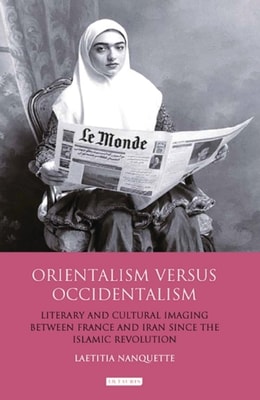
Zhand Shakibi presents a new interpretation of the political and social dynamics of the last decade of the Shah's rule that challenges the binary view of pro-West Shah and anti-West Ayatollah by drawing attention to the Pahlavi state's reaction to the intellectual and societal backlash against cultural and moral Occidentalism in its last decade.
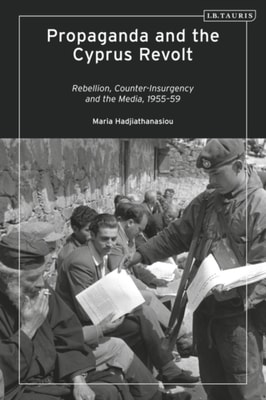
During the EOKA period of Greek Cypriot revolt against British colonial rule, the Greek Cypriots and the British deployed propaganda as a means of swaying allegiances, both within Cyprus and on the international scene.
At an auction in Edinburgh in 2010, the sale of an old walking stick belonging to a British officer, Captain Gill, shed new light on one of the mysterious crimes of the Victorian era.
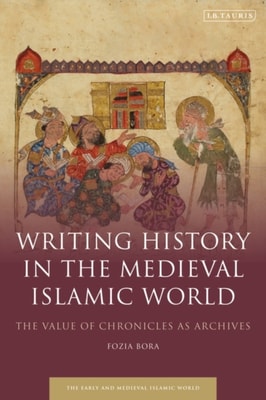
In the 'encyclopaedic' fourteenth century, Arabic chronicles produced in Mamluk cities bore textual witness to both recent and bygone history, including that of the Fatimids (969–1171CE).
Turkish Intelligence and the Cold War examines the hitherto unexplored history of secret intelligence cooperation between three asymmetric partners specifically the UK, US and Turkey from the end of the Second World War until the Turkey's first military coup d' tat on 27 May 1960.
Following the devastating Mongol conquest of Baghdad in 1258, the domination of the Abbasids declined leading to successor polities, chiefly among them the Ilkhanate in Greater Iran, Iraq and the Caucasus.
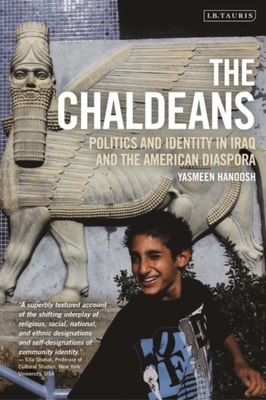
Modern Chaldeans are an Aramaic speaking Catholic Syriac community from northern Iraq, not to be confused with the ancient Mesopotamian civilization of the same name.
The Ottoman–Safavid conflict was viewed by the countries of Europe as being beneficial to their interests and there was therefore a subsequent hunger for up-to-date intelligence of events in that part of the world.
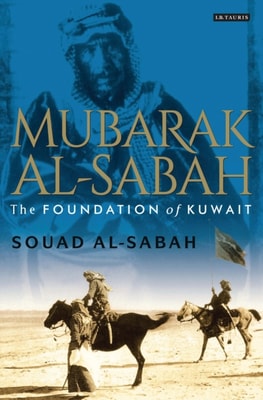
Amidst political upheaval and the decline of the Ottoman Empire, the State of Kuwait emerged as an independent country under British protection in 1899, with Sheikh Mubarak Al Sabah widely accredited as the instrument of its foundation.
In a world of rising tensions between Russia and the United States, the Middle East and Europe, Sunnis and Shiites, Islamism and liberalism, Turkey is at the epicentre.
Architecture and urban planning have always been used by political regimes to stamp their ideologies upon cities, and this is especially the case in the modern Turkish Republic.
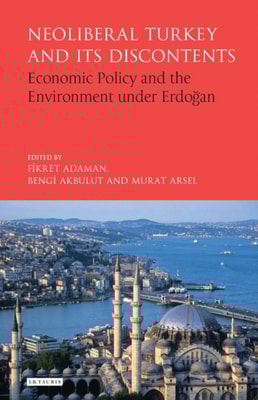
The 'neoliberal' economic policy of President Recep Tayyip Erdogan's AKP Party, which has delivered extraordinary growth in Turkish GDP over the last decade, has been one of the foundations of the party's popular appeal.
This revised edition builds upon and updates its twin themes of Turkey's continuing incorporation into the capitalist world and the modernization of state and society.
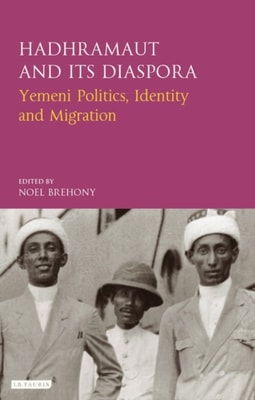
The Hadhramis of Yemen have migrated for centuries in large numbers, establishing a diaspora that extends around the Indian Ocean, Saudi Arabia and the other Gulf States.
Railway expansion was the great industrial project of the late 19th century, and the Great Powers built railways at speed and reaped great commercial benefits.
This book highlights the role of cultural representations and perceptions, such as when Iran is represented in the French media as a rogue state obsessed with its nuclear programme, and when France is portrayed in the Iranian media as a decadent and imperialist country.
Drawing on a variety of sources, ranging from interviews with key figures to unpublished archival material, Saban Halis Calis traces this ambition back to the 1930s.
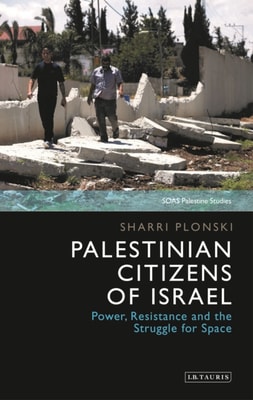
Since the 1993 Oslo Accords, the Occupied Palestinian Territory has been the subject of extensive international peacebuilding and statebuilding efforts coordinated by Western donor states and international finance institutions.
Early twentieth-century Iran had been dominated by the competing influences of the two great imperial powers of the time - Russia and Britain - making it difficult for a third power to establish a foothold.
US foreign policy in the Middle East has faced a challenge in the years since World War II: balancing an idealistic desire to promote democracy against the practical need to create stability.
Sir Kennedy Trevaskis was the last High Commissioner of South Arabia - a role he held from 1963-1965, which provided the pinnacle of his career and yet also his ultimate failure.
60 per cent of Jordanians are of Palestinian origin,a statistic which has propelled Jordan into the role of both player and pawn in regional issues such as the birth of the state of Israel,the prolonged Israel-Palestine conflict, the ascent and decline of Arab nationalism and the subsequent rise of political Islam and radicalism.
Amidst political upheaval and the decline of the Ottoman Empire, the State of Kuwait emerged as an independent country under British protection in 1899, with Sheikh Mubarak Al Sabah widely accredited as the instrument of its foundation.
Few images are as evocative as the silhouette of the Arab dhow as, under full sail, it tacks to windward on glittering waters of Red Sea before moving across the face of the rising or setting sun.
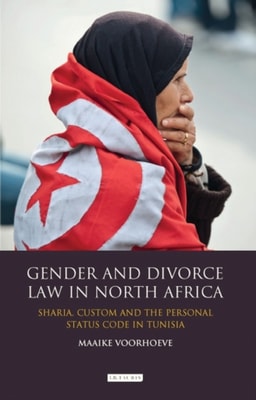
Personal status laws remain a highly politicized area of debate in the Middle East, as the arena in which the contentious issues of women's rights, religion and minority groups meet.
Early twentieth-century Iran had been dominated by the competing influences of the two great imperial powers of the time - Russia and Britain - making it difficult for a third power to establish a foothold.