The family from which I am derived is not an ignoble one, but hath descended all along from the priests; and as nobility among several people is of a different origin, so with us to be of the sacerdotal dignity, is an indication of the splendor of a family.
I suppose that by my books of the Antiquity of the Jews, most excellent Epaphroditus, have made it evident to those who peruse them, that our Jewish nation is of very great antiquity, and had a distinct subsistence of its own originally; as also, I have therein declared how we came to inhabit this country wherein we now live.
How progressive doctors, medical institutions, and state forces in Turkey use forensic methods to detect, erase, and reveal evidence of state violenceForensic Fantasies explores the role of medical documentation and evidence in uncovering human rights violations.
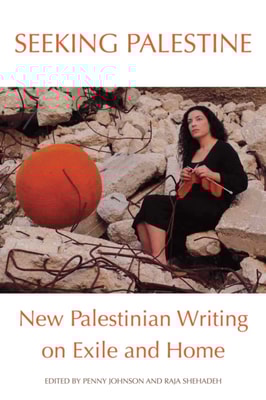
How do Palestinians live, imagine and reflect on home and exile in this period of a stateless and transitory Palestine and a sharp escalation in Israeli state violence and accompanying Palestinian oppression?
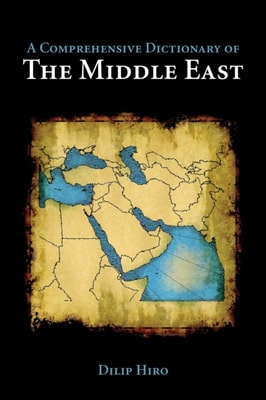
Highly readable and up-to-date to reflect the vast changes taking place in the region In this up-to-date, painstakingly researched dictionary, author Dilip Hiro brings one of the most tumultuous regions of the world to our fingertips.
Political speeches and public rhetoric paint the phenomena of terrorism with a black-and-white brush, presenting it as a clear-cut battle between evildoers and heroes.
This timely work, contributed by noted authorities, explains the crucial events in the history of the Israeli-Palestinian conflict that led to the UN resolution to partition Palestine into two states on November 29, 1947.
This timely work, contributed by noted authorities, explains the crucial events in the history of the Israeli-Palestinian conflict that led to the UN resolution to partition Palestine into two states on November 29, 1947.
Pentecostals and Nonviolence explores how a distinctly Pentecostal-charismatic peace witness might be reinvigorated and sustained in the twenty-first century.
In A Faith Not Worth Fighting For, editors Justin Bronson Barringer and Tripp York have assembled a number of essays by pastors, activists, and scholars in order to address the common questions and objections leveled against the Christian practice of nonviolence.
Spanning various regions of Sub-Saharan Africa, the authors of this volume come together to explore the complex relationship between religion and democracy in contemporary Africa.
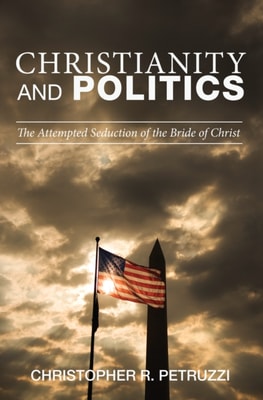
The church in the United States faces a dilemma: How is it possible for Christ's followers to worship faithfully in a nationalistic environment where religion and politics enjoy a vigorous affiliation while the separation of church and state is celebrated as the standard for the relationship between nation and faith?
BBC bureau chief Paul Danahar sets out the new order in the Middle East following the Arab Spring, and explains what it will mean both for the region and the West.
With a thrilling narrative that sheds much light on recent events, this national bestseller brings to life the 1953 CIA coup in Iran that ousted the countrys elected prime minister, ushered in a quarter-century of brutal rule under the Shah, and stimulated the rise of Islamic fundamentalism and anti-Americanism in the Middle East.
In recent generations, the Muslim and Arab world has been suffused with publications on the subject of the People of Israel, its Torah, and this people's affinity to the Land of Israel.
This comprehensive account examines the growing conflict between Arab and Jew in Palestine that first surfaced clearly in the pivotal years 1933-1939, and which proved to be an irreconcilable rift once the leadership of both peoples refused to accept minority status.
This comprehensive account examines the growing conflict between Arab and Jew in Palestine that first surfaced clearly in the pivotal years 1933-1939, and which proved to be an irreconcilable rift once the leadership of both peoples refused to accept minority status.
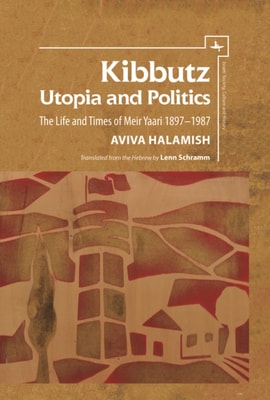
Meir Yaari (1897-1987) was the leader of Hashomer Hatza'ir, a movement which took an active part in shaping the history of the Jewish people in the crucial decades of the twentieth century.
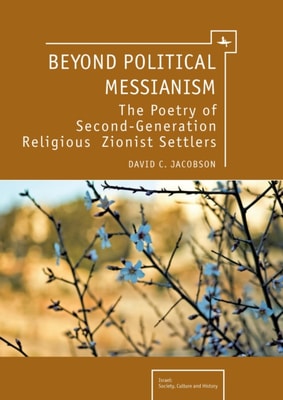
In recent decades, a group of second generation religious Zionist West Bank settlers have turned away from the collectivist political messianic ideology of the first generation of settlers and have begun to explore poetry as a mode of individual self-expression.
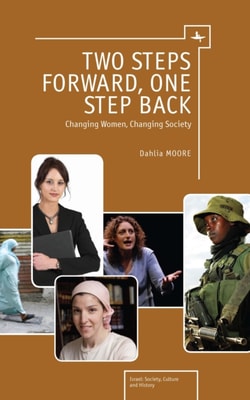
In Two Steps Forward, One Step Back, Dahlia Moore explores the social and cultural forces at play in Israeli society and their effects on the changing status of women.
Authority and Participation in a New Democracy focuses on the changes undergone by Mapai, Israel's first ruling party, during Israel's first years of independence, then analyzes the effects of these changes in relation to Israeli political culture.
This extensively-researched collection of essays lucidly explores how members of the ever-beleaguered Jewish people grappled with their identities during the past century in the United States and in Eretz Israel, the new centers of Jewry's long historical experience.
Zionist Arabesques is an ethno-historical account of the landscape of the Jezreel Valley in Israel and explores how the modern landscape of the valley has been created, both physically and symbolically, from the perspective of both local and large-scale processes.
Ever since the archaeological rediscovery of the Ancient Near East, generations of scholars have attempted to reconstruct the "real Babylon,” known to us before from the evocative biblical account of the Tower of Babel.