Addressing the relationship between religion and ideology, and drawing on a range of literary, ritual, and visual sources, this book reconstructs the cultural discourse of Assyria from the third through the first millennium BCE.
This book investigates the issue of the singularity versus the multiplicity of ancient Near Eastern deities who are known by a common first name but differentiated by their last names, or geographic epithets.
Economic history is well documented in Assyriology, thanks to the preservation of dozens of thousands of clay tablets recording administrative operations, contracts and acts dealing with family law.
This volume examines the state ideology of Assyria in the Early Neo-Assyrian period (934-745 BCE) focusing on how power relations between the Mesopotamian deities, the Assyrian king, and foreign lands are described and depicted.
Ever since the archaeological rediscovery of the Ancient Near East, generations of scholars have attempted to reconstruct the "real Babylon,” known to us before from the evocative biblical account of the Tower of Babel.
Addressing the relationship between religion and ideology, and drawing on a range of literary, ritual, and visual sources, this book reconstructs the cultural discourse of Assyria from the third through the first millennium BCE.
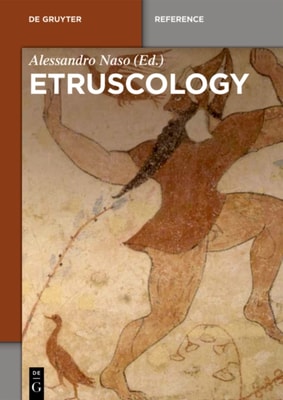
This handbook has two purposes: it is intended (1) as a handbook of Etruscology or Etruscan Studies, offering a state-of-the-art and comprehensive overview of the history of the discipline and its development, and (2) it serves as an authoritative reference work representing the current state of knowledge on Etruscan civilization.
Economic history is well documented in Assyriology, thanks to the preservation of dozens of thousands of clay tablets recording administrative operations, contracts and acts dealing with family law.
This volume examines the state ideology of Assyria in the Early Neo-Assyrian period (934-745 BCE) focusing on how power relations between the Mesopotamian deities, the Assyrian king, and foreign lands are described and depicted.
The first book to speak out against the pervasive influence of the American-Israeli Public Affairs Committee (AIPAC) on American politics, policy, and institutions resonates today as never before.
The first book to speak out against the pervasive influence of the American-Israeli Public Affairs Committee (AIPAC) on American politics, policy, and institutions resonates today as never before.
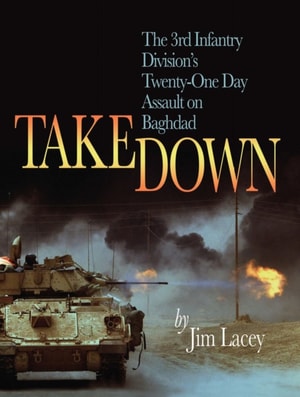
Over time the impression has grown that the 2003 invasion of Iraq met with little resistance and that, with few exceptions, the Iraqi army simply melted away.
Naval Institute Press and the United States Army Journal, Armor is pleased to offer a unique collection of essays highlighting Iraq's social, political and military history from a purely Iraqi perspective.
Since the United Nations adopted the principle of self-determination in 1945, great powers have found that military strength is no guarantee of success in small wars fought against insurgents who use guerrilla and terrorist tactics.
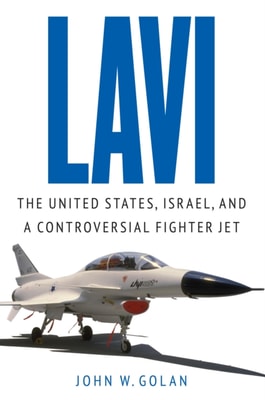
The Lavi fighter program, the largest weapons-development effort ever undertaken by the State of Israel, envisioned a new generation of high-performance aircraft.
The Lavi fighter program, the largest weapons-development effort ever undertaken by the State of Israel, envisioned a new generation of high-performance aircraft.
Turkey, which has always held an important position in global affairs, has become even more prominent on the international stage as an economic power and a harbinger of political Islam.
Political speeches and public rhetoric paint the phenomena of terrorism with a black-and-white brush, presenting it as a clear-cut battle between evildoers and heroes.
Although Boris Senior may not be well known outside Israel, he played an important, even vital, part in the formation of the Israel Air Force (IAF) and in the 1948 War of Independence.
Two of the most prominent trends in world affairs over the past decade—the projection of American power abroad and high energy prices—have made for some strange bedfellows.
a The conflict is only a seemingly' beyond solution, because all historical-political problems have solutions, if there is enough courage, honesty, and steadfastness.