The fifth and final instalment in Simon Scarrow's electrifying ARENA series sees gladiator Pavo face his most gruelling battle yet as strives to avenge his father's death.
The true story of seventeen months in the life of a Vietnamese village where a handful of American Marines and Vietnamese militia lived and died together attempting to defend it.
This riveting New York Times bestseller tells of the shocking true story of a rogue Soviet submarine poised for a nuclear strike on the United States, ';reveal[ing] the explosive facts about one of the best-kept secrets of the Cold War' (The Flint Journal).
Afghanistan: A Military History from the Ancient Empires to the Great Game covers the military history of a region encompassing Afghanistan, Central and South Asia, and West Asia, over some 2,500 years.
An accessible modern translation of essential speeches from Thucydides's History that takes readers to the heart of his profound insights on diplomacy, foreign policy, and warWhy do nations go to war?
In this comprehensive overview of ancient warfare, Antonio Santosuosso explores how the tactical and strategic concepts of warfare changed between the beginning of the fifth century B.
In this comprehensive overview of ancient warfare, Antonio Santosuosso explores how the tactical and strategic concepts of warfare changed between the beginning of the fifth century B.
Piracy, Pillage, and Plunder in Antiquity explores appropriation in its broadest terns in the ancient world, from brigands, mercenaries and state-sponsored "e;piracy"e;, to literary appropriation and the modern plundering of antiquities.
Piracy, Pillage, and Plunder in Antiquity explores appropriation in its broadest terns in the ancient world, from brigands, mercenaries and state-sponsored "e;piracy"e;, to literary appropriation and the modern plundering of antiquities.
The achievements of the Greek cavalry on the battlefield were monumental, and yet until now the heavy infantry - the hoplite - has received by far the most attention from military historians.
The achievements of the Greek cavalry on the battlefield were monumental, and yet until now the heavy infantry - the hoplite - has received by far the most attention from military historians.
The epic story of the inevitable fall of Rome's gloryIn The Fall of the Roman Empire, Peter Heather skillfully weaves a captivating tale of an ancient and long-lasting superpower that crumbled within the short space of a century.
Go tell the Spartans, Passerby, That here, obedient to their laws, we lie' Thus did the poet Simonides remember the three hundred elite Spartan warriors who, led by their king, Leonidas, faced the vast, inrushing Persian army at the 'hot gates' of Thermopylae and fought to the death for an ideal dearer to them than life itself - the ideal of freedom.
A splendid (The Wall Street Journal) account of one of ancient historys most important and yet little-known wars, the campaign culminating in the Battle of Actium in 31 BC, whose outcome determined the future of the Roman Empire.
From classicist James Romm comes a ';strikingfascinating' (Booklist) deep dive into the last decades of ancient Greek freedom leading up to Alexander the Great's destruction of Thebesand the saga of the greatest military corps of the time, the Theban Sacred Band, a unit composed of 150 pairs of male lovers.
**New York Times Book Review Editors' Choice** To save ancient Arabic texts from Al Qaeda, a band of librarians pulls off a brazen heist worthy of Ocean's Eleven in this ';fast-paced narrative that ispart intellectual history, part geopolitical tract, and part out-and-out thriller' (The Washington Post) from the award-winning journalist and author of The Falcon Thief.
An incisive look at immigration, assimilation, and national identity (Kirkus Reviews) and the landmark immigration law that transformed the face of the nation more than fifty years ago, as told through the stories of immigrant families in one suburban county in Virginia.
A detailed overview of the tumultuous events of this pivotal period, in which a divided Rome was plagued by assassination, civil wars, and invading hordes.
On 8 November 2004, the largest battle of the War on Terror began, with the US Army's assault on Fallujah and its network of tens of thousands of insurgents hiding in fortified bunkers, on rooftops, and inside booby-trapped houses.
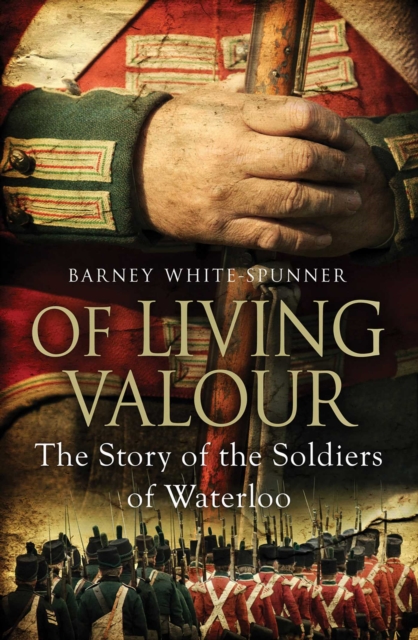
Publishing to coincide with the 200th anniversary of the Battle of Waterloo, for the first time a modern British history tells the story of the against-the-odds triumph through the accounts of the regimental officers and soldiers whose bravery and resolution achieved victory.