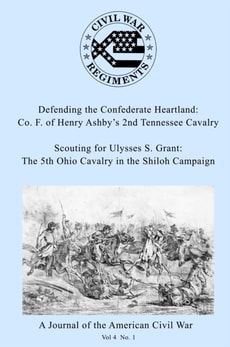
Balanced and in-depth military coverage (all theaters, North and South) in a non-partisan format with detailed notes, offering meaty, in-depth articles, original maps, photos, columns, book reviews, and indexes.
Elizabeth Bowen: A Literary Life reinvents Bowen as a public intellectual, propagandist, spy, cultural ambassador, journalist, and essayist as well as a writer of fiction.
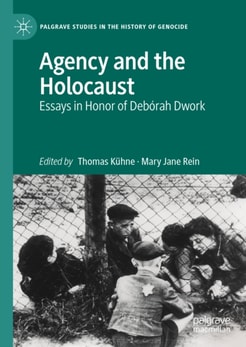
The book assembles case studies on the human dimension of the Holocaust as illuminated in the academic work of preeminent Holocaust scholar Deborah Dwork, the founding director of the Strassler Center for Holocaust and Genocide Studies, home of the first doctoral program focusing solely on the Holocaust and other genocides.
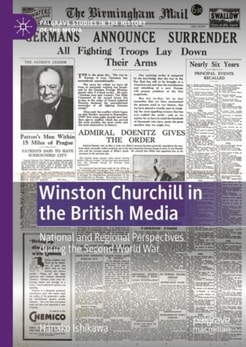
The book explores how Churchill was portrayed in the UK press during the Second World War, comparing his depictions in Scottish, Welsh, Northern Irish, and provincial English newspapers.
This book provides numerous examples that apply the modern theory of bureaucracy developed in Breton and Wintrobe (1982 and 1986) to the Nazi Holocaust.
This book is the first to bring together analyses of the full range of post-war testimony given by survivors of the Sonderkommando of Auschwitz-Birkenau.
This book elaborates Jean Amery's critique of philosophy and his discussion of some central philosophical themes in At the Mind's Limits and his other writings.
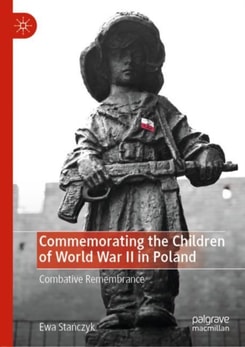
This book explores contemporary debates surrounding Poland's 'war children', that is the young victims, participants and survivors of the Second World War.
This book examines the history of Herbert Hoover's Commission for Relief in Belgium, which supplied humanitarian aid to the millions of civilians trapped behind German lines in Belgium and Northern France during World War I.
Books Across Borders: UNESCO and the Politics of Postwar Cultural Reconstruction, 1945-1951 is a history of the emotional, ideological, informational, and technical power and meaning of books and libraries in the aftermath of World War II, examined through the cultural reconstruction activities undertaken by the Libraries Section of the United Nations Educational, Scientific and Cultural Organization (UNESCO).
This book represents a new reading of a key moment in the history of East European Jewry, namely the period preceding the collapse of the Russian Empire.
This book provides a thorough examination of the relations between the men in the British, French and American armies on the Western Front of the First World War.
This volume explores how art and artifacts can tell women's stories of war-a critical way into these stories, often hidden due to the second-tier status of reporting women's accomplishments.
This book investigates the memory of the Holocaust in Sweden and concentrates on early initiatives to document and disseminate information about the genocide during the late 1940s until the early 1960s.
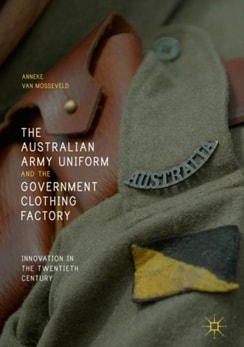
This book reveals the business history of the Australian Government Clothing Factory as it introduced innovative changes in the production and design of the Australian Army uniform during the twentieth century.
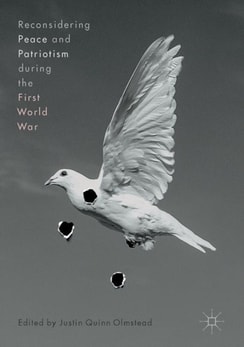
This volume provides a unique view of the movement for peace during the First World War, with authors from across Europe and the United States, each providing a distinctive cultural analysis of peace movements during the Great War.
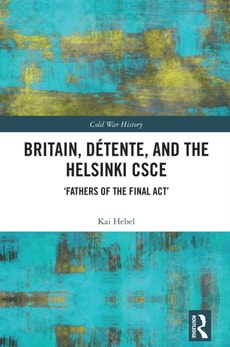
This book offers the first in-depth account of the United Kingdom's contribution to the rapprochement between East and West that culminated in the successful negotiation of the Helsinki Final Act of 1975.
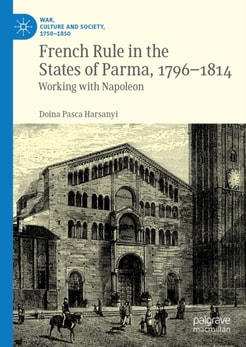
This book addresses the interplay between collaboration and resistance during the Revolutionary/Napoleonic era in the Duchies of Parma, Piacenza and Guastalla, renamed States of Parma in 1802 and Department of Taro in 1808.
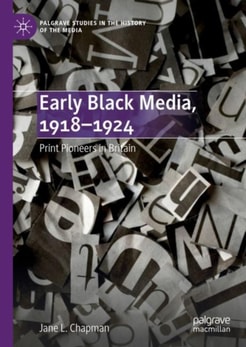
This book represents the first systematic attempt to analyse media and public communications published in Britain by people of African and Afro-Caribbean origin during the aftermaths of war, presenting an in-depth study of print publications for the period 1919-1924.
This book analyses the film industries and cinema cultures of Nazi-occupied countries (1939-1945) from the point of view of individuals: local captains of industry, cinema managers, those working for film studios and officials authorized to navigate film policy.
Drawing from military geography's spatial roots, its embrace of dynamic systems, and integration of human and biophysical environments, this book helps in understanding the value of analyzing patterns, processes and systems, and cross-scale and multi-disciplinary ways of acting in a complex world, while making the case for a resurgence of strategic and military geography in Australia.
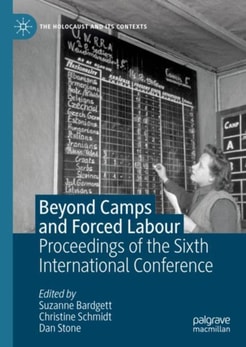
This book presents a selection of the newest research on themes amplified by the sixth annual Beyond Camps and Forced Labour conference on the post-Holocaust period, including 'displaced persons', reception and resettlement, exiles and refugees, trials and justice, reparation and restitution, and memory and testimony.