This book sheds new light on the role of the military in Italian society and culture during war and peacetime by bringing together a whole host of contributors across the interdisciplinary spectrum of Italian Studies.
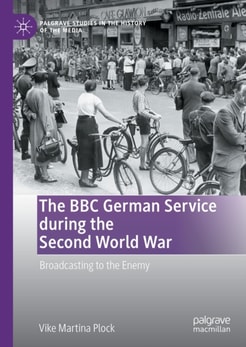
This book, part media history and part group biography, tells the story of the BBC's attempts to reach out to listeners in Nazi Germany at a time when Anglo-German relations were particularly strained.
This book offers a detailed investigation of the influence of public opinion and national identity on the foreign policies of France, Britain and the Netherlands in the late eighteenth and early nineteenth centuries.
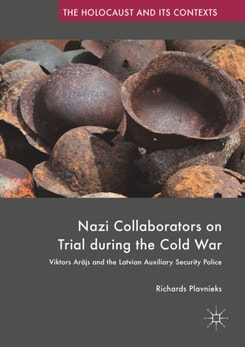
This book is a study of the legal reckoning with the crimes of the Latvian Auxiliary Security Police and its political dimensions in the Soviet Union, West and East Germany, and the United States in the context of the Cold War.
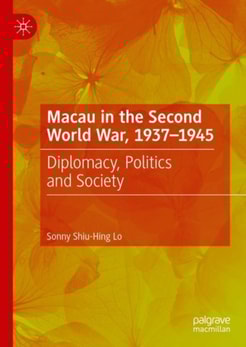
This book offers a re-interpretation of the political history of Macau from 1937 to 1945, during which Japan and China were engulfed in the Second World War.
This book explores the attitudes of the Spanish army officer corps towards the evolution of warfare during the early decades of the twentieth century, and their influence on the armies of the Spanish Civil War.
The book explores the intersection between the Great War and patriotism through an examination of the effects of both on Australia's most popular football code.
This book contributes to the global turn in First World War studies by exploring Australians' engagements with the conflict across varied boundaries and by situating Australian voices and perspectives within broader, more complex contexts.
This book takes a timely look at histories of radical Jewish movements, their modes of Holocaust memorialisation, and their relationships with broader anti-colonial and anti-racist struggles.
Nurse Memoirs from the Great War in Britain, France, and Germany examines an understudied corpus of memoirs in English, French, and German stemming from the unprecedented involvement of women in the war effort.
This book presents the backstory of how the Catholic Church came to clarify and embrace the role of Israel in salvation history, at the behest of an unlikely personality: Jules Isaac.
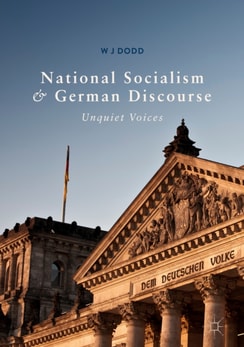
In this discourse history, W J Dodd analyses the 'unquiet voices' of opponents whose contemporary critiques of Nazism, from positions of territorial and inner exile, focused on the 'language of Nazism'.
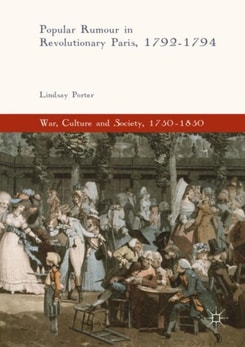
This book examines the impact of rumour during the French Revolution, offering a new approach to understanding the experiences of those who lived through it.
Five major groups fought one another in Bosnia and Herzegovina during the Second World War: The German and Italian occupiers, the Serbian Chetniks, the Ustasha of the Independent State of Croatia, the Bosnian Muslims, and the Tito-led Partisans.
This collection of essays by Indonesian and foreign contributors offers new and highly original analyses of the mass violence in Indonesia which began in 1965 and its aftermath.
This book reveals the nature and level of British engagement with controversial and lethal nerve agent weapons from the end of the Second World War to Britain's submission of a draft Chemical Weapons Convention.
Die drei iranischen Religionen stehen in Wechselwirkung mit der Gesellschaft, die – geschichtlich und gegenwärtig – nicht auf das Staatsgebiet der heutigen Islamischen Republik Iran beschränkt ist.
The Death of Transcendence presents a clear and compelling close reading and interpretation of the five essays included in Jean Amery's At the Mind's Limits, describing them as one continuous and progressing argument on the possibility of human society in the wake of the Holocaust.
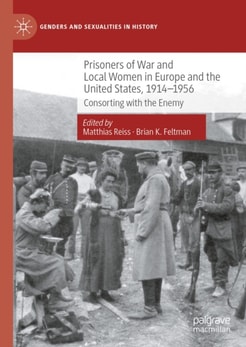
This book brings together historians from Great Britain, the United States, Germany, France, Canada, Austria, and Latvia who have worked and published on fraternisation between Prisoners of War and local women during either the First or Second World War, providing the first comparative study of this multi-faceted phenomenon in different belligerent countries.
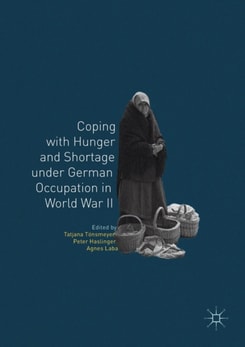
This volume demonstrates how German expansion in the Second World War II led to shortages, of food and other necessities including medicine, for the occupied populations, causing many to die from severe hunger or starvation.