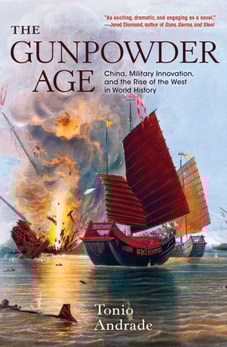
A first look at gunpowder's revolutionary impact on China's role in global historyThe Chinese invented gunpowder and began exploring its military uses as early as the 900s, four centuries before the technology passed to the West.
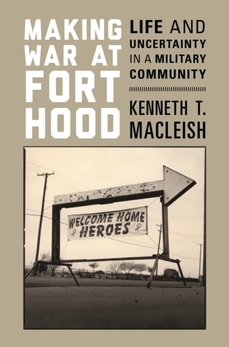
An intimate look at war through the lives of soldiers and their families at Fort HoodMaking War at Fort Hood offers an illuminating look at war through the daily lives of the people whose job it is to produce it.
Dieses eBook: "Pan Wolodyjowski (Historischer Roman)" ist mit einem detaillierten und dynamischen Inhaltsverzeichnis versehen und wurde sorgfältig korrekturgelesen.
A sweeping history of social theories about war and peace, from Hobbes to the twenty-first centuryThis book, the first of its kind, provides a sweeping critical history of social theories about war and peace from Hobbes to the present.
The Day Lincoln Was Almost Shot: The Fort Stevens Story recounts the story of President Abraham Lincoln's role in the Battle of Fort Stevens in July 1864.
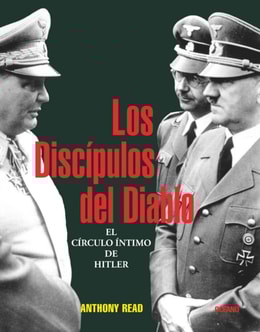
El meteórico ascenso al poder de Hitler, el férreo control ideológico que impuso en Alemania, su popularidad frente a las masas y la eficaz maquinaria bélica que puso en marcha constituyen aspectos de un proceso cuyo éxito dependió, en buena medida, del trabajo realizado por su círculo íntimo.
How a Chinese pirate defeated European colonialists and won Taiwan during the seventeenth centuryDuring the seventeenth century, Holland created the world's most dynamic colonial empire, outcompeting the British and capturing Spanish and Portuguese colonies.
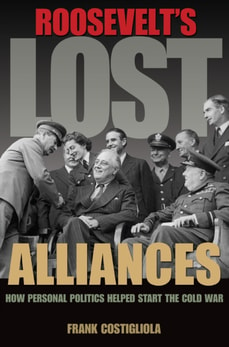
How the Grand Alliance of World War II succeeded-and then collapsed-because of personal politicsIn the spring of 1945, as the Allied victory in Europe was approaching, the shape of the postwar world hinged on the personal politics and flawed personalities of Roosevelt, Churchill, and Stalin.
How a new understanding of warfare can help the military fight today's conflicts more effectivelyThe way wars are fought has changed starkly over the past sixty years.
The Habsburg Empire's grand strategy for outmaneuvering and outlasting stronger rivals in a complicated geopolitical worldThe Empire of Habsburg Austria faced more enemies than any other European great power.
How honeybees make collective decisions-and what we can learn from this amazing democratic processHoneybees make decisions collectively-and democratically.
A classic account of Alexander the Great's conquest and its impact on the conquered-now in English for the first timeThis is the first publication in English of Pierre Briant's classic short history of Alexander the Great's conquest of the Persian empire, from the Mediterranean to Central Asia.
A multifaceted exploration of the interplay between civic and military life in ancient RomeThe ancient Romans famously distinguished between civic life in Rome and military matters outside the city-a division marked by the pomerium, an abstract religious and legal boundary that was central to the myth of the city's foundation.
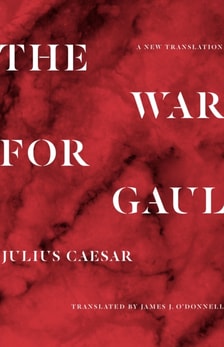
A new translation that captures the gripping power of one of the greatest war stories ever told-Julius Caesar's pitiless account of his brutal campaign to conquer GaulImagine a book about an unnecessary war written by the ruthless general of an occupying army-a vivid and dramatic propaganda piece that forces the reader to identify with the conquerors and that is designed, like the war itself, to fuel the limitless political ambitions of the author.
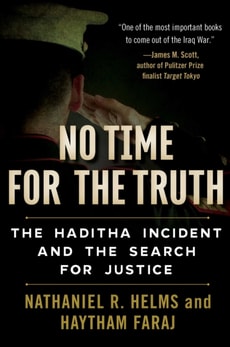
An Unflinching Look at a Black Chapter in Our War in Iraq and Americas Failure to Serve JusticeIn the waning days of 2005, twelve Marines were ambushed by Sunni Muslim insurgents on Route Chestnut, an ancient Mesopotamian road at the south edge of Haditha, Iraq, when an IED detonated under one of four Humvees they occupied, killing or wounding a quarter of their number.
At two o'clock in the morning on 27 April 1865, seven miles north of Memphis on the Mississippi, the sidewheel steamboat Sultana's boilers suddenly exploded.
Available in paperback for the first time, this book assesses the strains within the 'Special Relationship' between London and Washington and offers a new perspective on the limits and successes of British influence during the Korean War.
The encirclement of the German 6th Army at Stalingrad in mid-November 1942 and its final collapse in February 1943 was a signature defeat for Hitler, as more than 100,000 of his soldiers were marched off into captivity.
The second volume of this "e;excellent"e; overview of Germany's World War II fighter pilots, filled with photos, maps, and aircraft profiles (Air Power History).
A "e;well-researched"e; account of the nineteenth-century Sudanese cleric who led a bloody holy war, from a New York Times-bestselling author (Publishers Weekly).
Fighter Pilot's Daughter: Growing Up in the Sixties and the Cold War details author and Professor Mary Lawlor's unconventional upbringing in Cold War America.
This, the fourth volume in Andrew Field's highly praised study of the Waterloo campaign from the French perspective, depicts in vivid detail the often neglected final phase the rout and retreat of Napoleon's army.
Since the fall of Bagdad, women's voices have been largely erased, but four months after Saddam Hussein's statue fell, a 24 year-old woman from Baghdad began blogging.
The acclaimed World War II historian delivers "e;a panoramic and compelling boots-on-the-ground illumination of one of the Bulge's most epic battles"e; (Patrick K.
This book, part of a larger work entitled How to Live, offers practical advice on how one might live (as opposed to just existing) within the confines of 24 hours a day.
The Title 'Encyclopaedia of Dalits in India (Education), 10Th written/authored/edited by Sanjay Paswan, Paramanshi Jaideva', published in the year 2002.
A rare account of a non-German, Erik Wallin, who fought in the Nazi Party's Waffen-SS during World War II-a no-holds-barred narrative of the Eastern Front.
Sonsteby tells his courageous story of espionage and sabotage against the Naziz and of eluding capture through daring, intuition, and a constant slew of changing identities.
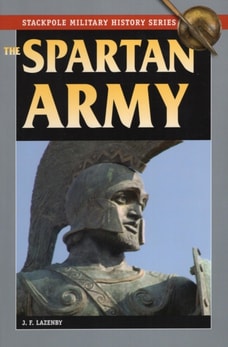
Reprint of a classic work of ancient military history Traces the origins of Sparta's unique training, tactics, and organization that made it the master of Greek battlefields Clear analysis of battles such as Thermopylae, Plataea, Mantinea, and Leuktra Spartan warriors continue to influence modern militaries, including the U.