This work, examines the transformation of American hospitals from a series of community- based charitable institutions into the large, bureaucratic system that existed by the end of the Progressive era.
In a rich survey encompassing music, art, literature, and architecture, Professor Davies studies the revolution in religious thought and worship in England during the Victorian era.
Setting out to describe the full spectrum of everyday life in early Maryland, this work integrates a range of economic, demographic, and anthropological approaches to the study of a colony in which tobacco was the staple crop.
This book shows how specific agents shape the political character of adolescents, how response to these agents varies according to sex, race, and other factors, and how political learning changes through the life-cycle and across generations.
The author brings to life more clearly than ever before the moment of triumph and the intricate web of negotiations preceding the Potsdam Conference in that period between victory and cold war.
From market memoirs, newspapers, financial journals, and Congressional records, the author has woven a narrative describing the political, social, and economic adjustment of the American people to the speculative machinery that developed between 1868 and the New Deal.
This work is a richly detailed study of the nature and development of the 139 Attic demes, the local units that made up the city-state of Athens during the classical and early Hellenistic periods.
The receding of the ice in the last Pleistocene Ice Age, the resulting dessication, and the emigration of peoples into river valleys and other places where control of water required new forms of civilization are here seen as the chief causes of the origin of the seven primary societies-Egyptian, Mesopotamian, Indian, Cretan, Chinese, Middle American, and Andean.
This book examines the events that led up to the day--March 31, 1968--when Lyndon Johnson dramatically renounced any attempt to be reelected president of the United States.
This book is a study of Ben Jonson's relationship with his audience in the public theater, as the relationship changed in the course of his career from the comical satires to Bartholomew Fair.
Franco Venturi, premier European interpreter of the Enlightenment, is still completing his acclaimed multi-volume work, a grand synthesis of Western history before the French Revolution as seen through the perceptive eyes of Italian observers.
This book is a comprehensive treatment of the development of Thebes as documented by archaeological and historical evidence and the literary tradition.
Photography in Japan 1853-1912 is a fascinating visual record of Japanese culture during its metamorphosis from a feudal society to a modern, industrial nation at a time when the art of photography was still in its infancy.
Though Russia and Germany were far apart in their principal goals, their negative attitude toward the Europe of Versailles brought these two "e;outcasts"e; together.
One of America's leading authorities on China outlines and assesses the implications of the inevitable passing of Mao Tse-tung and the older generation of revolutionary leaders from their position of command in China.
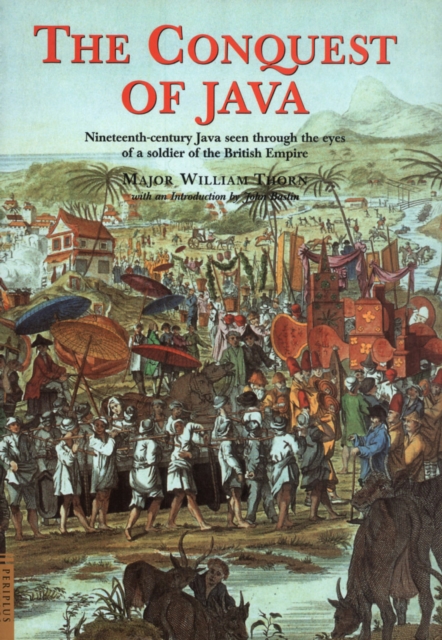
Originally published in 1815, Major William Thorn's The Conquest of Java describes the military and naval elements of the British expeditionary force to Java in 1811.
Oriental Fortune Telling brings to the Western reader a novel way of using cards, dice, coins, and "e;subconscious"e; numbers to arrive at modern interpretations of a fortune telling school that has existed in Asia for more than three thousand years.
Alan Spitzer approaches the history of the French Restoration by examining the experience of a particular age group born between 1792 and 1803: the generation of 1820.
Professor Kahler focuses on organizations below the state, investigating party competition and sensitivity to political change produced by the characteristics of commercial firms.
The Two Kingdoms treats a major achievement of the Carolingian "e;Renaissance,"e; Frankish ecclesiology, and the influence of 9th-century ecclesiology upon contemporary political thought.
Professor Avrich records the history of the anarchist movement from its Russian origins in the 19th century, with a full discussion of Bakunin and Kropotkin, to its upsurge in the 1905 and 1917 Social Democratic Revolutions, and its decline and fall after the Bolshevik Revolution.
A persuasive reassessment of the nature of the institution that was in the forefront of the American revolutionary struggle with Great Britain--the Continental Congress.
In a world where environmental influences and personal choices intertwine, this book delves into the profound relationship that shapes our individual experiences.
Uprooted by the war, exposed to the full brunt of economic dislocation, and fearful of losing status in face of the growing might of big business and organized labor, the middle classes in Weimar Germany longed for a solution to their plight that neither the capitalism nor the socialism of their day could offer.
"e;Easily the most comprehensive and useful work on American socialism, including its history, theories, and impact on life, culture, and economic and political parties in the United States.
Examining the cultural history of Renaissance Naples with an emphasis on humanism, the author also evaluates Naples in the broader context of fifteenth-century Italy and Renaissance Europe in general.
Since Russian tradition and institutions resemble those of Asia and Africa as much if not more than the patterns of Western societies, the pre-1917 industrial history of Russia, as the last part of the tsarist regime, provides one of the most important examples of early industrialization in world history.