Featuring leading scholars of British television drama and noted writers and producers from the television industry, this new edition of British Television Drama evaluates past and present TV fiction since the 1960s, and considers its likely future.
The screenplay is currently the focus of extensive critical re-evaluation, however, as yet there has been no comprehensive study of its historical development.
Offering unique insights into the writing and production of television drama series such as The Killing and Borgen, produced by DR, the Danish Broadcasting Corporation, Novrup Redvall explores the creative collaborations in writers' rooms and 'production hotels' through detailed case studies of Denmark's public service production culture.
The essays within this collection explore the possibilities and potentialities of all three positions, presenting encounters that are, at times contradictory, at other times supportive, as well as complementary.
McGee studies historical representation in commodified, popular cinema as expressions of historical truths that more authentic histories usually miss and argues for the political and social significance of mass culture through the interpretation of four recent big-budget movies: Titanic, Gangs of New York, Australia, and Inglourious Basterds .
Suspend your disbelief you can make it as a screenwriter Behind every blockbuster film and binge-worthy show, there s a screenwriter and that writer could be you!
Suspend your disbelief you can make it as a screenwriter Behind every blockbuster film and binge-worthy show, there s a screenwriter and that writer could be you!
From the Academy Award-winning Eternal Sunshine of the Spotless Mind (2004) and Academy Award-nominated Adaptation (2002) to the cult classic Being John Malkovich (1999), screenwriter Charlie Kaufman is widely admired for his innovative, philosophically resonant films.
From the Academy Award-winning Eternal Sunshine of the Spotless Mind (2004) and Academy Award-nominated Adaptation (2002) to the cult classic Being John Malkovich (1999), screenwriter Charlie Kaufman is widely admired for his innovative, philosophically resonant films.
The Science of Writing Characters is a comprehensive handbook to help writers create compelling and psychologically-credible characters that come to life on the page.
The Science of Writing Characters is a comprehensive handbook to help writers create compelling and psychologically-credible characters that come to life on the page.
A woman for all seasons, tender and tough in just the right proportions The New York TimesTwo classic collections of uproarious essays from the late Nora Ephron, bestselling author of I Feel Bad About My Neck and I Remember Nothing.
Nora Ephron can write about anything better than anybody else can write about anything New York TimesA bitingly funny, provocative and revealing look at our foibles, passions and pastimes from the much-missed, bestselling author of I Feel Bad About My Neck and I Remember Nothing.
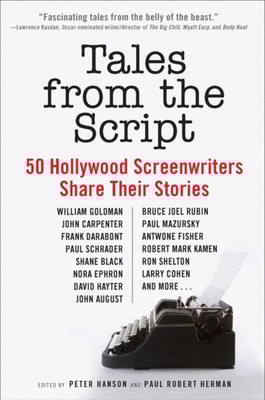
Discover the secrets of Hollywood storytelling in this fascinating collection, in which fifty screenwriters share the inside scoop about how they surmounted incredible odds to break into the business, how they transformed their ideas into box-office blockbusters, how their words helped launch the careers of major stars, and how they earned accolades and Academy Awards.
The hilarious, implausible, and touching story of twin brothers accomplishing the impossible-making a feature film (with a cast and crew with 11 Academy Awards and 26 nominations) with no experience, no money and no contacts.