This book clarifies - on the basis of mainly Hungarian data - basic issues concerning the category 'adverb,' the function 'adverbial,' and the grammar of adverbial modification.
The volume presents recent results in the field of Information Structure based on research on Italian and Italian dialects, and on further studies on several typologically different languages.
This is the first volume dedicated to the study of formal features and the expression of arguments within Phase Theory, the latest model of syntactic theorizing within the Minimalist Program.
The papers in this volume study linguistic structures in the context of their interactive functions and usages; they concentrate on grammatical constructions for the positioning of self and others.
This collection of nine original articles deals with the expression of possession at various levels of grammar, morphological, phrasal, and syntactic, and from a typologically diverse range of languages (including Germanic, Oceanic, Meso-American, and Australian Aboriginal).
Research on spontaneous language acquisition both in children learning their mother tongue and in adults learning a second language has shown that language development proceeds in a stagewise manner.
The volume presents new approaches to explaining word order variation and change in the Germanic languages and thus relates to one of the most prominent and widely discussed topics in the theory of language change and diachronic syntax.
While variation within individual languages has traditionally been focused upon in sociolinguistics, its relevance for grammatical theory has only recently been acknowledged.
The book is the first corpus-based study giving a comprehensive overview of English items which have been used as adverbial connectors ('conjuncts', 'linking adverbials'), from Old English to Present-Day English.
The book is concerned with a hitherto underresearched grammaticalization process: the development from quality-attributing adjective to determiner in the English noun phrase.
New Perspectives on Historical Latin Syntax: Constituent Syntax (Quantification, Numerals, Possession, Anaphora) is the third of four volumes dealing with the long-term evolution of Latin syntax, roughly from the 4th century BCE up to the 6th century CE.
This collection of papers focuses on the general theme of phonological strength, bringing together current work being undertaken in a variety of leading theoretical frameworks.
The contributions collected in this voume address central topics in theoretical and computational linguistics, such as quantification, types of context dependence and aspects concerning the formalisation of major grammatical frameworks, among others GB, DRT and HPSG.
Human language is a phenomenon of immense richness: It provides finely nuanced means of expression that underlie the formation of culture and society; it is subject to subtle, unexpected constraints like syntactic islands and cross-over phenomena; different mutually-unintelligeable individual languages are numerous; and the descriptions of individual languages occupy thousands of pages.
After reviewing, from a grammaticalization perspective, the main stages in the evolution of Italian object clitic pronouns, the book discusses the distinctive morphosyntactic, semantic, and pragmatic features of Italian clitics.
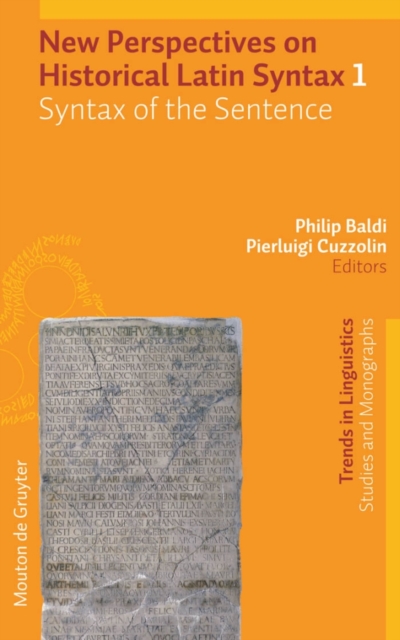
This is the first of a multi-volume set dealing with the long-term evolution of Latin syntax, roughly from the 4th century BCE up to the 6th century CE.
In the last 25 years foreign language teaching has been able to increase its efficiency through an orientation towards authentic language materials, pragmatic language functions and interactive learning methods.
This volume presents a systematic and comprehensive analysis of the Spanish evidential semi-auxiliaries parecer and resultar, the modal constructions with amenazar and prometer, and the modal auxiliaries poder, deber and tener que.
The book provides a theoretical and empirical evaluation of a field that has been the focus of generative theories on language acquisition: the acquisition of finiteness and related properties such as root infinitives, verb movement and null subjects.
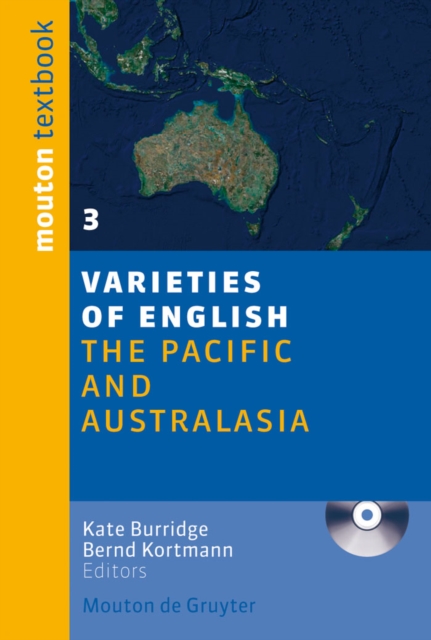
This volume gives a detailed overview of the varieties of English spoken in the Pacific and Australasia, including regional, social and ethnic dicalects (such as New Zealand, Australian Vernacular, or Maori English) as well as pidgins and creoles (such as Tok Pisin, Hawaii Creole, or Kriol in Australia).
This book is relevant for phonologists, morphologists, Slavists and cognitive linguists, and addresses two questions: How can the morphology-phonology interface be accommodated in cognitive linguistics?
This study addresses the problems scrambling langauges provide for the existing syntactic theories by analyzing the interaction of semantic and discourse functional factors with syntactic properties of word order in this type of languages, and by discussing the implications of this interaction for Universal Grammar.
The proposition that there is a correlation between language and culture or culture-specific ways of thinking can be traced back to the views of Herder and von Humboldt in the late 18th and early 19th centuries.
Tense/Mood/Aspect-agreeing Infinitivals is an in-depth investigation of the syntax of verb-verb agreement phenomena in Swedish, including pseudocoordinations of the form John started and wrote 'John started writing' and double participles of the form John had been-able written 'John had been able to write'.
This book investigates the concept of phase, aiming at a structural definition of the three domains that are assumed as the syntactic loci for interface interpretation, namely vP, CP and DP.
Cognitive Linguistics, the branch of linguistics that tries to "e;make one's account of human language accord with what is generally known about the mind and the brain,"e; has become one of the most flourishing fields of contemporary linguistics.
This book presents a number of studies which focus on the [voice] grammar of Japanese, paying particular attention to historical background, dialectal diversity, phonetic experiment, and phonological analysis.