Recent years have seen a growing interest in linguistic phenomena whose formal manifestation and underlying licensing conditions represent the convergence of two or more areas of the grammar, an area of investigation particularly invigorated in recent generative research by developments such as phase theory (cf.
This book is a detailed study of French-English linguistic borrowing in Prince Edward Island, Canada which argues for the centrality of lexical innovation to grammatical change.
This collection in honor of creolist Charlene Junko Sato (1951-1996) brings together contributions by leading specialists in pidgin-creole studies in three primary areas: Pidgin-Creole Genesis and Development; Attitudes and Education, and Creole Discourse and Literature.
The purpose of Diachronic Pragmatics is to exemplify historical pragmatics in its twofold sense of constituting both a subject matter and a methodology.
A synchronic sociolinguistic study of Jamaican Creole (JC) as spoken in urban Kingston, this work uses variationist methods to closely investigate two key concepts of Atlantic Creole studies: the mesolect, and the creole continuum.
Perceptual dialectology investigates what ordinary people (as opposed to professional linguists) believe about the distribution of language varieties in their own and surrounding speech communities and how they have arrived at and implement those beliefs.
This is a selection of papers from the 14th International Conference on Historical Linguistics held August 9-13, 1999, at the University of British Columbia.
This unique collection fills a ten-year gap in studies on the nature of Australian English, and it is the first to deal exclusively with varieties of English on the Australian continent.
This volume, based on presentations at a 1998 state of the art conference at the University of Georgia, critically examines African American English (AAE) socially, culturally, historically, and educationally.
This volume contains revised and extended versions of a selection of the papers presented at “The Amsterdam Workshop on Language Contact and Creolization.
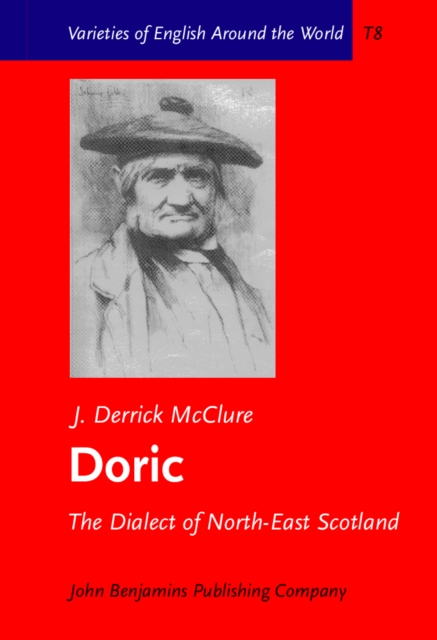
The dialect of North-East Scotland, one of the most distinctive and best preserved in the country, survives as both a proudly maintained mark of local identity and the vehicle for a remarkable regional literature.
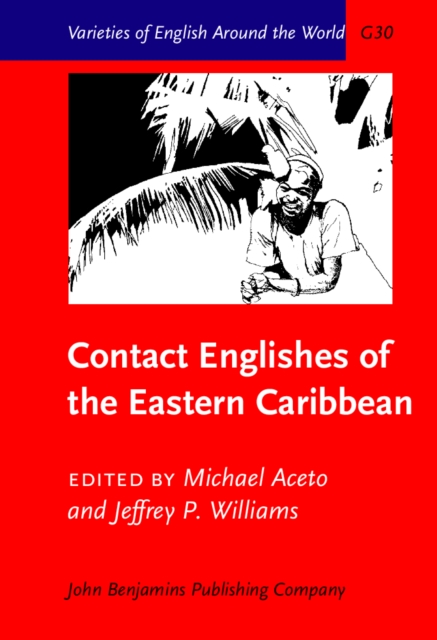
Contact Englishes of the Eastern Caribbean is the first collection to focus, via primary linguistic fieldwork, on the underrepresented and neglected area of the Anglophone Eastern Caribbean.
The time-honoured study of dialects took a new turn some forty years ago, giving centre stage to social factors and the quantitative analysis of language variation and change.
This book offers an in-depth treatment of a variety of morpho-syntactic issues in Cape Verdean Creole (CVC) both from a descriptive and theoretical perspective.
The Handbook of Perceptual Dialectology, Volume 2, expands on the coverage of both regions and methodologies in the investigation of nonlinguists' perceptions of language variety.
This volume contains a selection of fifteen papers presented at three consecutive meetings of the Society for Pidgin and Creole Linguistics, held in Washington, D.
Singapore English: A grammatical description provides a vivid account of current, contemporary Singapore English, complementing older seminal accounts of this variety.
This volume explores the linguistic complexities and critical issues of the Midland dialect area of the USA, and contains a unique data-based set of investigations of the Midlands dialect.
This volume presents 16 original studies of variation in languages representing the three main European language families, as well as in varieties of Greek and Hungarian.
This book is a corpus-based study examining thou and you in three speech-related genres from 1560-1760, a crucial period in the history of second person singular pronouns, spanning the time from when you became dominant to when thou became all but obsolete.
Deconstructing Creole is a collection of studies aimed at critically assessing the idea of creole languages as a homogeneous structural type with shared and peculiar patterns of genesis.
This volume offers a thorough examination of the syntactic, semantic, pragmatic and discourse properties of noun phrases in a wide variety of creole (and non-creole) languages including Cape Verdean Creole, Santome, Papiamentu, Guinea-Bissau Creole, Mindanao Chabacano, Reunionnais Creole, Lesser Antillean, Haitian Creole, Mauritian Creole, Seychellois, Sranan, Jamaican Creole, Berbice Dutch Creole and African American English.
This volume contains a selection of papers from the 4th International Conference on Language Variation in Europe (ICLaVE 4), which was held at the University of Cyprus from June 17th-19th 2007.
The Twelfth International Conference on Historical Linguistics, which is the major forum for the presentation of work in progress in the field of diachronic linguistics, took place at the University of Manchester in August 1995.
This volume contains papers on general issues of language change, as well as specific studies of non-Germanic languages, including Romance, Slavonic, Japanese, Australian languages, and early Indo-European.
This work is based on an investigation of language acquisition process, particularly in regard to syntax, among Mauritian children learning to speak Mauritian Creole as their first language.
By focusing on the "e;East European"e; dialogues and polemics, both contemporary and past, the present volume pursues two aims: 1) It would like to locate the discussion between semiotics and dialectics in an historical context.
In addition to borrowing from various foreign sources, the main origins of slang terms are the activation and revitalization of existing morphological and lexical material.
This volume seeks to present 'Germanic philology' with its main linguistic, literary and cultural subdivisions as a whole, and to call into question the customary pedagogical division of the discipline.
Two of the most prominent hypotheses about why the structures of the Creole languages of the Atlantic and the Pacific differ are the universalist and he substrate hypotheses.