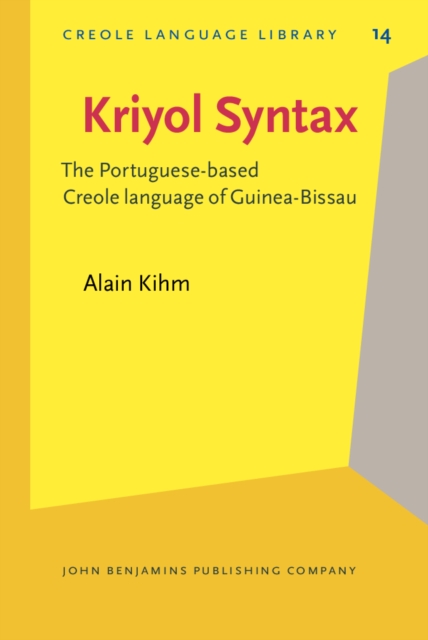
This monograph is about the chains of verbs commonly found in Creole Languages, West African languages, in particular the Kwa sub-group of Niger-Congo, Chinese and certain other languages and have acquired the name of 'serial verbs' in the literature.
With English and Portuguese as parent languages; the significant lexical retention of African languages; and the relative isolation of its speakers, Saramaccan has always stood out among Creole languages.
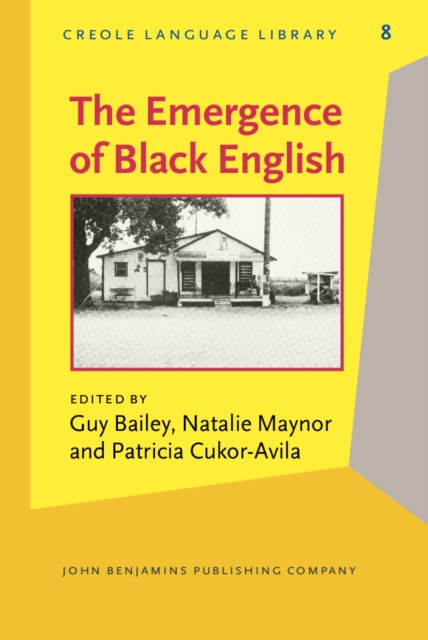
Debate over the evolution of Black English Vernacular (BEV) has permeated Afro-American studies, creole linguistics, dialectology, and sociolinguistics for a quarter of a century with little sign of a satisfactory resolution, primarily because evidence that bears directly on the earlier stages of BEV is sparse.
The results of the dialect surveys of Great Britain have been published in the form of hundreds of single and collected maps, but so far there has been no actual handbook to the charted material.
This volume contains a selection of papers from the Fifth International Conference on the History of the Language Sciences, dealing with subjects ranging from the classical period till the 20th century.
This is the first major study of the conservative or basilectal English creoles of the Anglophone Caribbean since Bailey's (1966) and Bickerton's (1975) descriptions of Jamaican and Guyanese Creole respectively.
Although varieties of North American English have come in for a good deal of linguistic scrutiny in recent years, the vast majority of published works have dealt with American rather than Canadian English.
This volume contains a selection of 34 of the 96 papers presented at ICHL 1993, including several of the contributions to the workshop on Parameters and Typology organized jointly by Henning Andersen and David W.
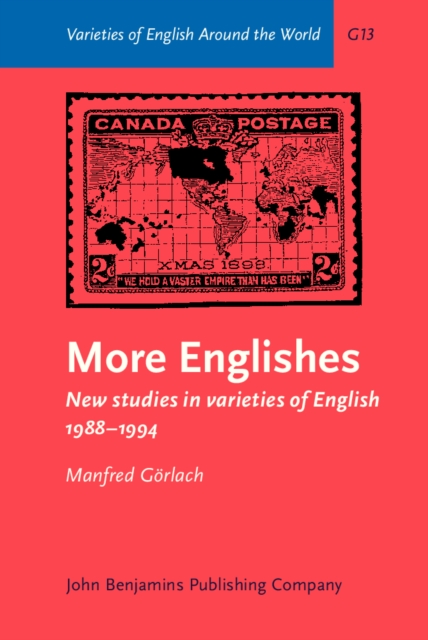
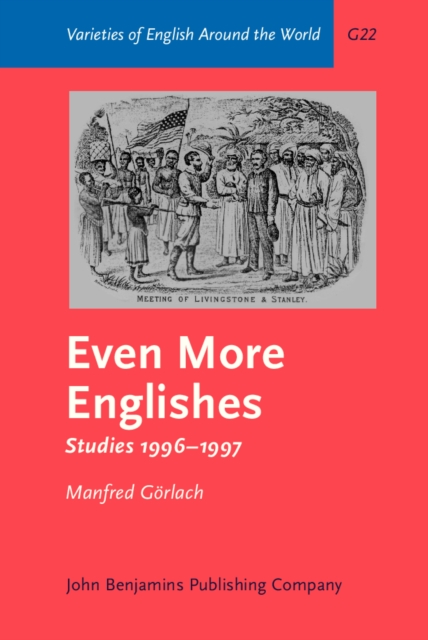
This collection of eight papers is a continuation of Manfred Gorlach's previous collection "e;Englishes"e; with the author's most influential writings in the field of varieties of English
Richard Kayne’s introduction to this volume stresses that comparative work on the syntax of very closely related languages and dialects is a research tool promising to provide both a broad understanding of parameters at their finest-grained and an approach to the question of the minimal units of syntactic variation.
Among the topics treated in this collection are the status of Scots as a national language; the orthography of Scots; the actual and potential degree of standardisation of Scots; the debt of the vocabulary of Scots to Gaelic; the use of Scots in fictional dialogue; and the development of Scots as a poetic medium in the modern period.
Contributions to this collection focus on the unity and diversity of the language of the Roma (Gypsies), the only Indic language spoken exclusively in Europe.
This book contributes to a more balanced view of the most dramatic results of language contact by presenting linguistic and historical sketches of lesser-known contact languages.
Destined to become a landmark work, this book is devoted principally to a reassessment of the content, categories, boundaries, and basic assumptions of pidgin and creole studies.
The two volumes of Englishes around the World present high-quality original research papers written in honour of Manfred Gorlach, founder and editor of the journal English World-Wide and the book series Varieties of English Around the World.
The two volumes of Englishes around the World present high-quality original research papers written in honour of Manfred Görlach, founder and editor of the journal English World-Wide and the book series Varieties of English Around the World.
Standards and Variation in Urban Speech is an examination and exploration of the aims and methods of sociolinguistic investigation, based on studies of Scottish urban speech.
Irish English is both the oldest overseas variety of English and, thanks to its co-existence with Irish Gaelic, one of the longest-documented examples of a contact-influenced language variety.
This book, based on revised papers originally delivered at the VII International Systemic Functional Workshop in Valencia in 1995, explores some of the choices open to speakers and writers for the expression of meaning in different socio-cultural contexts.
Although there is a substantial amount of linguistic research on standard language acquisition, little attention has been given to the mechanisms underlying second dialect acquisition.
Basic notions in the field of creole studies, including the category of “creole languages” itself, have been questioned in recent years: Can creoles be defined on structural or on purely sociohistorical grounds?
This brief monograph explores the historical motivations for two sets of phonological changes in some varieties of Romance: restructured voicing of intervocalic /p t k/, and palatalization of initial /l/ and /n/.
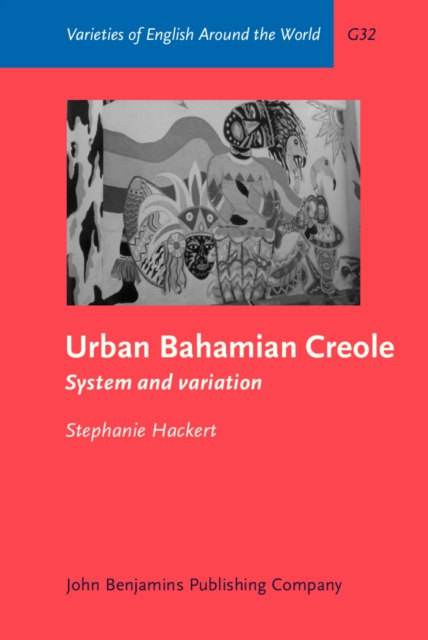
This volume, a detailed empirical study of the creole English spoken in the Bahamian capital, Nassau, contributes to our understanding of both urban creoles and tense-aspect marking in creoles.
Containing all new material and published for the American Dialect Society's centennial celebration (1889-1989), this volume bings together in one place, as no previously published work has, current approaches to the general problems of language distribution and variation.
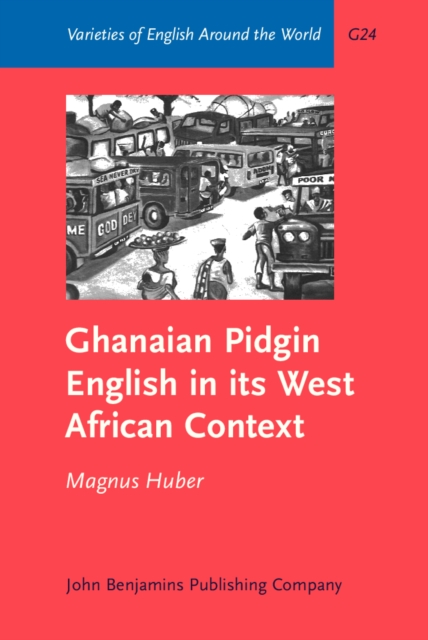
This first published full-scale study of the Ghanaian variety of West African Pidgin English (GhaPE) makes extensive use of hitherto neglected historical material and provides a synchronic account of GhaPE’s structure and sociolinguistics.