This studyargues that female networks of conversation, correspondenceand patronage formed the foundation for women's work in the 'higher' realms of Shakespeare criticism and poetry.
As rich as the development of the Spanish and Portuguese languages has been in Latin America, no single book has attempted to chart their complex history.
The availability of large electronic corpora has caused major shifts in linguistic research, including the ability to analyze much more data than ever before, and to perform micro-analyses of linguistic structures across languages.
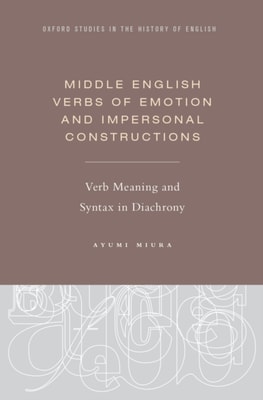
Impersonal constructions in the history of English form a puzzling category, in that there has been uncertainty as to why some verbs are attested in such constructions while others are not, even though they look almost synonymous.
This book presents and analyzes various features of the morphosyntax of Borgomanerese, a Gallo-Italic dialect spoken in the town of Borgomanero, in the Piedmont region of Northern Italy.
Information Structure and Syntactic Change in the History of English is the first book to apply information structure as it relates to language change to a corpus-based analysis of a wide range of features in the evolution of English syntax and grammars of prose in long diachrony.
From baby boomers with 'groovy' and 'yuppie,' to Generation X with 'whatever' and 'like,' each generation inevitably comes to use certain words that are particular to its unique time in history.
The availability of large electronic corpora has caused major shifts in linguistic research, including the ability to analyze much more data than ever before, and to perform micro-analyses of linguistic structures across languages.
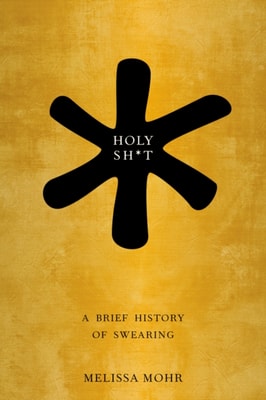
Almost everyone swears, or worries about not swearing, from the two year-old who has just discovered the power of potty mouth to the grandma who wonders why every other word she hears is obscene.
Almost everyone swears, or worries about not swearing, from the two year-old who has just discovered the power of potty mouth to the grandma who wonders why every other word she hears is obscene.
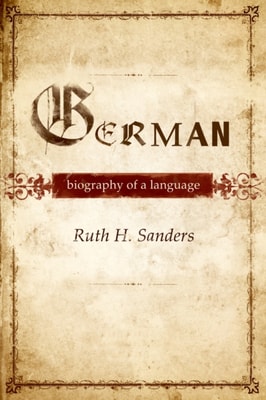
Thousands of years ago, seafront clans in Denmark began speaking the earliest form of Germanic language--the first of six "e;signal events"e; that Ruth Sanders highlights in this marvelous history of the German language.
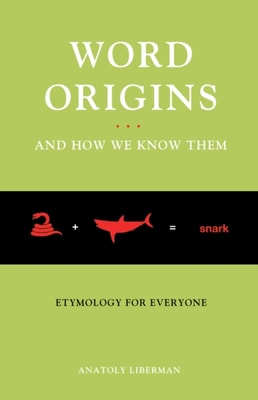
Written in a funny, charming, and conversational style, Word Origins is the first book to offer a thorough investigation of the history and the science of etymology, making this little-known field accessible to everyone interested in the history of words.
Like Carl Darling Buck's Comparative Grammar of Greek and Latin (1933), this book is an explanation of the similarities and differences between Greek and Latin morphology and lexicon through an account of their prehistory.
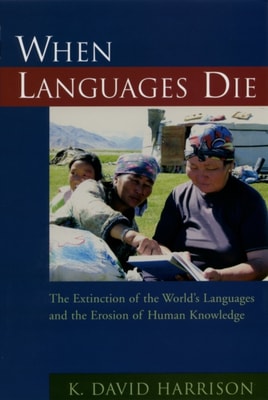
It is commonly agreed by linguists and anthropologists that the majority of languages spoken now around the globe will likely disappear within our lifetime.
Elly van Gelderen provides examples of linguistic cycles from a number of languages and language families, along with an account of the linguistic cycle in terms of minimalist economy principles.
Aspects of Split Ergativity argues that aspect-based split ergativity does not mark a split in how Case is assigned, but rather, a split in sentence structure.
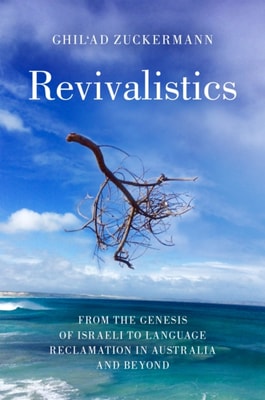
In this book, Ghil'ad Zuckermann introduces revivalistics, a new trans-disciplinary field of enquiry surrounding language reclamation, revitalization, and reinvigoration.
American literary works written in the heyday of modernism between the 1890s and 1940s were playfully, painfully, and ambivalently engaged with language politics.
Joseph Conrad, Jean Rhys, and Pramoedya Ananta Toer are writers renowned for crafting narratives of great technical skill that resonate with potent truths on the colonial condition.
The Early English Impersonal Construction aims to demonstrate that an understanding of the functional and semantic aspects of impersonal verbs in Old and Middle English can shed light on questions that remain about these verbs today.
As the most widely documented language in human history, English holds a unique key to unlocking some of the mysteries of the uniquely human endowment of language.
Here is a wonderful Baedeker to down-and-dirty politics--more than six hundred slang terms straight from the smoke-filled rooms of American political speech.
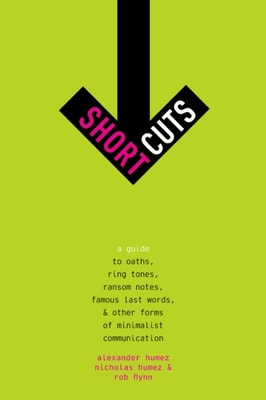
Our everyday lives are inevitably touched--and immeasurably enriched--by an extraordinary variety of miniature forms of verbal communication, from classified ads to street signs, and from yesterday's graffito to tomorrow's headline.
The technological realm provides an unusually active laboratory not only for new ideas and products but also for the remarkable linguistic innovations that accompany and describe them.
It is said to be the most frequently spoken (or typed) word on the planet, more common than an infant's first word ma or the ever-present beverage Coke.
The technological realm provides an unusually active laboratory not only for new ideas and products but also for the remarkable linguistic innovations that accompany and describe them.
Our everyday lives are inevitably touched--and immeasurably enriched--by an extraordinary variety of miniature forms of verbal communication, from classified ads to street signs, and from yesterday's graffito to tomorrow's headline.
Thousands of years ago, seafront clans in Denmark began speaking the earliest form of Germanic language--the first of six "e;signal events"e; that Ruth Sanders highlights in this marvelous history of the German language.