Written in a funny, charming, and conversational style, Word Origins is the first book to offer a thorough investigation of the history and the science of etymology, making this little-known field accessible to everyone interested in the history of words.
Despite the humble origins of its name (Anglo Saxon for "e;the speck at the head of a boil"e;), the dot has been one of the most versatile players in the history of written communication, to the point that it has become virtually indispensable.
Beyond Yellow English is the first edited volume to examine issues of language, identity, and culture among the rapidly growing Asian Pacific American (APA) population.
It is commonly agreed by linguists and anthropologists that the majority of languages spoken now around the globe will likely disappear within our lifetime.
Like Carl Darling Buck's Comparative Grammar of Greek and Latin (1933), this book is an explanation of the similarities and differences between Greek and Latin morphology and lexicon through an account of their prehistory.
It is said to be the most frequently spoken (or typed) word on the planet, more common than an infant's first word ma or the ever-present beverage Coke.
By comparing linguistic varieties that are quite similar overall, linguists can often determine where and how grammatical systems differ, and how they change over time.
From Truth to Technique addresses key questions raised by the burgeoning literature in what Philip Gaines calls advocacy advice texts-manuals, handbooks, and other how-to guides-written by lawyers for lawyers, both practicing and aspiring, to help them be as effective as possible in trial advocacy.
People have been reading on computer screens for several decades now, predating popularization of personal computers and widespread use of the internet.
People have been reading on computer screens for several decades now, predating popularization of personal computers and widespread use of the internet.
The broad arc of islands north of Australia that extends from Indonesia east towards the central Pacific is home to a set of human populations whose concentration of diversity is unequaled elsewhere.
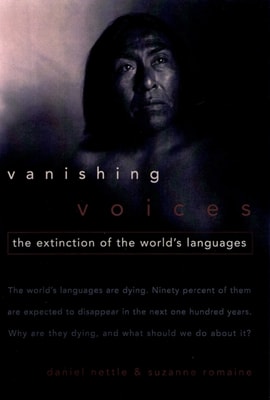
Few people know that nearly 100 native languages once spoken in what is now California are near extinction, or that most of Australia's 250 aboriginal languages have vanished.
This work investigates the syntax of the higher portion of the functional structure of the clause using comparative data from hundreds of Northern Italian dialects.
Polarity sensitivity is a ubiquitous phenomenon involving expressions such as anybody, nobody, ever, never, somebody and their counterparts in other languages.
Polarity sensitivity is a ubiquitous phenomenon involving expressions such as anybody, nobody, ever, never, somebody and their counterparts in other languages.
Many of the world's languages permit or require clause-initial positioning of the primary predicate, potentially alongside some or all of its dependents.
Many of the world's languages permit or require clause-initial positioning of the primary predicate, potentially alongside some or all of its dependents.
The Last Language on Earth is an ethnographic history of the disputed Eskayan language, spoken today by an isolated upland community living on the island of Bohol in the southern Philippines.
The Last Language on Earth is an ethnographic history of the disputed Eskayan language, spoken today by an isolated upland community living on the island of Bohol in the southern Philippines.
The study of comparative syntax in closely related languages has yielded valuable insights into syntactic phenomena--for example in the study of the Romance languages--yet little comparative work has been done on English dialects.
The Michif language -- spoken by descendants of French Canadian fur traders and Cree Indians in western Canada -- is considered an "e;impossible language"e; since it uses French for nouns and Cree for verbs, and comprises two different sets of grammatical rules.
This book challenges the widespread belief that overzealous Americans forced unnecessary script reforms on an unprepared, unenthusiastic, but helpless Japan during the Occupation.
A major concern in current anthropological thinking is that the method of recording or translating into writing a society's cultural expressions--dance, rituals, pottery, the social use of space, et al--cannot help but fundamentally alter the meaning of the living words and deeds of the culture in question.
The media frenzy surrounding the 1996 resolution by the Oakland School Board brought public attention to the term "e;Ebonics"e;, however the idea remains a mystery to most.