This book investigates the syntactic and semantic development of a selection of indefinite pronouns and determiners (such as aliquis 'some', nullus 'no', and nemo 'no one') between Latin and the Romance languages.
This novel, ground-breaking study aims to define Hesiod's place in early Greek intellectual history by exploring his conception of language and the ways in which it represents reality.
This novel, ground-breaking study aims to define Hesiod's place in early Greek intellectual history by exploring his conception of language and the ways in which it represents reality.
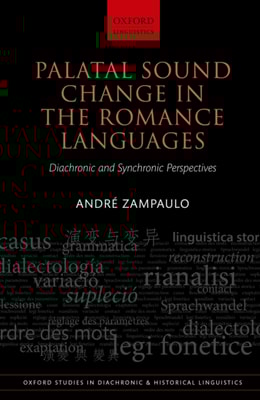
This book presents a thorough investigation of the main diachronic changes that have taken place in the palatal sounds of the Romance languages, as well as their current patterns of synchronic variation.
The book provides a comprehensive description and in-depth analysis of the major word order changes that took place in the clausal and the nominal domains in the transition from old to modern Romanian.
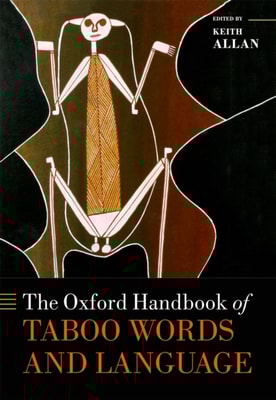
This volume brings together experts from a wide range of disciplines to define and describe tabooed words and language and to investigate the reasons and beliefs behind them.
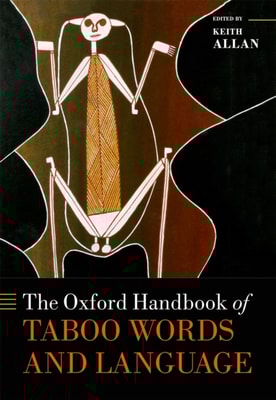
This volume brings together experts from a wide range of disciplines to define and describe tabooed words and language and to investigate the reasons and beliefs behind them.
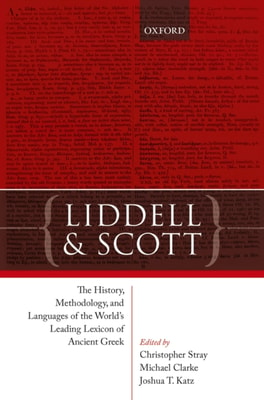
The Greek-English Lexicon of Liddell and Scott is one of the most famous dictionaries in the world, and for the past century-and-a-half has been a constant and indispensable presence in teaching, learning, and research on ancient Greek throughout the English-speaking world and beyond.
The Greek-English Lexicon of Liddell and Scott is one of the most famous dictionaries in the world, and for the past century-and-a-half has been a constant and indispensable presence in teaching, learning, and research on ancient Greek throughout the English-speaking world and beyond.
This volume provides the first book-length study of the controversial topic of Verb Second and related properties in a range of Medieval Romance varieties.
The Oxford Guide to the Transeurasian Languages provides a comprehensive account of the Transeurasian languages, and is the first major reference work in the field since 1965.
This volume explores the way in which grammaticalization processes - whereby lexical words eventually become markers of grammatical categories - converge and differ across various types of language.
This book explores the results of language contact in Michif, an endangered Canadian language that is traditionally claimed to combine a French noun phrase with a Cree verb phrase, and is hence usually considered a 'mixed' language.
This book explores the wealth of evidence from early Indo-Aryan for the existence of transitive nouns and adjectives, a rare linguistic phenomenon which, according to some categorizations of word classes, should not occur.
This volume explores the grammar of Niuean, an endangered Polynesian language spoken on the island of Niue and in New Zealand, with a focus on the issue of predication.
Scribal Repertoires in Egypt from the New Kingdom to the Early Islamic Period deals with the possibility of glimpsing pre-modern and early modern Egyptian scribes, the actual people who produced ancient documents, through the ways in which they organized and wrote those documents.
In addition to Phoenician, Greek, and Latin, at least four writing systems were used between the fifth century BCE and the first century CE to write the indigenous languages of the Iberian peninsula (the so-called Palaeohispanic languages): Tartessian, Iberian, Celtiberian, and Lusitanian.
In addition to Phoenician, Greek, and Latin, at least four writing systems were used between the fifth century BCE and the first century CE to write the indigenous languages of the Iberian peninsula (the so-called Palaeohispanic languages): Tartessian, Iberian, Celtiberian, and Lusitanian.
This is the latest addition to a group of handbooks covering the field of morphology, alongside The Oxford Handbook of Case (2008), The Oxford Handbook of Compounding (2009), and The Oxford Handbook of Derivational Morphology (2014).
This is the latest addition to a group of handbooks covering the field of morphology, alongside The Oxford Handbook of Case (2008), The Oxford Handbook of Compounding (2009), and The Oxford Handbook of Derivational Morphology (2014).
Despite the ubiquitous importance of medicine in Roman literature, philosophy, and social history, the language of Latin medical texts has not been properly studied.
Explanations for sound change have traditionally focused on identifying the inception of change, that is, the identification of perturbations of the speech signal, conditioned by physiological constraints on articulatory and/or auditory mechanisms, which affect the way speech sounds are analyzed by the listener.
This book provides an overview of phonological typology: the study of how sounds are distributed across the languages of the world and why they display these distributions and patterns.
In a series of cross-cultural investigations of word meaning, Cliff Goddard and Anna Wierzbicka examine key expressions from different domains of the lexicon - concrete, abstract, physical, sensory, emotional, and social.
This book outlines a system of phonological features that is minimally sufficient to distinguish all consonants and vowels in the languages of the world.