Oxford Textual Perspectives is a new series of informative and provocative studies focused upon literary texts (conceived of in the broadest sense of that term) and the technologies, cultures and communities that produce, inform, and receive them.
Lynda Mugglestone's hugely popular The Oxford History of English is now updated and entirely reset in a new edition featuring David Crystal's new take on the future of English in the wider world.
Lynda Mugglestone's hugely popular The Oxford History of English is now updated and entirely reset in a new edition featuring David Crystal's new take on the future of English in the wider world.
Possession and Ownership brings together linguists and anthropologists in a series of cross-linguistic explorations of expressions used to denote possession and ownership, concepts central to most if not all the varied cultures and ideologies of humankind.
In this handbook, scholars from around the world offer an up-to-date account of the state of the art in different areas of onomastics, in a format that is both useful to specialists in related fields and accessible to the general reader.
In this handbook, scholars from around the world offer an up-to-date account of the state of the art in different areas of onomastics, in a format that is both useful to specialists in related fields and accessible to the general reader.
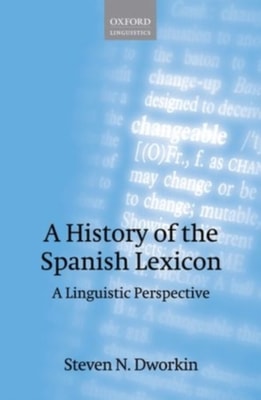
This history of the Spanish lexicon is written from the interacting perspectives of linguistic and cultural change and in the light of advances in the study of language contact and lexical change.
Basic Linguistic Theory provides a fundamental characterization of the nature of human languages and a comprehensive guide to their description and analysis.
This book presents the state of the art in research on grammaticalization, the process by which lexical items acquire grammatical function, grammatical items get additional functions, and grammars are created.
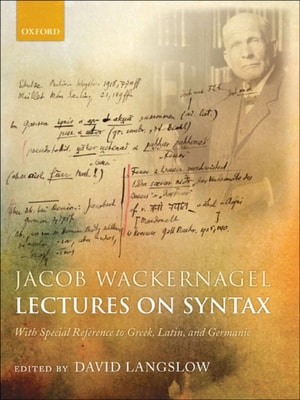
This book is an English version of two series of highly acclaimed introductory lectures given by the great Swiss linguist and classical philologist Jacob Wackernagel (1853-1938) at the University of Basle in 1918-19 on aspects of Greek, Latin, and German as languages.
Linguistics falls in the gap between arts and science, on the edges of which the most fascinating discoveries and the most important problems are found.
This is the first comprehensive treatment of the strategies employed in the world's languages to express predicative possession, as in "e;the boy has a bat"e;.
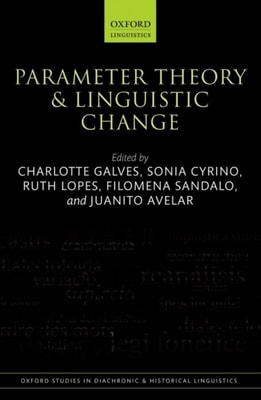
This book of new work by leading international scholars considers developments in the study of diachronic linguistics and linguistic theory, including those concerned with the very definition of language change in the biolinguistic framework, parametric change in a minimalist conception of grammar, the tension between the observed gradual nature of language change and the binary nature of parameters, and whether syntactic change can be triggered internally or requires the external stimuli produced by phonological or morphological change or through language contact.
The second volume of Julie Coleman's entertaining and revealing history of the recording and uses of slang and criminal cant takes the story from 1785 to 1858, and explores their manifestations in the United States of America and Australia.
The future has exercised students of Modern Greek language developments for many years, and no satisfactory set of arguments for the development of the modern form from the ancient usages has ever been produced.
This is a history of the great language controversy that has occupied and empassioned Greeks - sometimes with fatal results - for over two hundred years.