One Hope: Re-Membering the Body of Christ is a rich ecumenical resource designed to help Catholic and Lutheran communities mark the approaching 500th anniversary of the Reformation.
The fascinating history of French words that have entered the English language and the fertile but fraught relationship between English- and French-speaking cultures across the worldEnglish has borrowed more words from French than from any other modern foreign language.
**WINNER OF THE PULITZER PRIZE** 'A book of big questions, and big answers' Yuval Noah Harari, bestselling author of Sapiens Why has human history unfolded so differently across the globe?
The History of English: An Introduction provides a chronological analysis of the linguistic, social, and cultural development of the English language from before its establishment in Britain around the year 450 to the present.
The language of crime has a long and venerable history - in fact, the first collection of words specifically used by criminals, Hye-Way to the Spittel House, dates from as early as 1531.
Half the world's languages are threatened with extinction over the next century, as English and the rest of the world's top twenty languages drive all before them.
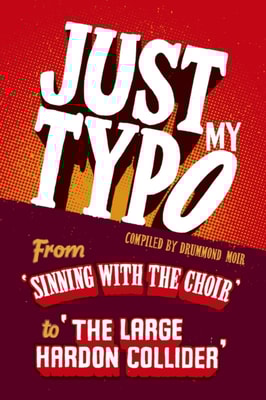
From the sublime to the ridiculous, Just My Typo is a hilarious collection of typographical errors, slips of the pen and embarrassing misprints which, like any typo of any kind, should never have happened, cannot be excused, and must not in any way be glorified.
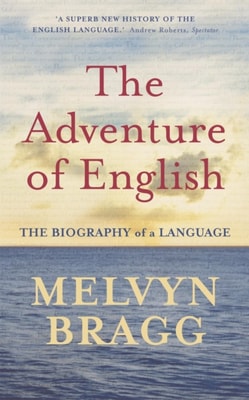
'Superb'Spectator'Consistently entertaining'Independent'Impressive and sage'New Statesman'Bragg's affection for his subject is infectious'ObserverEnglish is the collective work of millions of people throughout the ages.
This text makes use of contemporary work in linguistics to provide up-to-date commentary on the development of Latin, from its prehistoric origins in the Indo-European language family, through the earliest texts, to the creation of the Classical Language of Cicero and Vergil, and examines the impact of the spread of spoken Latin through the Roman Empire.
Written by the world-renowned pioneer in the field of modern sociolinguistics, this volume examines the cognitive and cultural factors responsible for linguistic change, tracing the life history of these developments, from triggering events to driving forces and endpoints.
Written by the world-renowned pioneer in the field of modern sociolinguistics, this volume examines the cognitive and cultural factors responsible for linguistic change, tracing the life history of these developments, from triggering events to driving forces and endpoints.
Greek: A History of the Language and its Speakers, Second Edition reveals the trajectory of the Greek language from the Mycenaean period of the second millennium BC to the current day.
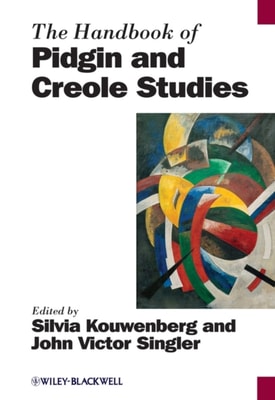
Featuring an international contributor list, this long-awaited and broad-ranging collection examines the key issues, topics and research in pidgin and creole studies.
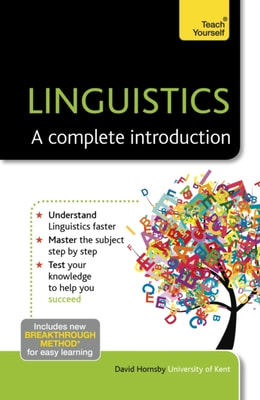
Written by David Hornsby, who is a current Linguistics lecturer and researcher at theUniversity of Kent, Linguistics - The Essentials is designed to give you everything you need to succeed, all in one place.
Because developments in informal logic have been based, for the most part, on idealized and abstract models, the tools available for argument analysis are not easily adapted to the needs of everyday argumentation.
The papers in this collection deal with a cultural problem central to the study of the history of exploration: the editing and transmission of the texts in which explorers relate their experiences.
Ever since the word romantic and its many cognates in European languages began to be used as technical terms towards the end of the eighteenth century, the quest for a satisfactory definition of their meanings has continued unabated.
Heller and McElhinny reinterpret sociolinguistics for the twenty-first century with an original approach to the study of language that is situated in the political and economic contexts of colonialism and capitalism.
Heller and McElhinny reinterpret sociolinguistics for the twenty-first century with an original approach to the study of language that is situated in the political and economic contexts of colonialism and capitalism.
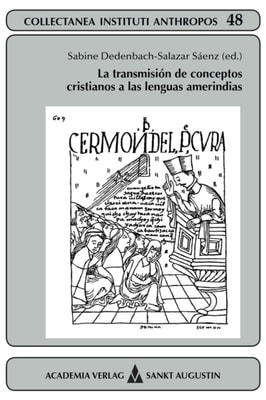
Las contribuciones a este libro se centran en las estrategias y los métodos lingüísticos interculturales usados por los misioneros coloniales de la América Latina.
A discourse analysis that is not based on grammar is likely to end up as a running commentary on a text, whereas a grammar-based one tends to treat text as a finished product rather than an on-going process.
Creole languages have in recent years become a valuable source of data for current theories of syntax and theories of child/adult language acquisition.
A discourse analysis that is not based on grammar is likely to end up as a running commentary on a text, whereas a grammar-based one tends to treat text as a finished product rather than an on-going process.
Originally published as the Continuum Companion to Historical Linguistics, this book brings together a number of leading scholars who provide a combination of different approaches to current and new issues in historical linguistics, while supplying an exhaustive and up-to-date coverage of sub-fields traditionally regarded as central to historical linguistics research.