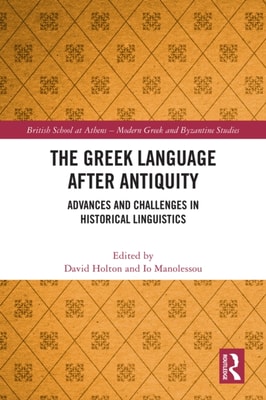
Originally published as the Continuum Companion to Historical Linguistics, this book brings together a number of leading scholars who provide a combination of different approaches to current and new issues in historical linguistics, while supplying an exhaustive and up-to-date coverage of sub-fields traditionally regarded as central to historical linguistics research.
Creole languages have in recent years become a valuable source of data for current theories of syntax and theories of child/adult language acquisition.
Historical Discourse analyses the importance of the language of time, cause and evaluation in both texts which students at secondary school are required to read, and their own writing for assessment.
There are many Old Testament Hebrew lexicons available today, yet none offer the accuracy, user-friendliness, or affordable price as the single volume Old Testament Parsing Guide.
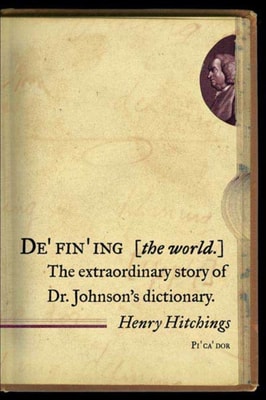
“[A] marvelous account” of Johnson’s towering achievement, nearly a decade of labor and linguistic fact-finding, presented by “a buoyant, zestful writer” (The Boston Globe).
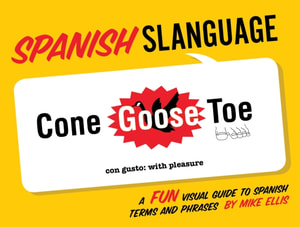
The Slanguage of Love is a new visual guide in the best-selling Slanguage series, featuring more than two dozen phrases centered around the theme of love, with each phrase translated into ten different languages: Spanish, French, Italian, Portuguese, German, Russian, Greek, Chinese, Japanese, and Korean.
These easy-to-use, pocket-sized language guides are a great way to learn to speak hundreds of basic words and phrases in the most popular foreign languages.
The Greek Language after Antiquity offers an in-depth look at the diachrony of the Greek language, focusing on a period relatively neglected by modern scholarship: the more than 1,000 years between the end of Antiquity and the early modern period.
A compelling history of the national conflicts that resulted from efforts to produce the first definitive American dictionary of English In The Dictionary Wars, Peter Martin recounts the patriotic fervor in the early American republic to produce a definitive national dictionary that would rival Samuel Johnson's 1755 Dictionary of the English Language.
Latin names frequently unpronounceable, all too often wrong and always a tiny puzzle to unravel have been annoying the layman since they first became formalised as scientific terms in the eighteenth century.