Now in its third edition, Philosophy of Language: A Contemporary Introduction introduces students to the main issues and theories in twenty-first-century philosophy of language, focusing specifically on linguistic phenomena.
Now in its third edition, Philosophy of Language: A Contemporary Introduction introduces students to the main issues and theories in twenty-first-century philosophy of language, focusing specifically on linguistic phenomena.
The main aim of this book is to reconstruct a philosophical context for the Hieroglyphica of Horapollo, a late 5th century Greek study of hieroglyphic writing.
The main aim of this book is to reconstruct a philosophical context for the Hieroglyphica of Horapollo, a late 5th century Greek study of hieroglyphic writing.
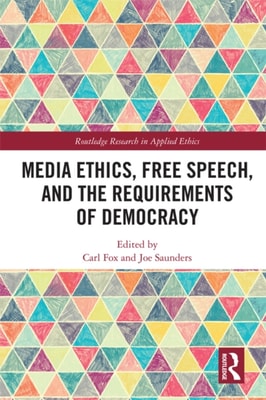
How we understand, protect, and discharge our rights and responsibilities as citizens in a democratic society committed to the principle of political equality is intimately connected to the standards and behaviour of our media in general, and our news media in particular.
How we understand, protect, and discharge our rights and responsibilities as citizens in a democratic society committed to the principle of political equality is intimately connected to the standards and behaviour of our media in general, and our news media in particular.
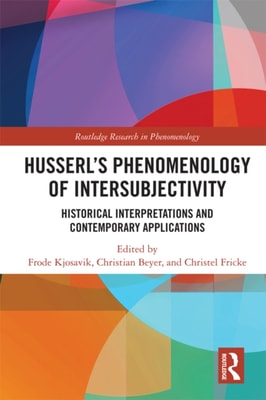
This collection examines the instrumental role of intersubjectivity in Husserl's philosophy and explores the potential for developing novel ways of addressing and resolving contemporary philosophical issues on that basis.
This collection examines the instrumental role of intersubjectivity in Husserl's philosophy and explores the potential for developing novel ways of addressing and resolving contemporary philosophical issues on that basis.
Mark Platts is responsible for the first systematic presentation of truth-conditional semantics and for turning a generation of philosophers on to the Davidsonian program.
Mark Platts is responsible for the first systematic presentation of truth-conditional semantics and for turning a generation of philosophers on to the Davidsonian program.
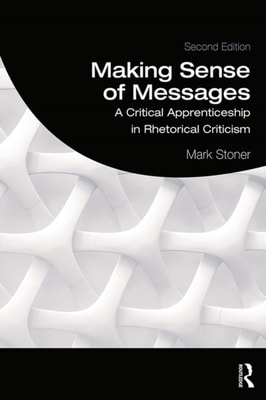
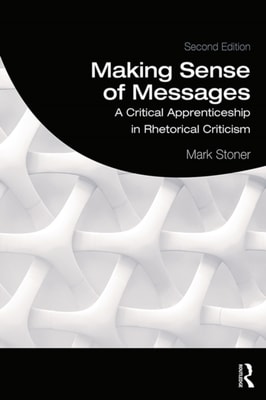
Making Sense of Messages, now in its second edition, retains the apprenticeship approach which facilitates effectively learning the complex content and skills of rhetorical theory and criticism.
Making Sense of Messages, now in its second edition, retains the apprenticeship approach which facilitates effectively learning the complex content and skills of rhetorical theory and criticism.
The aim of this volume is to critically assess the philosophical importance of phenomenology as a method for studying the normativity of meaning and its transcendental conditions.
The aim of this volume is to critically assess the philosophical importance of phenomenology as a method for studying the normativity of meaning and its transcendental conditions.
This introduction brings to life the main themes in Indian philosophy of language by using an accessible translation of an Indian classical text to provide an entry into the world of Indian linguistic theories.
This book presents a genetic-phenomenological approach of existential psychotherapy, articulating its theoretical underpinnings with principles supported by scientific evidence and concluding with clinical examples.
Striking out from a number of new headings and in a number of new directions each of the essays in this collection pushes at the borders of their topics, disciplines and ways of thinking, providing innovative and inventive insights into the work - and application - of Jacques Derrida on a diverse range of themes including Irish identity, communication, ethics, love, tele-technology, Victorian studies, the limits of philosophy, translation, otherness and literature, demonstrating that, today, despite repeated accusations over recent years that the work of Derrida has become passe, there is more vitality and spirit in engaging with the writings of Derrida than ever before.
Structuralism and the Logic of Dissent is a fascinating and lucid exploration of the seminal writings of four eminent French structuralists that sheds new light on influential theoretical texts.
This book explores the relation between language and our senses and emotions, taking readers into domains as diverse as wine-tasting, marriage guidance counselling, medical training and face recognition.
This book examines the achievements of William Carlos Williams in the context of the transcendentalism of Ralph Waldo Emerson, Henry David Thorgau and Walt Whitman.
Reading the Qur'an in the Twenty-First Century considers the development of Qur'anic interpretation and highlights modern debates around new approaches to interpretation.
Reading the Qur'an in the Twenty-First Century considers the development of Qur'anic interpretation and highlights modern debates around new approaches to interpretation.
Providing an analysis of the complete story of Mary in its liturgical, narrative and rhetorical contexts, this literary reading is a prerequisite to any textual reading of the Qur'an whether juristic, theological, or otherwise.
Providing an analysis of the complete story of Mary in its liturgical, narrative and rhetorical contexts, this literary reading is a prerequisite to any textual reading of the Qur'an whether juristic, theological, or otherwise.