The question of whether aesthetic judgements are simply statements about subjective preferences or whether they have some non-subjective basis is one of the most important questions of aesthetics, and, indeed, of philosophy.
The close connection between philosophy of language and philosophy of law has been recognized for decades through the work of many influential legal philosophers.
The close connection between philosophy of language and philosophy of law has been recognized for decades through the work of many influential legal philosophers.
Individual objects have potentials: paper has the potential to burn, an acorn has the potential to turn into a tree, some people have the potential to run a mile in less than four minutes.
This volume offers novel views on the precise relation between reference to an object by means of a linguistic expression and our mental representation of that object, long a source of debate in the philosophy of language, linguistics, and cognitive science.
Unity and Plurality presents novel ways of thinking about plurality while casting new light on the interconnections among the logical, philosophical, and linguistic aspects of plurals.
Metasemantics comprises new work on the philosophical foundations of linguistic semantics, by a diverse group of established and emerging experts in the philosophy of language, metaphysics, and the theory of content.
Robert Stalnaker explores the notion of the context in which speech takes place, its role in the interpretation of what is said, and in the explanation of the dynamics of discourse.
When the logical positivists espoused emotivism as a theory of moral discourse, they assumed that their general theories of meaning could be straightforwardly applied to the subject of metaethics.
Mark Jago presents an original philosophical account of meaningful thought: in particular, how it is meaningful to think about things that are impossible.
Philosophy (especially philosophy of language and philosophy of mind), science (especially linguistics and cognitive science), and common sense all sometimes make reference to propositions--understood as the things we believe and say, and the things which are (primarily) true or false.
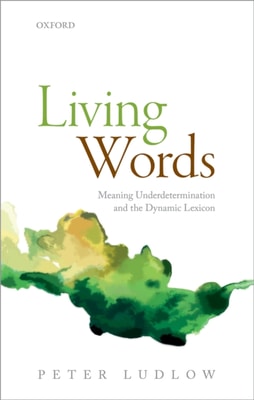
Peter Ludlow shows how word meanings are much more dynamic than we might have supposed, and explores how meanings are modulated (changed) even during the course of our everyday conversations.
Paolo Mancosu presents a series of innovative studies in the history and the philosophy of logic and mathematics in the first half of the twentieth century.
John MacFarlane debates how we might make sense of the idea that truth is relative, and how we might use this idea to give satisfying accounts of parts of our thought and talk that have resisted traditional methods of analysis.
Vagueness is the study of concepts that admit borderline cases: the property of being bald is vague because there are people who are neither definitely bald, nor definitely not bald.
Peter Ludlow shows how word meanings are much more dynamic than we might have supposed, and explores how meanings are modulated (changed) even during the course of our everyday conversations.
This book argues that the complex, anthropocentric, and often culture-specific meanings of words have been shaped directly by their history of 'utility' for communication in social life.
Mark Jago presents an original philosophical account of meaningful thought: in particular, how it is meaningful to think about things that are impossible.
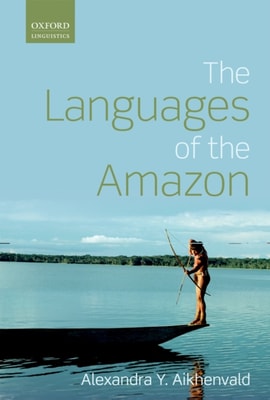
This is the first guide and introduction to the extraordinary range of languages in Amazonia, which include some of the most the most fascinating in the world and many of which are now teetering on the edge of extinction.
In a postfactual world in which claims are often held to be true only to the extent that they confirm pre-existing or partisan beliefs, this book asks crucial questions: how can we identify the many forms of untruthfulness in discourse?
In a postfactual world in which claims are often held to be true only to the extent that they confirm pre-existing or partisan beliefs, this book asks crucial questions: how can we identify the many forms of untruthfulness in discourse?
This book elucidates the poetics of Philodemus of Gadara, a first century BCE Epicurean philosopher and poet, whose On Poems survives in extensive fragments among the Herculaneum papyri.
This book elucidates the poetics of Philodemus of Gadara, a first century BCE Epicurean philosopher and poet, whose On Poems survives in extensive fragments among the Herculaneum papyri.