This book addresses the fundamental issues in the phase-based approach to the mental computation of language that have arisen from the recent developments in the Minimalist Program.
This book addresses fundamental issues in linguistic theory, including the relation between formal and cognitive approaches, the autonomy of syntax, the content of universal grammar, and the value of generative and functional approaches to grammar.
This is the most comprehensive survey ever published of auxiliary verb constructions, as in 'he could have been going to drink it' and 'she does eat cheese'.
This book explores the nature of finiteness, one of most commonly used notions in descriptive and theoretical linguistics but possibly one of the least understood.
This book represents the state of the art in the study of gradience in grammar - the degree to which utterances are acceptable or grammatical, and the relationship between acceptability and grammaticality.
Constructions of Intersubjectivity shows that the meaning of grammatical constructions often has more to do with the human cognitive capacity for taking other peoples' points of view than with describing the world.
The notions of 'function', 'feature' and 'functional feature' are associated with relatively new developments and insights in several areas of cognition.
This handbook presents an overview of the phenomenon of reference - the ability to refer to and pick out entities - which is an essential part of human language and cognition.
This handbook presents an overview of the phenomenon of reference - the ability to refer to and pick out entities - which is an essential part of human language and cognition.
This book examines the question of whether languages can differ in grammatical complexity and, if so, how relative complexity differences might be measured.
This handbook offers an extensive crosslinguistic and cross-theoretical survey of polysynthetic languages, in which single multi-morpheme verb forms can express what would be whole sentences in English.
This handbook offers an extensive crosslinguistic and cross-theoretical survey of polysynthetic languages, in which single multi-morpheme verb forms can express what would be whole sentences in English.
This book addresses different linguistic and philosophical aspects of referring to the self in a wide range of languages from different language families, including Amharic, English, French, Japanese, Korean, Mandarin, Newari (Sino-Tibetan), Polish, Tariana (Arawak), and Thai.
This book is about one of the most intriguing features of human communication systems: the fact that words that go together in meaning can occur arbitrarily far away from each other.
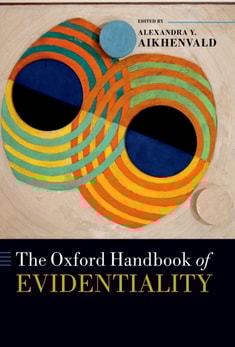
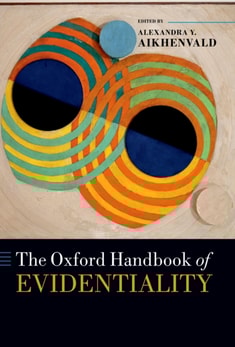
This volume offers a thorough, systematic, and crosslinguistic account of evidentiality, the linguistic encoding of the source of information on which a statement is based.
This volume offers a thorough, systematic, and crosslinguistic account of evidentiality, the linguistic encoding of the source of information on which a statement is based.
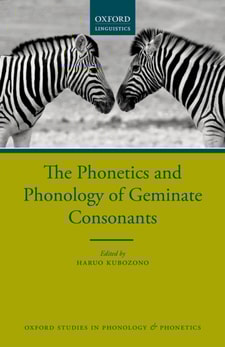
This book is the first volume specifically devoted to the phonetics and phonology of geminate consonants, a feature of many of the world's languages including Arabic, Bengali, Finnish, Hungarian, Italian, Japanese, Malayalam, Persian, Saami, Swiss German, and Turkish.
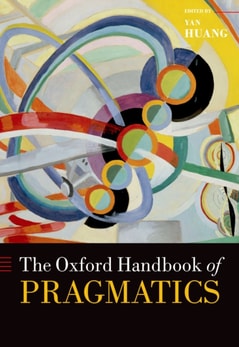
This volume brings together distinguished scholars from all over the world to present an authoritative, thorough, and yet accessible state-of-the-art survey of current issues in pragmatics.
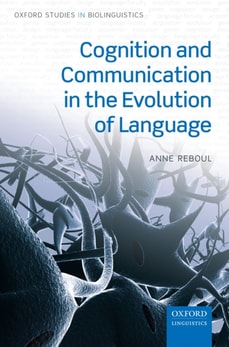
This book proposes a new two-step approach to the evolution of language, whereby syntax first evolved as an auto-organizational process for the human conceptual apparatus (as a Language of Thought), and this Language of Thought was then externalized for communication, owing to social selection pressures.
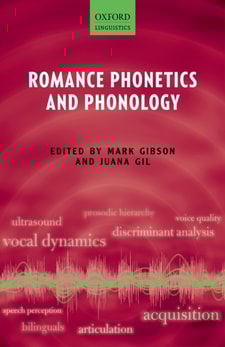
This volume explores several recurring topics in Romance phonetics and phonology, with a special focus on the segment, syllable, word, and phrase levels of analysis.
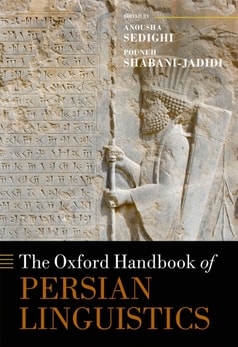
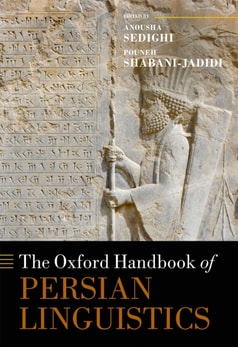
This handbook offers a comprehensive overview of the field of Persian linguistics, discusses its development, and captures critical accounts of cutting edge research within its major subfields, as well as outlining current debates and suggesting productive lines of future research.
This handbook offers a comprehensive overview of the field of Persian linguistics, discusses its development, and captures critical accounts of cutting edge research within its major subfields, as well as outlining current debates and suggesting productive lines of future research.
This volume brings together the latest research on the semantics of nouns in both familiar and less well-documented languages, including English, Mandarin Chinese, Russian, the Papuan language Koromu, the Dravidian language Solega, and Pitjantjatjara/Yankunytjatjara from Australia.
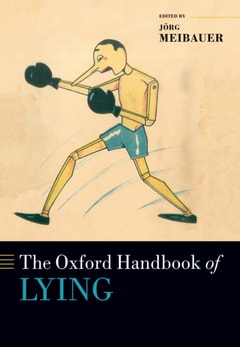
This handbook brings together past and current research on all aspects of lying and deception, with chapters contributed by leading international experts in the field.