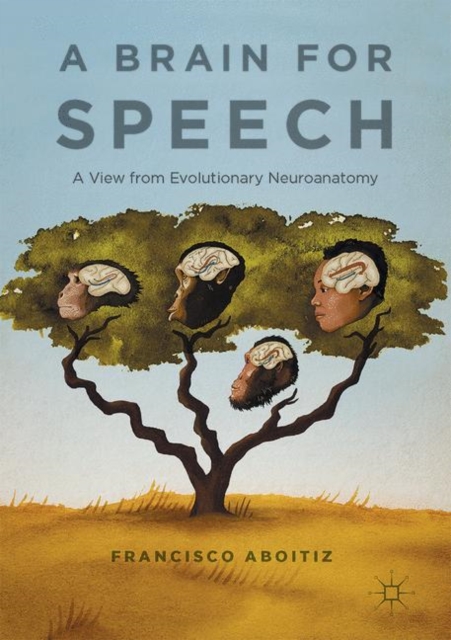
This volume brings together linguistic, psychological and neurological research in a discussion of the Cognitive Dualism Hypothesis, whose central idea is that human cognitive activity in general and linguistic cognition in particular cannot reasonably be reduced to a single, monolithic system of mental processing, but that they have a dualistic organization.
This volume presents a range of studies testing some of the latest models and hypotheses in the field of second/third language acquisition, such as the Bottleneck Hypothesis (Slabakova, 2008, 2016), the Scalpel Model (Slabakova, 2017), and the Interface Hypothesis (Sorace & Serratrice, 2009) to name a few.
The expression of temporal relations, notably through tense and aspect, is central in all processes of communication, but commonly perceived and described as a major hurdle for non-native speakers.
The Acquisition of Turkish in Childhood presents recent research on the nature of language acquisition by typically and atypically developing monolingual and bilingual Turkish-speaking children.
This book proposes a multidisciplinary assessment of the impact of complex diversity on language politics and policies, analysing how the legacies of the old interact with the challenges of the new.
Engaging with recent research in literary multilingualism studies, the global anglophone and comparative studies, this book theorizes the so-called post-monolingual anglophone novels.
Shortlisted for the BAAL Book Prize 2025Presenting a detailed examination of the origins, evolutions, and state-of-the-art of linguistic landscape research, The Bloomsbury Handbook of Linguistic Landscapes is a comprehensive guide to the burgeoning field of linguistic landscapes and the study of meaning and interpretation in public spaces and settings.
This lively and engaging book, set in the historical context of centuries of migration and multilingualism in Berlin, explores the relationship between language and migration.
This book explores the interconnections between linguistics and Artificial Intelligence (AI) research, their mutually influential theories and developments, and the areas where these two groups can still learn from each other.
This edited book examines the phenomenon of English as a Lingua Franca (ELF) in the Japanese context, using multilingualism as a lens through which to explore language practices and attitudes in what is traditionally viewed as a monolingual, monocultural setting.
This book explores the present-day Irish Diaspora in Argentina, using oral narrative and a sociolinguistic theoretical framework to draw out the features that define contemporary Hiberno-Argentine identity.
This edited book makes a significant contribution to the relatively under-explored field of multilingualism and politics, approaching the topic from two key perspectives: multilingualism in politics, and the politics of multilingualism.
This book undertakes a systematic analysis of the workings of ideology in discourse, using an interdisciplinary approach that links language, cognition and society.
This volume gathers recent research findings in the field of foreign language (FL) teaching in Romanian higher education dwelling on both methodology and students' learning outcomes.
This book covers research topics in bilingual education, language policies, language contact, identity of bilingual speakers, early bilingualism, heritage languages, and more, and provides an overview of current theory, research and practice in the field of bilingualism.
This book explores the metaphors used in public and media communication to ask how language shapes our moral reasoning about the global coronavirus crisis.
This present book explores recent advances in modeling discourse processes, in particular, new approaches aimed at understanding pathological language behavior specific to schizophrenia.
This book contributes to the literature of interlanguage pragmatics by building an interface between researching and teaching speech acts in the Chinese context.
This book proposes a novel CWW model to personalize individual semantics in linguistic decision making, based on two new concepts: numerical scale and consistency-driven methodology.
This book is the first volume to be devoted to the examination of the application of the multiliteracies pedagogical framework to the teaching of Spanish to heritage language learners in higher education institutions in the United States.
This book explains why cognitive linguistics offers a plausible theoretical framework for a systematic and unified analysis of the syntax and semantics of particle verbs.
This book systematically investigates what follows about meaning in language if current views on the limited, or even redundant, role of linguistic semantics are taken to their radical conclusion.
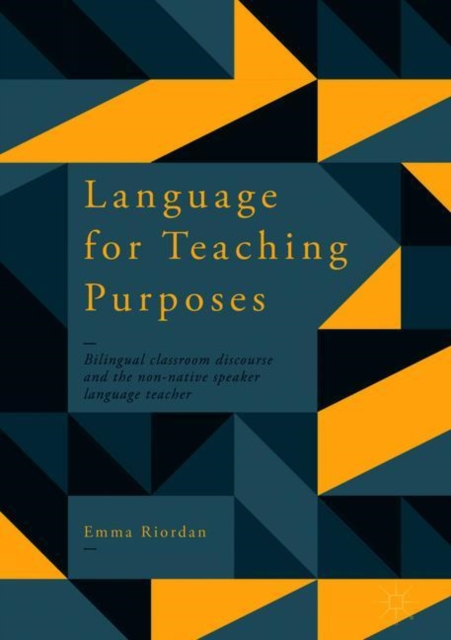
This book's innovative approach proposes Language for Teaching Purposes as a distinct field of enquiry and practice within Language for Specific Purposes.
This book addresses translingual identities through an innovative multimodal analysis of the language learning histories of a class of advanced learners of English in Japan who grew up between two or more languages.
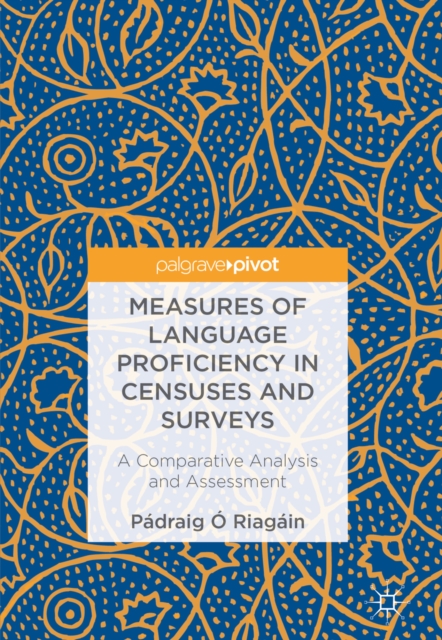
This book offers a systematic analysis of a wide range of questions used in censuses, national surveys and international surveys to measure language proficiency.
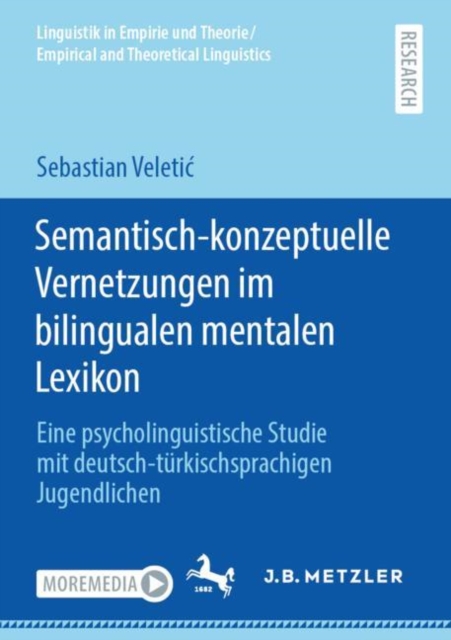
Das bilinguale mentale Lexikon weist eine komplexe netzwerkartige Struktur auf, die in diesem Buch theoretisch ergründet und empirisch untersucht wird.
This book is the second in a three-volume set that celebrates the career and achievements of Cliff Goddard, a pioneer of the Natural Semantic Metalanguage approach in linguistics.
This book is the third in a three-volume set that celebrates the career and achievements of Cliff Goddard, a pioneer of the Natural Semantic Metalanguage approach in linguistics.